
Asiago Cheese vs Tête de Moine Cheese
Asiago Cheese
Tête de Moine Cheese
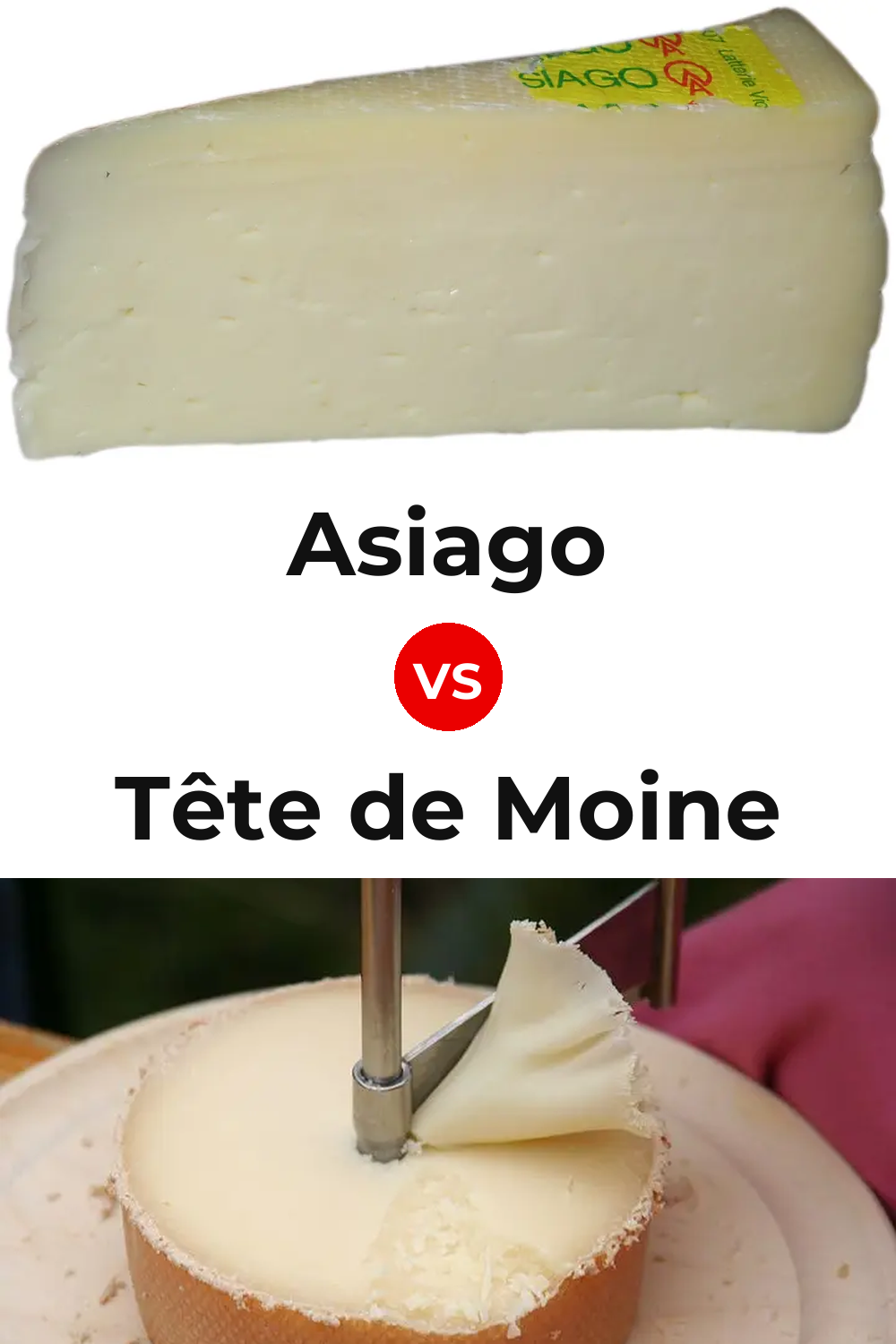
Asiago Cheese is a cheese from Italy, while Tête de Moine Cheese is semi-hard and made from cow milk, originating in Switzerland.
What Is Asiago Cheese?
Asiago is a cow's milk cheese from the Asiago plateau in Veneto and Trentino-Alto Adige, Italy, made either young and soft (Asiago pressato) or aged and crumbly (Asiago d'allevo). It carries Italian DOP status, though the name is treated as generic in the U.S. and Australia.
What Is Tête de Moine Cheese?
Tête de Moine AOP is a semi-hard cow's milk cheese from the Swiss Jura, first made by the canons of Bellelay abbey in the 12th century. It is not sliced but pared into thin rosettes with a Girolle.
What's the Difference Between Asiago Cheese and Tête de Moine Cheese?
- Origin: Asiago Cheese (Italy), Tête de Moine Cheese (Switzerland)
- Milk treatment: Asiago Cheese (raw (Asiago d'allevo)), Tête de Moine Cheese (unpasteurized)
- Rind: Asiago Cheese (thin, elastic (Asiago pressato)), Tête de Moine Cheese (firm, grainy natural crust)
- Aging: Asiago Cheese (20 to 40 days fresh; 60 days to 15 months or more aged), Tête de Moine Cheese (at least 2½ months)
- Taste: Asiago Cheese (sweetish when young, bitter and spicy when very old), Tête de Moine Cheese (nutty)
Side-by-Side Comparison
| Asiago Cheese | Tête de Moine Cheese | |
|---|---|---|
| Country of Origin | Italy | Switzerland |
| Specific Origin | Veneto And Trentino-Alto Adige, Italy | Bernese Jura And Canton Of Jura, Switzerland |
| Milk Type | — | Cow's milk |
| Milk Treatment | Raw (Asiago d'allevo) | Unpasteurized |
| Texture | — | Semi-hard |
| Rind | Thin, elastic (Asiago pressato) | Firm, grainy natural crust |
| Aging | 20 to 40 days fresh; 60 days to 15 months or more aged | At least 2½ months |
| Taste | Sweetish when young, bitter and spicy when very old | Nutty |
Taste Comparison: Does Asiago Cheese Taste Like Tête de Moine Cheese?
Asiago Cheese reads as sweetish when young, bitter and spicy when very old, while Tête de Moine Cheese brings nutty character. Aging plays into this as well. Asiago Cheese at 20 to 40 days fresh; 60 days to 15 months or more aged develops a different profile than Tête de Moine Cheese at at least 2½ months.
Can You Substitute Asiago Cheese for Tête de Moine Cheese?
Asiago Cheese can stand in for Tête de Moine Cheese in many dishes, but the switch will shift the overall character of the recipe. Flavor-wise, Asiago Cheese reads as sweetish when young, bitter and spicy when very old while Tête de Moine Cheese brings nutty notes.
Which Is Better, Asiago Cheese or Tête de Moine Cheese?
There's no single winner. It depends on your recipe and the profile you want. Flavor-wise, Asiago Cheese suits recipes that want sweetish when young, bitter and spicy when very old notes, while Tête de Moine Cheese fits dishes calling for nutty.
Which is your favorite?
One click, anonymous. See what others chose.
Frequently Asked Questions
Is Asiago Cheese the same as Tête de Moine Cheese?
No, they're distinct cheeses. Asiago Cheese originates in Italy, while Tête de Moine Cheese comes from Switzerland. Aging also differs: Asiago Cheese is typically aged 20 to 40 days fresh; 60 days to 15 months or more aged, Tête de Moine Cheese at least 2½ months.
Is Asiago Cheese similar to Tête de Moine Cheese?
Not closely. They use different milk bases and have distinct profiles.
Can I substitute Asiago Cheese for Tête de Moine Cheese?
You can, but expect a shift in flavor and finish.
Does Asiago Cheese taste like Tête de Moine Cheese?
Asiago Cheese reads as sweetish when young, bitter and spicy when very old, while Tête de Moine Cheese is nutty.
What is Asiago Cheese made of?
Asiago Cheese is made from milk (raw (asiago d'allevo)), using rennet. It's typically aged 20 to 40 days fresh; 60 days to 15 months or more aged. It originates in Italy.
What is Tête de Moine Cheese made of?
Tête de Moine Cheese is made from cow milk (unpasteurized). It's typically aged at least 2½ months. It originates in Switzerland.
Which should I choose, Asiago Cheese or Tête de Moine Cheese?
It depends on the dish. The table above is the fastest way to decide based on your recipe.