
Beaufort Cheese vs Stilton Cheese
Beaufort Cheese
Stilton Cheese
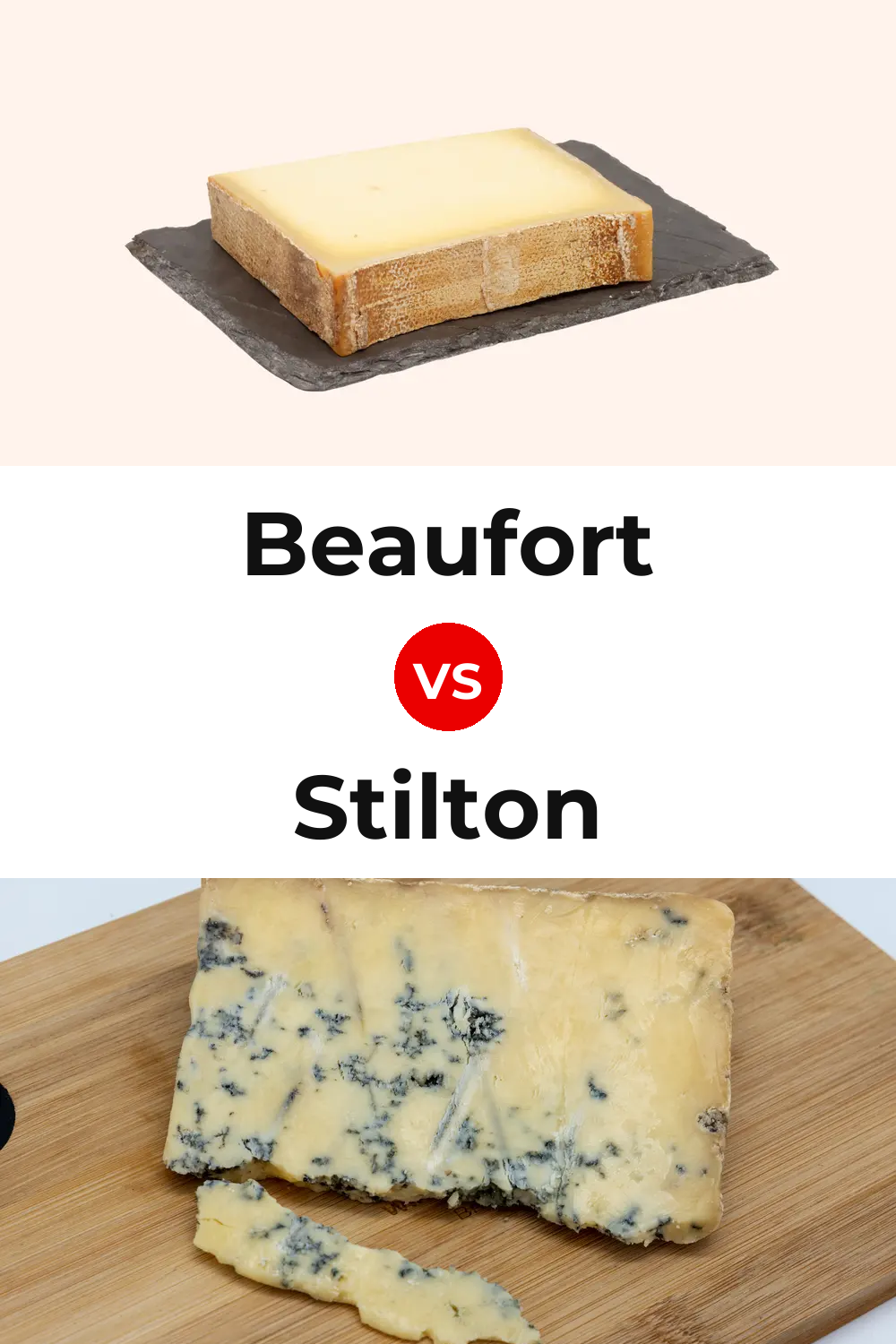
Beaufort Cheese is a hard cow-milk cheese from France, while Stilton Cheese is semi-soft, crumbly, blue-veined and made from cow milk, originating in England.
Buy Beaufort Cheese
Buy Stilton Cheese
What Is Beaufort Cheese?
Beaufort is a firm raw cow's milk cheese from the Savoie region of the French Alps, part of the gruyère family. Its wheels take a concave shape from the beechwood hoop, and the cheese melts easily enough to be a standard choice for fondue.
What Is Stilton Cheese?
Stilton is an English cheese made in Derbyshire, Leicestershire and Nottinghamshire, in a blue version and a white one. The blue kind gets its veins from Penicillium roqueforti. Both hold PDO status, so no cheese made elsewhere can use the name.
What's the Difference Between Beaufort Cheese and Stilton Cheese?
- Origin: Beaufort Cheese (France), Stilton Cheese (England)
- Milk treatment: Beaufort Cheese (Raw), Stilton Cheese (pasteurized)
- Texture: Beaufort Cheese (Hard), Stilton Cheese (Semi-soft, crumbly, blue-veined)
- Rind: Beaufort Cheese (Even yellow color), Stilton Cheese (natural)
- Aging: Beaufort Cheese (5 to 12+ months), Stilton Cheese (9 to 12 weeks)
- Taste: Beaufort Cheese (strong), Stilton Cheese (spicy, strong)
Side-by-Side Comparison
| Beaufort Cheese | Stilton Cheese | |
|---|---|---|
| Country of Origin | France | England |
| Specific Origin | Beaufortin Valley, Savoie Region | Nottinghamshire, Leicestershire, Derbyshire |
| Milk Type | Cow's milk | Cow's milk |
| Milk Treatment | Raw | Pasteurized |
| Texture | Hard | Semi-soft, crumbly, blue-veined |
| Rind | Even yellow color | Natural |
| Aging | 5 to 12+ months | 9 to 12 weeks |
| Taste | Strong | Spicy, strong |
Taste Comparison: Does Beaufort Cheese Taste Like Stilton Cheese?
Beaufort Cheese reads as strong, while Stilton Cheese brings spicy, strong character. Aging plays into this as well. Beaufort Cheese at 5 to 12+ months develops a different profile than Stilton Cheese at 9 to 12 weeks.
Can You Substitute Beaufort Cheese for Stilton Cheese?
In most recipes, Beaufort Cheese and Stilton Cheese can be swapped with reasonable results. Both are cow-milk cheeses, so the base character carries over. Expect hard bite and body where the recipe calls for semi-soft, crumbly, blue-veined. Flavor-wise, Beaufort Cheese reads as strong while Stilton Cheese brings spicy, strong notes.
Which Is Better, Beaufort Cheese or Stilton Cheese?
There's no single winner. It depends on your recipe and the profile you want. If you want a hard cheese, go with Beaufort Cheese. For a semi-soft, crumbly, blue-veined profile, Stilton Cheese is the better fit. Flavor-wise, Beaufort Cheese suits recipes that want strong notes, while Stilton Cheese fits dishes calling for spicy, strong.
Which is your favorite?
One click, anonymous. See what others chose.
Frequently Asked Questions
Is Beaufort Cheese the same as Stilton Cheese?
No, they're distinct cheeses. Beaufort Cheese originates in France, while Stilton Cheese comes from England. Aging also differs: Beaufort Cheese is typically aged 5 to 12+ months, Stilton Cheese 9 to 12 weeks.
Is Beaufort Cheese similar to Stilton Cheese?
Somewhat. They share a cow-milk base but diverge in texture and flavor.
Can I substitute Beaufort Cheese for Stilton Cheese?
You can, but expect a shift in bite and mouthfeel.
Does Beaufort Cheese taste like Stilton Cheese?
Beaufort Cheese reads as strong, while Stilton Cheese is spicy, strong.
What is Beaufort Cheese made of?
Beaufort Cheese is made from cow milk (raw), using dried calves’ abomasum in recuite rennet. It's typically aged 5 to 12+ months. It originates in France.
What is Stilton Cheese made of?
Stilton Cheese is made from cow milk (pasteurized). It's typically aged 9 to 12 weeks. It originates in England.
Which should I choose, Beaufort Cheese or Stilton Cheese?
It depends on the dish. The texture difference is the biggest practical tell. Beaufort Cheese is hard, while Stilton Cheese is semi-soft, crumbly, blue-veined.