
Blue Cheese vs American Gruyere Cheese
Blue Cheese
American Gruyere Cheese
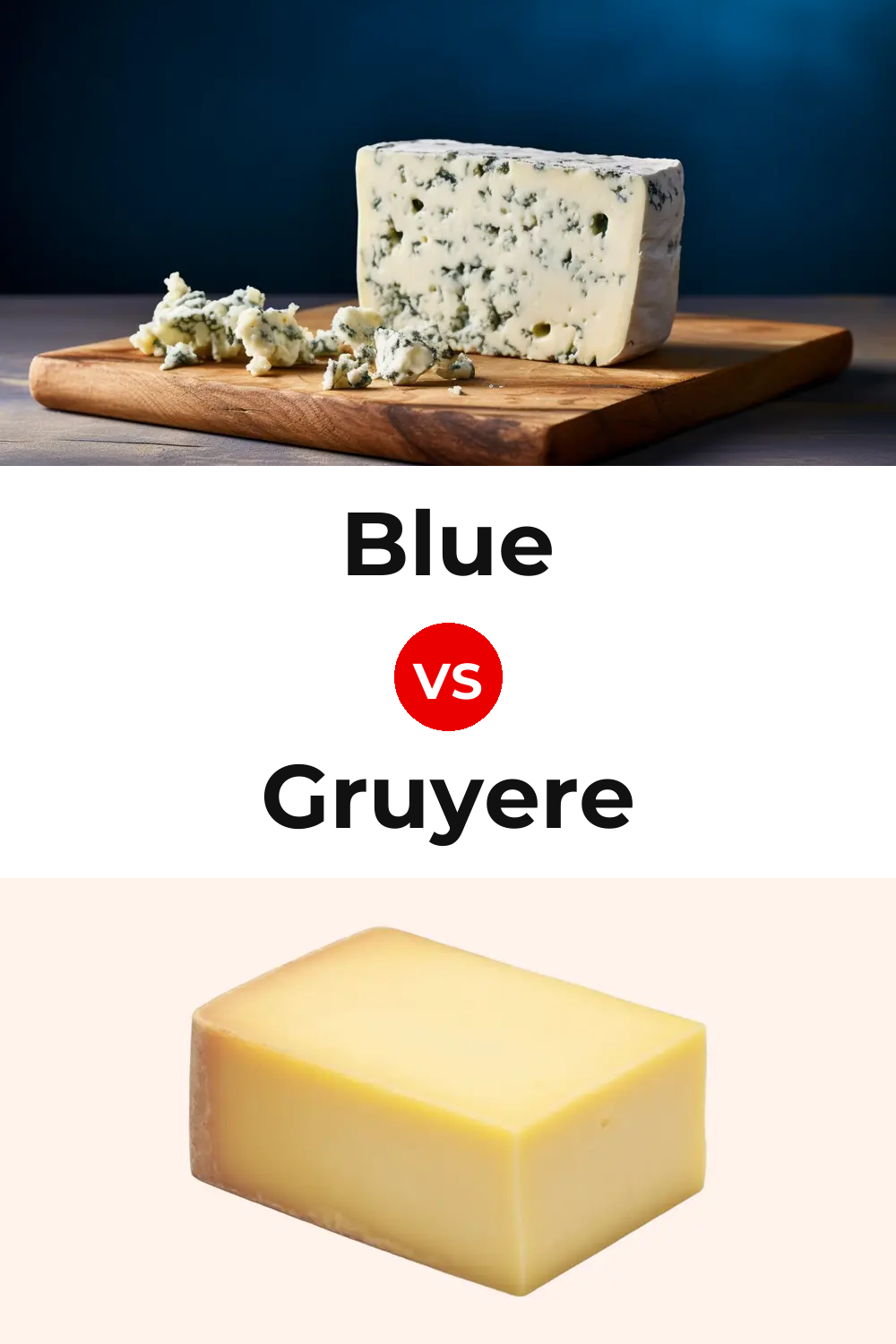
Blue Cheese is a crumbly, creamy, semi-soft cow, goat, or sheep-milk cheese from France, while American Gruyere Cheese is semi-firm and made from cow milk, originating in United States.
What Is Blue Cheese?
Blue cheese is any cheese made with edible mold cultures that form blue-green spots and veins through the paste. It ranges from mild and slightly sweet to salty and sharp, and from almost liquid to hard.
What Is American Gruyere Cheese?
American Gruyere is a Gruyere-style cheese made in the United States, with Wisconsin producing the most of it. A U.S. court ruled in 2021 that gruyere is a generic cheese name, which leaves American makers free to use it.
What's the Difference Between Blue Cheese and American Gruyere Cheese?
- Origin: Blue Cheese (France), American Gruyere Cheese (United States)
- Milk type: Blue Cheese (Cow, Sheep, Goat), American Gruyere Cheese (cow's milk)
- Milk treatment: Blue Cheese (Pasteurized or Raw), American Gruyere Cheese (Pasteurized)
- Texture: Blue Cheese (Crumbly, Creamy, Semi-Soft), American Gruyere Cheese (Semi-Firm)
- Rind: Blue Cheese (Natural), American Gruyere Cheese (Natural or Brushed, Sometimes Waxed)
- Aging: Blue Cheese (Typically aged 2-6 months), American Gruyere Cheese (Typically 3-6 months)
- Taste: Blue Cheese (Sharp, Tangy, Savory, Salty, Pungent), American Gruyere Cheese (Mild, Nutty, Slightly Buttery)
Side-by-Side Comparison
| Blue Cheese | American Gruyere Cheese | |
|---|---|---|
| Country of Origin | France | United States |
| Specific Origin | — | Wisconsin, The U.S. |
| Milk Type | Cow, Sheep, Goat | Cow's milk |
| Milk Treatment | Pasteurized or Raw | Pasteurized |
| Texture | Crumbly, Creamy, Semi-Soft | Semi-Firm |
| Rind | Natural | Natural or Brushed, Sometimes Waxed |
| Aging | Typically aged 2-6 months | Typically 3-6 months |
| Taste | Sharp, Tangy, Savory, Salty, Pungent | Mild, Nutty, Slightly Buttery |
Pairing Comparison
What works with each cheese: wines, foods, breads and more.
| Blue Cheese | American Gruyere Cheese | |
|---|---|---|
| Pairs well with | Amaro, Apricot, Asian Pear, Cabernet Sauvignon, Dirty Martini, Dried Figs, Fig Jam, German Riesling, Green Apple, Hard Cider, Honey, Honeycomb and more | Dijon Mustard, Grilled Cheese, Macaroni and Cheese, Roast Beef, Pastrami |
Taste Comparison: Does Blue Cheese Taste Like American Gruyere Cheese?
Blue Cheese reads as sharp, tangy, savory, salty, pungent, while American Gruyere Cheese brings mild, nutty, slightly buttery character. On the nose, Blue Cheese offers strong, pungent, earthy, funky, contrasted with American Gruyere Cheese's mild, slightly nutty, buttery. More specifically, Blue Cheese shows earthy, spicy, peppery, slightly sweet, umami, nutty, bitter, while American Gruyere Cheese leans toward buttery, mildly nutty, slightly sweet, less complex than traditional gruyère. Aging plays into this as well. Blue Cheese at typically aged 2-6 months develops a different profile than American Gruyere Cheese at typically 3-6 months.
Can You Substitute Blue Cheese for American Gruyere Cheese?
Blue Cheese can stand in for American Gruyere Cheese in many dishes, but the switch will shift the overall character of the recipe. Expect crumbly, creamy, semi-soft bite and body where the recipe calls for semi-firm. Flavor-wise, Blue Cheese reads as sharp, tangy, savory, salty, pungent while American Gruyere Cheese brings mild, nutty, slightly buttery notes.
Which Is Better, Blue Cheese or American Gruyere Cheese?
There's no single winner. It depends on your recipe and the profile you want. If you want a crumbly, creamy, semi-soft cheese, go with Blue Cheese. For a semi-firm profile, American Gruyere Cheese is the better fit. Flavor-wise, Blue Cheese suits recipes that want sharp, tangy, savory, salty, pungent notes, while American Gruyere Cheese fits dishes calling for mild, nutty, slightly buttery.
Which is your favorite?
One click, anonymous. See what others chose.
Frequently Asked Questions
Is Blue Cheese the same as American Gruyere Cheese?
No, they're distinct cheeses. Blue Cheese originates in France, while American Gruyere Cheese comes from United States. Blue Cheese is made from cow, goat, or sheep milk; American Gruyere Cheese uses cow. Aging also differs: Blue Cheese is typically aged typically aged 2-6 months, American Gruyere Cheese typically 3-6 months.
Is Blue Cheese similar to American Gruyere Cheese?
Not closely. They use different milk bases and have distinct profiles.
Can I substitute Blue Cheese for American Gruyere Cheese?
You can, but expect a shift in richness and milk character.
Does Blue Cheese taste like American Gruyere Cheese?
Blue Cheese reads as sharp, tangy, savory, salty, pungent, while American Gruyere Cheese is mild, nutty, slightly buttery. Aromas also diverge. Blue Cheese leans strong, pungent, earthy, funky, and American Gruyere Cheese is closer to mild, slightly nutty, buttery.
What is Blue Cheese made of?
Blue Cheese is made from cow, goat, or sheep milk (pasteurized or raw), using traditional (animal rennet) or microbial (varies by producer) rennet. It's typically aged typically aged 2-6 months. It originates in France.
What is American Gruyere Cheese made of?
American Gruyere Cheese is made from cow milk (pasteurized), using microbial or vegetarian (varies by producer) rennet. It's typically aged typically 3-6 months. It originates in United States.
Which should I choose, Blue Cheese or American Gruyere Cheese?
It depends on the dish. The texture difference is the biggest practical tell. Blue Cheese is crumbly, creamy, semi-soft, while American Gruyere Cheese is semi-firm.