Cacioricotta Cheese vs Provolone Cheese
Cacioricotta Cheese
Provolone Cheese
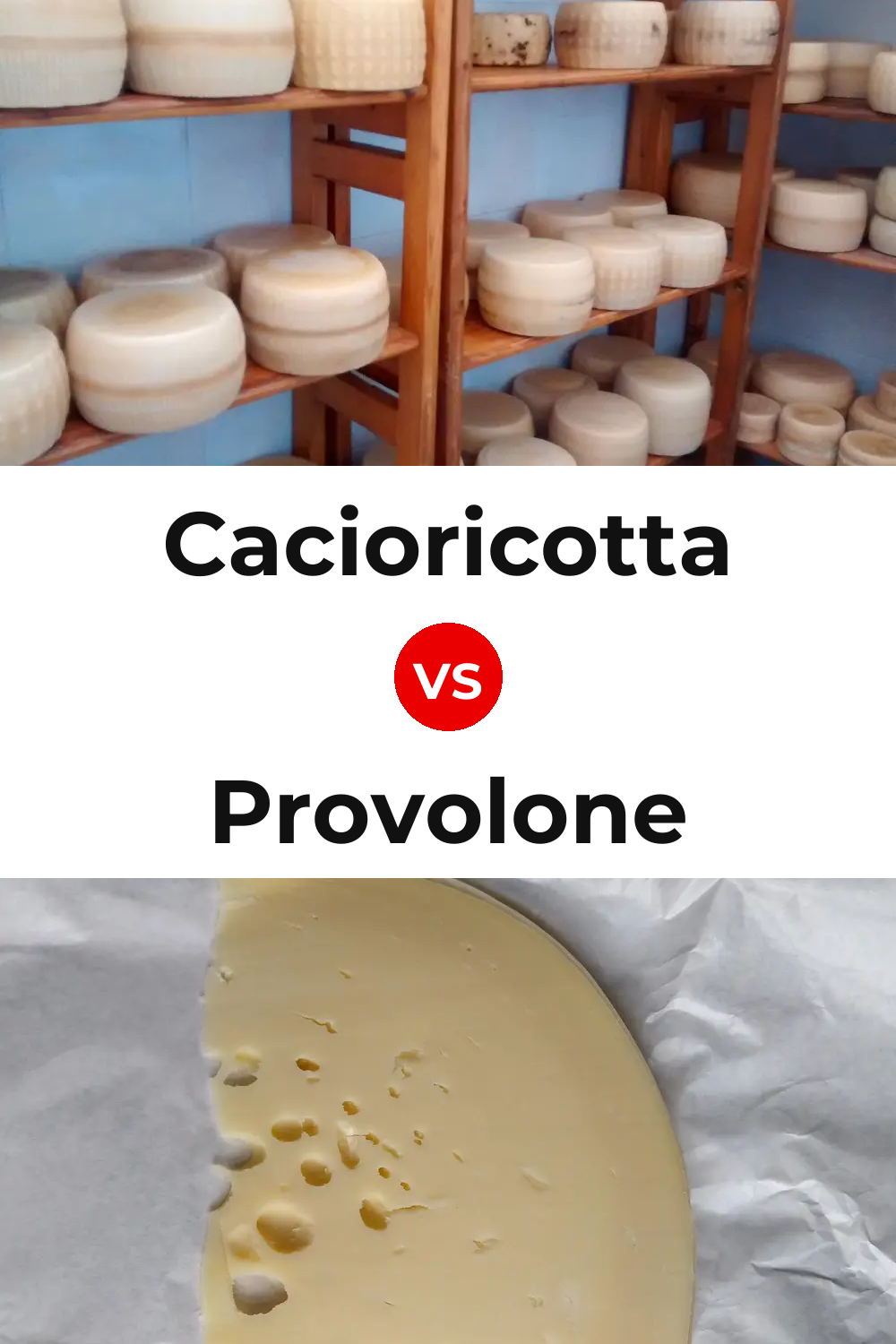
Cacioricotta Cheese is a cow, goat, and sheep-milk cheese from Italy, while Provolone Cheese is semi-hard, artisan and made from cow milk, originating in Italy.
What Is Cacioricotta Cheese?
Cacioricotta is a southern Italian cheese from Basilicata, Apulia and Calabria, usually made with sheep or goat milk. Its name comes from the hybrid method behind it, which borrows steps from both ricotta and hard cheese making.
What Is Provolone Cheese?
Provolone is an Italian semi-hard cheese made from cow's milk with a stretched curd. It runs from the very sharp piccante, aged at least four months, to the mild dolce.
What's the Difference Between Cacioricotta Cheese and Provolone Cheese?
- Milk type: Cacioricotta Cheese (Goat's, occasionally Sheep's and Cow's mix), Provolone Cheese (cow's milk)
- Aging: Cacioricotta Cheese (Fresh or 3 to 6 months), Provolone Cheese (at least 4 months for piccante)
- Taste: Cacioricotta Cheese (Sweet to salty, spicy), Provolone Cheese (tangy)
Side-by-Side Comparison
| Cacioricotta Cheese | Provolone Cheese | |
|---|---|---|
| Country of Origin | Italy | Italy |
| Specific Origin | Basilicata, Calabria, Puglia, Campania | Campania, Italy |
| Milk Type | Goat's, occasionally Sheep's and Cow's mix | Cow's milk |
| Milk Treatment | Heated | — |
| Texture | — | Semi-hard, artisan |
| Rind | None when fresh, straw-color when aged | — |
| Aging | Fresh or 3 to 6 months | At least 4 months for piccante |
| Taste | Sweet to salty, spicy | Tangy |
| Where to Buy | Shop on Amazon | Shop on Amazon |
As an Amazon Associate, AnyCheese earns from qualifying purchases.
Taste Comparison: Does Cacioricotta Cheese Taste Like Provolone Cheese?
Cacioricotta Cheese reads as sweet to salty, spicy, while Provolone Cheese brings tangy character. On the nose, Cacioricotta Cheese offers cooked milk, contrasted with Provolone Cheese's pleasant. Aging plays into this as well. Cacioricotta Cheese at fresh or 3 to 6 months develops a different profile than Provolone Cheese at at least 4 months for piccante.
Can You Substitute Cacioricotta Cheese for Provolone Cheese?
Cacioricotta Cheese can stand in for Provolone Cheese in many dishes, but the switch will shift the overall character of the recipe. Flavor-wise, Cacioricotta Cheese reads as sweet to salty, spicy while Provolone Cheese brings tangy notes.
Which Is Better, Cacioricotta Cheese or Provolone Cheese?
There's no single winner. It depends on your recipe and the profile you want. Flavor-wise, Cacioricotta Cheese suits recipes that want sweet to salty, spicy notes, while Provolone Cheese fits dishes calling for tangy.
Which is your favorite?
One click, anonymous. See what others chose.
Frequently Asked Questions
Is Cacioricotta Cheese the same as Provolone Cheese?
No, they're distinct cheeses. Cacioricotta Cheese is made from cow, goat, and sheep milk; Provolone Cheese uses cow. Aging also differs: Cacioricotta Cheese is typically aged fresh or 3 to 6 months, Provolone Cheese at least 4 months for piccante.
Is Cacioricotta Cheese similar to Provolone Cheese?
Not closely. They use different milk bases and have distinct profiles.
Can I substitute Cacioricotta Cheese for Provolone Cheese?
You can, but expect a shift in richness and milk character.
Does Cacioricotta Cheese taste like Provolone Cheese?
Cacioricotta Cheese reads as sweet to salty, spicy, while Provolone Cheese is tangy. Aromas also diverge. Cacioricotta Cheese leans cooked milk, and Provolone Cheese is closer to pleasant.
What is Cacioricotta Cheese made of?
Cacioricotta Cheese is made from cow, goat, and sheep milk (heated), using added after cooling to 38 to 40°c rennet. It's typically aged fresh or 3 to 6 months. It originates in Italy.
What is Provolone Cheese made of?
Provolone Cheese is made from cow milk. It's typically aged at least 4 months for piccante. It originates in Italy.
Which should I choose, Cacioricotta Cheese or Provolone Cheese?
It depends on the dish. The table above is the fastest way to decide based on your recipe.