
Chèvre (Goat Cheese) vs Crottin de Chavignol Cheese
Chèvre (Goat Cheese)
Crottin de Chavignol Cheese
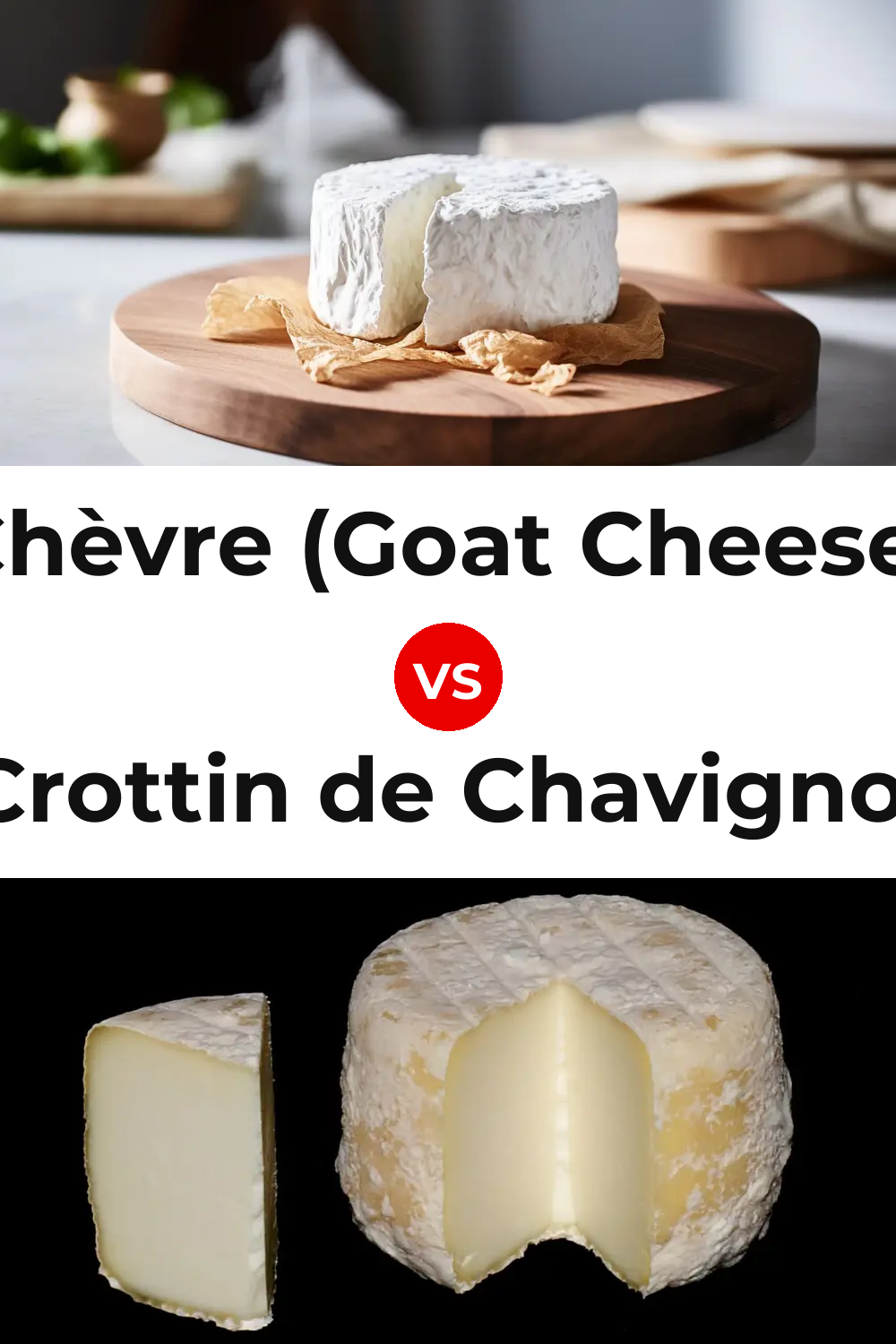
Chèvre (Goat Cheese) is a soft goat-milk cheese from France, while Crottin de Chavignol Cheese is semi-hard and made from goat milk, originating in France.
Buy Chèvre (Goat Cheese)
Buy Crottin de Chavignol Cheese
What Is Chèvre (Goat Cheese)?
Chèvre is the French name for cheese made from goat's milk. The classic French style is soft and creamy under a light colored rind, tart from the fatty acids in goat milk, and is sometimes served hot as chèvre chaud.
What Is Crottin de Chavignol Cheese?
Crottin de Chavignol is a small cylindrical goat cheese from the Loire Valley and the claim to fame of the village of Chavignol. It tastes subtle and slightly nutty, and it is sold at three stages of ripening, from a white rind and compact paste to a crumbly one with bluish mould.
What's the Difference Between Chèvre (Goat Cheese) and Crottin de Chavignol Cheese?
- Milk treatment: Chèvre (Goat Cheese) (pasteurized or unpasteurized), Crottin de Chavignol Cheese (unpasteurized)
- Texture: Chèvre (Goat Cheese) (Soft), Crottin de Chavignol Cheese (Semi-hard)
- Rind: Chèvre (Goat Cheese) (light colored), Crottin de Chavignol Cheese (Natural, white or blue)
- Aging: Chèvre (Goat Cheese) (not aged for long), Crottin de Chavignol Cheese (At least 10 days)
- Taste: Chèvre (Goat Cheese) (tangy), Crottin de Chavignol Cheese (Light goat to walnut and hazelnut)
Side-by-Side Comparison
| Chèvre (Goat Cheese) | Crottin de Chavignol Cheese | |
|---|---|---|
| Country of Origin | France | France |
| Specific Origin | France, Especially The Loire Valley And Poitou | Sancerre Region |
| Milk Type | Goat's milk | Goat's milk |
| Milk Treatment | Pasteurized or unpasteurized | Unpasteurized |
| Texture | Soft | Semi-hard |
| Rind | Light colored | Natural, white or blue |
| Aging | Not aged for long | At least 10 days |
| Taste | Tangy | Light goat to walnut and hazelnut |
Taste Comparison: Does Chèvre (Goat Cheese) Taste Like Crottin de Chavignol Cheese?
Chèvre (Goat Cheese) reads as tangy, while Crottin de Chavignol Cheese brings light goat to walnut and hazelnut character. On the nose, Chèvre (Goat Cheese) offers goaty, contrasted with Crottin de Chavignol Cheese's light goat to mushroom and forest undergrowth. More specifically, Chèvre (Goat Cheese) shows mild, creamy, sometimes fruity, while Crottin de Chavignol Cheese leans toward light goat flavor, floral, balanced, ages to mushroom, forest undergrowth, matures to nutty flavors, repassé: strong, creamy. Aging plays into this as well. Chèvre (Goat Cheese) at not aged for long develops a different profile than Crottin de Chavignol Cheese at at least 10 days.
Can You Substitute Chèvre (Goat Cheese) for Crottin de Chavignol Cheese?
In most recipes, Chèvre (Goat Cheese) and Crottin de Chavignol Cheese can be swapped with reasonable results. Both are goat-milk cheeses, so the base character carries over. Expect soft bite and body where the recipe calls for semi-hard. Flavor-wise, Chèvre (Goat Cheese) reads as tangy while Crottin de Chavignol Cheese brings light goat to walnut and hazelnut notes.
Which Is Better, Chèvre (Goat Cheese) or Crottin de Chavignol Cheese?
There's no single winner. It depends on your recipe and the profile you want. If you want a soft cheese, go with Chèvre (Goat Cheese). For a semi-hard profile, Crottin de Chavignol Cheese is the better fit. Flavor-wise, Chèvre (Goat Cheese) suits recipes that want tangy notes, while Crottin de Chavignol Cheese fits dishes calling for light goat to walnut and hazelnut.
Which is your favorite?
One click, anonymous. See what others chose.
Frequently Asked Questions
Is Chèvre (Goat Cheese) the same as Crottin de Chavignol Cheese?
No, they're distinct cheeses. Aging also differs: Chèvre (Goat Cheese) is typically aged not aged for long, Crottin de Chavignol Cheese at least 10 days.
Is Chèvre (Goat Cheese) similar to Crottin de Chavignol Cheese?
Somewhat. They share a goat-milk base but diverge in texture and flavor.
Can I substitute Chèvre (Goat Cheese) for Crottin de Chavignol Cheese?
You can, but expect a shift in bite and mouthfeel.
Does Chèvre (Goat Cheese) taste like Crottin de Chavignol Cheese?
Chèvre (Goat Cheese) reads as tangy, while Crottin de Chavignol Cheese is light goat to walnut and hazelnut. Aromas also diverge. Chèvre (Goat Cheese) leans goaty, and Crottin de Chavignol Cheese is closer to light goat to mushroom and forest undergrowth.
What is Chèvre (Goat Cheese) made of?
Chèvre (Goat Cheese) is made from goat milk (pasteurized or unpasteurized). It's typically aged not aged for long. It originates in France.
What is Crottin de Chavignol Cheese made of?
Crottin de Chavignol Cheese is made from goat milk (unpasteurized). It's typically aged at least 10 days. It originates in France.
Which should I choose, Chèvre (Goat Cheese) or Crottin de Chavignol Cheese?
It depends on the dish. The texture difference is the biggest practical tell. Chèvre (Goat Cheese) is soft, while Crottin de Chavignol Cheese is semi-hard.