
Edam Cheese vs Pérail Cheese
Edam Cheese
Pérail Cheese
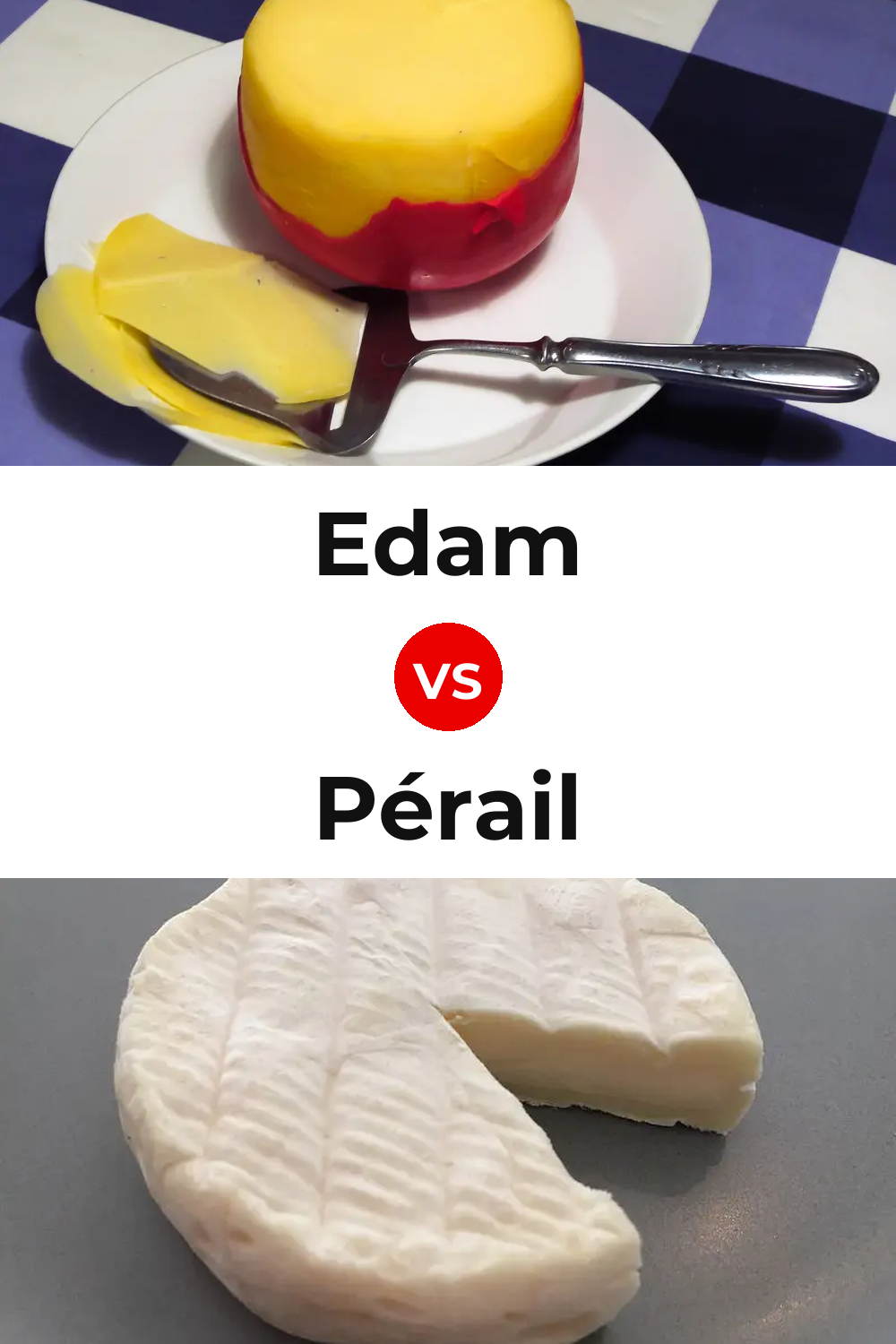
Edam Cheese is a rubber-textured to crystalline cow-milk cheese from Netherlands, while Pérail Cheese is soft and made from sheep milk, originating in France.
What Is Edam Cheese?
Edam is a semi-hard Dutch cheese named after the town of Edam in North Holland, sold in flat-ended spheres under a red wax rind. It hardens rather than spoils, which made it the world's most popular cheese from the 14th to the 18th century.
What Is Pérail Cheese?
Pérail is a soft sheep's milk cheese from Aveyron in southern France, sold in small rounds with an ivory, wrinkly rind. Older wheels taste distinctly sheepy.
What's the Difference Between Edam Cheese and Pérail Cheese?
- Origin: Edam Cheese (Netherlands), Pérail Cheese (France)
- Milk type: Edam Cheese (cow's milk), Pérail Cheese (sheep)
- Texture: Edam Cheese (Rubber-textured to crystalline), Pérail Cheese (soft)
- Rind: Edam Cheese (Smooth, waxed), Pérail Cheese (wrinkly, mainly Geotrichum candidum)
- Aging: Edam Cheese (3 months to longer), Pérail Cheese (2 to 8 weeks)
- Taste: Edam Cheese (Sweet, milky, nutty, buttery), Pérail Cheese (distinctly sheepy in older cheeses)
Side-by-Side Comparison
| Edam Cheese | Pérail Cheese | |
|---|---|---|
| Country of Origin | Netherlands | France |
| Specific Origin | North Of Holland | Aveyron, France |
| Milk Type | Cow's milk | Sheep |
| Milk Treatment | Pasteurized | — |
| Texture | Rubber-textured to crystalline | Soft |
| Rind | Smooth, waxed | Wrinkly, mainly Geotrichum candidum |
| Aging | 3 months to longer | 2 to 8 weeks |
| Taste | Sweet, milky, nutty, buttery | Distinctly sheepy in older cheeses |
Taste Comparison: Does Edam Cheese Taste Like Pérail Cheese?
Edam Cheese reads as sweet, milky, nutty, buttery, while Pérail Cheese brings distinctly sheepy in older cheeses character. Aging plays into this as well. Edam Cheese at 3 months to longer develops a different profile than Pérail Cheese at 2 to 8 weeks.
Can You Substitute Edam Cheese for Pérail Cheese?
Edam Cheese can stand in for Pérail Cheese in many dishes, but the switch will shift the overall character of the recipe. Expect rubber-textured to crystalline bite and body where the recipe calls for soft. Flavor-wise, Edam Cheese reads as sweet, milky, nutty, buttery while Pérail Cheese brings distinctly sheepy in older cheeses notes.
Which Is Better, Edam Cheese or Pérail Cheese?
There's no single winner. It depends on your recipe and the profile you want. If you want a rubber-textured to crystalline cheese, go with Edam Cheese. For a soft profile, Pérail Cheese is the better fit. Flavor-wise, Edam Cheese suits recipes that want sweet, milky, nutty, buttery notes, while Pérail Cheese fits dishes calling for distinctly sheepy in older cheeses.
Which is your favorite?
One click, anonymous. See what others chose.
Frequently Asked Questions
Is Edam Cheese the same as Pérail Cheese?
No, they're distinct cheeses. Edam Cheese originates in Netherlands, while Pérail Cheese comes from France. Edam Cheese is made from cow milk; Pérail Cheese uses sheep. Aging also differs: Edam Cheese is typically aged 3 months to longer, Pérail Cheese 2 to 8 weeks.
Is Edam Cheese similar to Pérail Cheese?
Not closely. They use different milk bases and have distinct profiles.
Can I substitute Edam Cheese for Pérail Cheese?
You can, but expect a shift in richness and milk character.
Does Edam Cheese taste like Pérail Cheese?
Edam Cheese reads as sweet, milky, nutty, buttery, while Pérail Cheese is distinctly sheepy in older cheeses.
What is Edam Cheese made of?
Edam Cheese is made from cow milk (pasteurized). It's typically aged 3 months to longer. It originates in Netherlands.
What is Pérail Cheese made of?
Pérail Cheese is made from sheep milk. It's typically aged 2 to 8 weeks. It originates in France.
Which should I choose, Edam Cheese or Pérail Cheese?
It depends on the dish. The texture difference is the biggest practical tell. Edam Cheese is rubber-textured to crystalline, while Pérail Cheese is soft.