Feta Cheese vs Salers Cheese
Feta Cheese
Salers Cheese
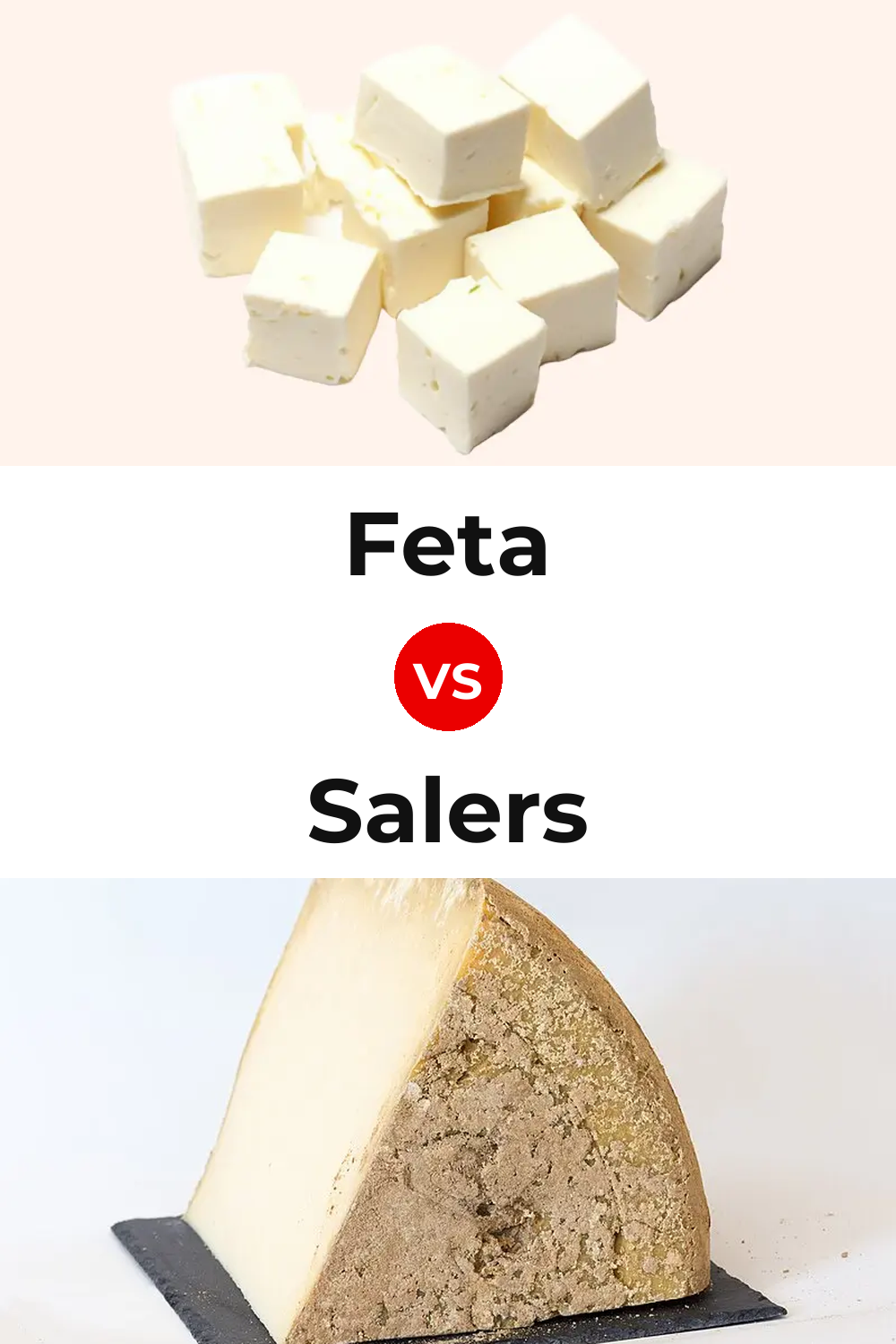
Feta Cheese is a soft, white, aged in brine goat and sheep-milk cheese from Greece, while Salers Cheese is firm and made from cow milk, originating in France.
What Is Feta Cheese?
Feta is a brined curd white cheese from Greece, made traditionally from sheep's milk, or from a mixture of sheep and goat's milk. It is crumbly with a slightly grainy texture and has a salty, tangy flavor. Feta is commonly used in salads, pastries, and as a table cheese, and is central to Greek cuisine.
What Is Salers Cheese?
Salers is a semi-hard cheese from the Auvergne region of France, made from the raw milk of Salers cows. It has a strong, complex flavor with spicy, fruity, and nutty notes and a firm, chewy texture. Traditionally, Salers is made only when the cows are out in the pastures during the warmer months, from April to November.
What's the Difference Between Feta Cheese and Salers Cheese?
- Origin: Feta Cheese (Greece), Salers Cheese (France)
- Milk type: Feta Cheese (goat's and sheep's milk), Salers Cheese (cow's milk)
- Milk treatment: Feta Cheese (Pasteurized, sometimes raw), Salers Cheese (unpasteurized)
- Texture: Feta Cheese (Soft, white, aged in brine), Salers Cheese (Firm)
- Rind: Feta Cheese (None), Salers Cheese (Thick gray)
- Aging: Feta Cheese (2 months to longer), Salers Cheese (Minimum of three months, up to forty-five months)
- Taste: Feta Cheese (Sharp to mild), Salers Cheese (Strong-tasting)
Side-by-Side Comparison
| Feta Cheese | Salers Cheese | |
|---|---|---|
| Country of Origin | Greece | France |
| Specific Origin | Throughout Greece | Salers, Massif Central |
| Milk Type | Goat's and sheep's milk | Cow's milk |
| Milk Treatment | Pasteurized, sometimes raw | Unpasteurized |
| Texture | Soft, white, aged in brine | Firm |
| Rind | None | Thick gray |
| Aging | 2 months to longer | Minimum of three months, up to forty-five months |
| Taste | Sharp to mild | Strong-tasting |
Pairing Comparison
What works with each cheese — wines, foods, breads, and more.
| Feta Cheese | Salers Cheese | |
|---|---|---|
| Best Pairings | Albariño, Asparagus, Avocado, Cod, Dirty Martini, Green Tea, Kiwi, Kolsch, Kombucha, Mangoes, Muscat, Pesto, Pinot Grigio, Pistachios, Pumpkin, Riesling, Roasted Vegetables, Salmon, Sauvignon Blanc, Seaweed, Shrimp, Sweet Potato, Tomatoes | — |
| Other Good Pairings | Beaujolais, Cabernet Franc, California Viogniers, Chicken, Dried Cranberries, Fruit Compote, Gamay, German Riesling, Grüner Veltliner, Muscat, Pinot Gris, Prosecco, Raspberry, Sparkling Rosé, Strawberries, Tacos, Tequila, Tuna, Viognier | — |
Which would you pick?
One click, anonymous — see what others chose.
Where to buy Feta Cheese and Salers Cheese
Feta Cheese
Salers Cheese
Taste Comparison: Does Feta Cheese Taste Like Salers Cheese?
Feta Cheese reads as sharp to mild, while Salers Cheese brings strong-tasting character. More specifically, Feta Cheese shows sharp, dry, hard to mild, rich, creamy depending on production methods, breed of animals, season, and diet. can be tangy or creamy. flavors of sheep’s milk, grass, and clover. variety ranges from region to region, and producer to producer., while Salers Cheese leans toward plant and fruit with peppery and even smoky flavors. Aging plays into this as well. Feta Cheese at 2 months to longer develops a different profile than Salers Cheese at minimum of three months, up to forty-five months.
Can You Substitute Feta Cheese for Salers Cheese?
Feta Cheese can stand in for Salers Cheese in many dishes, but the switch will shift the overall character of the recipe. Expect soft, white, aged in brine bite and body where the recipe calls for firm. Flavor-wise, Feta Cheese reads as sharp to mild while Salers Cheese brings strong-tasting notes.
Which Is Better, Feta Cheese or Salers Cheese?
There's no single winner. It depends on your recipe and the profile you want. If you want a soft, white, aged in brine cheese, go with Feta Cheese. For a firm profile, Salers Cheese is the better fit. Flavor-wise, Feta Cheese suits recipes that want sharp to mild notes, while Salers Cheese fits dishes calling for strong-tasting.
Frequently Asked Questions
Is Feta Cheese the same as Salers Cheese?
No, they're distinct cheeses. Feta Cheese originates in Greece, while Salers Cheese comes from France. Feta Cheese is made from goat and sheep milk; Salers Cheese uses cow. Aging also differs: Feta Cheese is typically aged 2 months to longer, Salers Cheese minimum of three months, up to forty-five months.
Is Feta Cheese similar to Salers Cheese?
Not closely. They use different milk bases and have distinct profiles.
Can I substitute Feta Cheese for Salers Cheese?
You can, but expect a shift in richness and milk character.
Does Feta Cheese taste like Salers Cheese?
Feta Cheese reads as sharp to mild, while Salers Cheese is strong-tasting.
What is Feta Cheese made of?
Feta Cheese is made from goat and sheep milk (pasteurized, sometimes raw). It's typically aged 2 months to longer. It originates in Greece.
What is Salers Cheese made of?
Salers Cheese is made from cow milk (unpasteurized). It's typically aged minimum of three months, up to forty-five months. It originates in France.
Which should I choose, Feta Cheese or Salers Cheese?
It depends on the dish. The texture difference is the biggest practical tell. Feta Cheese is soft, white, aged in brine, while Salers Cheese is firm.
See full profiles: Feta Cheese and Salers Cheese.