Laguiole Cheese vs Ricotta Cheese
Laguiole Cheese
Ricotta Cheese
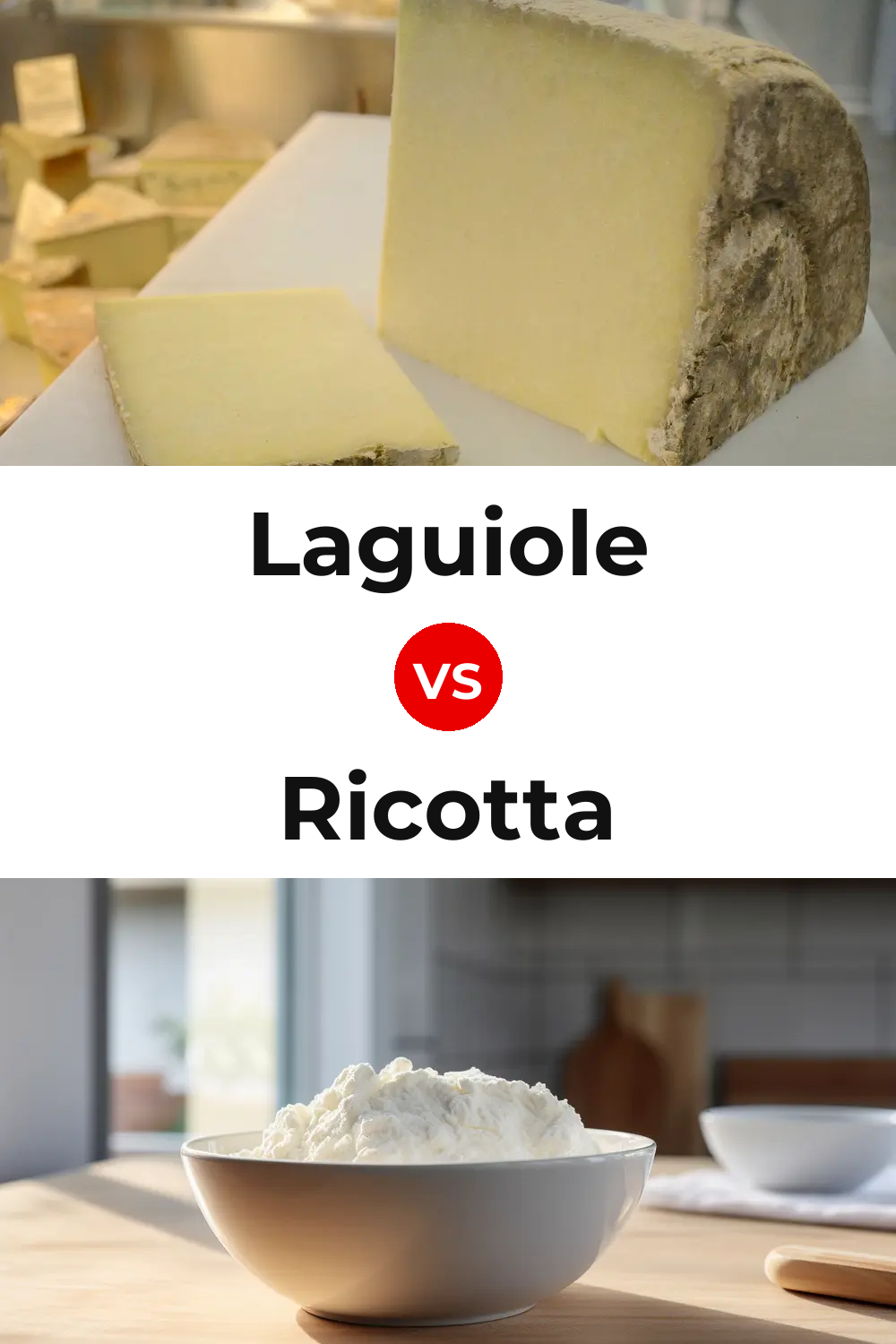
Laguiole Cheese is a firm and supple cow-milk cheese from France, while Ricotta Cheese is soft, moist and made from cow, goat, sheep, or buffalo milk, originating in Italy.
What Is Laguiole Cheese?
Laguiole is a semi-hard cheese from the Aubrac region in the Massif Central of France. It is traditionally made from the raw milk of Aubrac and Salers cows. This cheese has a smooth texture and a complex flavor profile, with nutty and floral notes. Laguiole is often used in French cuisine, especially for melting in dishes such as aligot.
What Is Ricotta Cheese?
Ricotta is a soft Italian cheese made from the whey left over from the production of other cheeses, primarily sheep, cow, goat, or buffalo milk. It has a creamy texture and a mild, sweet flavor, making it versatile for both savory dishes, like lasagna and ravioli, and sweet dishes, such as cheesecakes and cannoli.
What's the Difference Between Laguiole Cheese and Ricotta Cheese?
- Origin: Laguiole Cheese (France), Ricotta Cheese (Italy)
- Milk type: Laguiole Cheese (cow's milk), Ricotta Cheese (cow's, goat's, sheep's or water buffalo's milk)
- Milk treatment: Laguiole Cheese (unpasteurized), Ricotta Cheese (Whey)
- Texture: Laguiole Cheese (Firm and supple), Ricotta Cheese (Soft, moist)
- Rind: Laguiole Cheese (Dry whitish to light gray, aging to amber-brown to granite gray), Ricotta Cheese (None)
- Aging: Laguiole Cheese (4-10+ months), Ricotta Cheese (Fresh)
- Taste: Laguiole Cheese (Medium to intense), Ricotta Cheese (Sweet, slightly creamy)
Side-by-Side Comparison
| Laguiole Cheese | Ricotta Cheese | |
|---|---|---|
| Country of Origin | France | Italy |
| Specific Origin | Aveyron Department | — |
| Milk Type | Cow's milk | Cow's, goat's, sheep's or water buffalo's milk |
| Milk Treatment | Unpasteurized | Whey |
| Texture | Firm and supple | Soft, moist |
| Rind | Dry whitish to light gray, aging to amber-brown to granite gray | None |
| Aging | 4-10+ months | Fresh |
| Taste | Medium to intense | Sweet, slightly creamy |
Pairing Comparison
What works with each cheese — wines, foods, breads, and more.
| Laguiole Cheese | Ricotta Cheese | |
|---|---|---|
| Best Pairings | — | Fruit Compote, Pumpkin |
| Other Good Pairings | — | Albariño, Apricot, Asti Spumante, Bresaola, Honey, Honeycomb, Kiwi, Mangoes, Pesto, Raspberry, Roasted Vegetables, Strawberries |
Which would you pick?
One click, anonymous — see what others chose.
Where to buy Laguiole Cheese and Ricotta Cheese
Laguiole Cheese
Ricotta Cheese
Taste Comparison: Does Laguiole Cheese Taste Like Ricotta Cheese?
Laguiole Cheese reads as medium to intense, while Ricotta Cheese brings sweet, slightly creamy character. On the nose, Laguiole Cheese offers milky and fresh grass, dried meat, contrasted with Ricotta Cheese's mild. More specifically, Laguiole Cheese shows dry whitish to light gray rind transitioning to amber-brown to granite gray as aged. the body is ivory to straw yellow. flavor ranges from milky and fresh grass to nuts, with a lactic flavor varying by age. consumed as a table cheese, in salads, or for cooking. noted for use in aligot de l’aubrac., while Ricotta Cheese leans toward depending on milk source. Aging plays into this as well. Laguiole Cheese at 4-10+ months develops a different profile than Ricotta Cheese at fresh.
Can You Substitute Laguiole Cheese for Ricotta Cheese?
Laguiole Cheese can stand in for Ricotta Cheese in many dishes, but the switch will shift the overall character of the recipe. Expect firm and supple bite and body where the recipe calls for soft, moist. Flavor-wise, Laguiole Cheese reads as medium to intense while Ricotta Cheese brings sweet, slightly creamy notes.
Which Is Better, Laguiole Cheese or Ricotta Cheese?
There's no single winner. It depends on your recipe and the profile you want. If you want a firm and supple cheese, go with Laguiole Cheese. For a soft, moist profile, Ricotta Cheese is the better fit. Flavor-wise, Laguiole Cheese suits recipes that want medium to intense notes, while Ricotta Cheese fits dishes calling for sweet, slightly creamy.
Frequently Asked Questions
Is Laguiole Cheese the same as Ricotta Cheese?
No, they're distinct cheeses. Laguiole Cheese originates in France, while Ricotta Cheese comes from Italy. Laguiole Cheese is made from cow milk; Ricotta Cheese uses cow, goat, sheep, or buffalo. Aging also differs: Laguiole Cheese is typically aged 4-10+ months, Ricotta Cheese fresh.
Is Laguiole Cheese similar to Ricotta Cheese?
Not closely. They use different milk bases and have distinct profiles.
Can I substitute Laguiole Cheese for Ricotta Cheese?
You can, but expect a shift in richness and milk character.
Does Laguiole Cheese taste like Ricotta Cheese?
Laguiole Cheese reads as medium to intense, while Ricotta Cheese is sweet, slightly creamy. Aromas also diverge. Laguiole Cheese leans milky and fresh grass, dried meat, and Ricotta Cheese is closer to mild.
What is Laguiole Cheese made of?
Laguiole Cheese is made from cow milk (unpasteurized). It's typically aged 4-10+ months. It originates in France.
What is Ricotta Cheese made of?
Ricotta Cheese is made from cow, goat, sheep, or buffalo milk (whey), using animal or microbial rennet. It's typically aged fresh. It originates in Italy.
Which should I choose, Laguiole Cheese or Ricotta Cheese?
It depends on the dish. The texture difference is the biggest practical tell. Laguiole Cheese is firm and supple, while Ricotta Cheese is soft, moist.
See full profiles: Laguiole Cheese and Ricotta Cheese.