Gouda Cheese vs Paneer Cheese
Gouda Cheese
Paneer Cheese
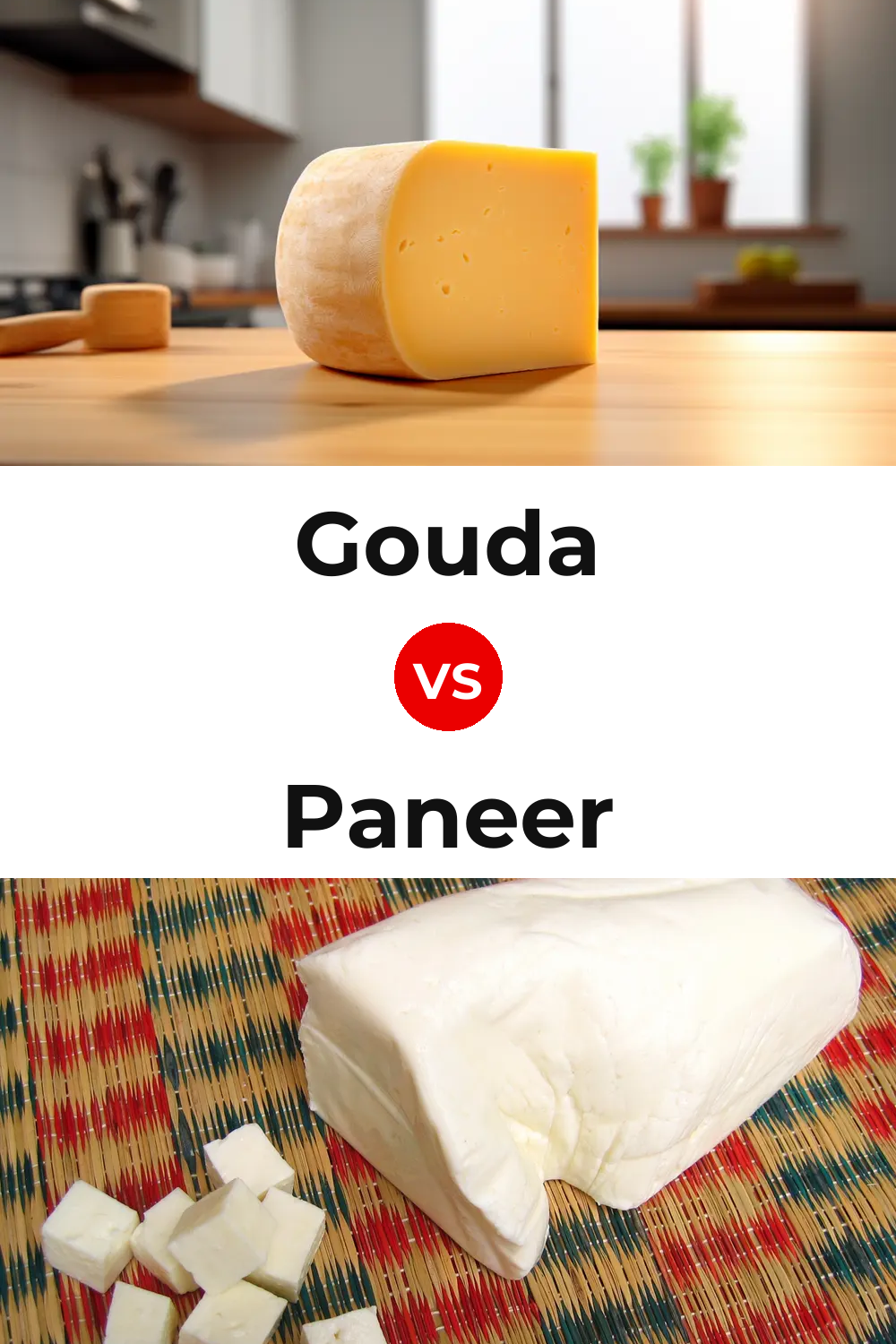
Gouda Cheese is a cow, goat, or sheep-milk cheese from Netherlands, while Paneer Cheese is semisoft, crumbly and made from cow or buffalo milk, originating in Bangladesh and India.
What Is Gouda Cheese?
Gouda is a famous Dutch cheese named after the city of Gouda in the Netherlands. It is typically made from cow's milk and aged to develop a rich, caramel-like sweetness with a smooth, firm texture. Young Gouda is mild and creamy, while aged Gouda becomes hard and crumbly with intense flavors.
What Is Paneer Cheese?
Paneer is a fresh, unaged cheese common in Indian and Pakistani cuisine. Made from cow or buffalo milk, it has a mild flavor and a dense, crumbly texture that holds its shape when cooked. Paneer doesn't melt, making it ideal for dishes like saag paneer, paneer tikka, and various curries where it absorbs flavors beautifully.
What's the Difference Between Gouda Cheese and Paneer Cheese?
- Origin: Gouda Cheese (Netherlands), Paneer Cheese (Bangladesh and India)
- Milk type: Gouda Cheese (cow's, goat's or sheep's milk), Paneer Cheese (cow's or water buffalo's milk)
- Milk treatment: Gouda Cheese (pasteurized or unpasteurized), Paneer Cheese (pasteurized)
- Rind: Gouda Cheese (Durable), Paneer Cheese (rindless)
- Taste: Gouda Cheese (Sweet to nutty), Paneer Cheese (Mild, slightly milky)
Side-by-Side Comparison
| Gouda Cheese | Paneer Cheese | |
|---|---|---|
| Country of Origin | Netherlands | Bangladesh And India |
| Specific Origin | Southern Holland | Northern India, Pakistan |
| Milk Type | Cow's, goat's or sheep's milk | Cow's or water buffalo's milk |
| Milk Treatment | Pasteurized or unpasteurized | Pasteurized |
| Texture | — | Semisoft, crumbly |
| Rind | Durable | Rindless |
| Aging | — | Fresh |
| Taste | Sweet to nutty | Mild, slightly milky |
Which would you pick?
One click, anonymous — see what others chose.
Where to buy Gouda Cheese and Paneer Cheese
Gouda Cheese
Paneer Cheese
Taste Comparison: Does Gouda Cheese Taste Like Paneer Cheese?
Gouda Cheese reads as sweet to nutty, while Paneer Cheese brings mild, slightly milky character. More specifically, Gouda Cheese shows young: mellow, fruity, sweet. aged: nutty, herbaceous, notes of chocolate, brazil nut, butterscotch., while Paneer Cheese leans toward absorbs flavors of the sauce it is cooked in.
Can You Substitute Gouda Cheese for Paneer Cheese?
Gouda Cheese can stand in for Paneer Cheese in many dishes, but the switch will shift the overall character of the recipe. Flavor-wise, Gouda Cheese reads as sweet to nutty while Paneer Cheese brings mild, slightly milky notes.
Which Is Better, Gouda Cheese or Paneer Cheese?
There's no single winner. It depends on your recipe and the profile you want. Flavor-wise, Gouda Cheese suits recipes that want sweet to nutty notes, while Paneer Cheese fits dishes calling for mild, slightly milky.
Frequently Asked Questions
Is Gouda Cheese the same as Paneer Cheese?
No, they're distinct cheeses. Gouda Cheese originates in Netherlands, while Paneer Cheese comes from Bangladesh and India. Gouda Cheese is made from cow, goat, or sheep milk; Paneer Cheese uses cow or buffalo.
Is Gouda Cheese similar to Paneer Cheese?
Not closely. They use different milk bases and have distinct profiles.
Can I substitute Gouda Cheese for Paneer Cheese?
You can, but expect a shift in richness and milk character.
Does Gouda Cheese taste like Paneer Cheese?
Gouda Cheese reads as sweet to nutty, while Paneer Cheese is mild, slightly milky.
What is Gouda Cheese made of?
Gouda Cheese is made from cow, goat, or sheep milk (pasteurized or unpasteurized). It originates in Netherlands.
What is Paneer Cheese made of?
Paneer Cheese is made from cow or buffalo milk (pasteurized), using vinegar, lemon juice, yogurt, or buttermilk rennet. It's typically aged fresh. It originates in Bangladesh and India.
Which should I choose, Gouda Cheese or Paneer Cheese?
It depends on the dish. The table above is the fastest way to decide based on your recipe.
See full profiles: Gouda Cheese and Paneer Cheese.