Pont-l'Évêque Cheese vs Roquefort Cheese
Pont-l'Évêque Cheese
Roquefort Cheese
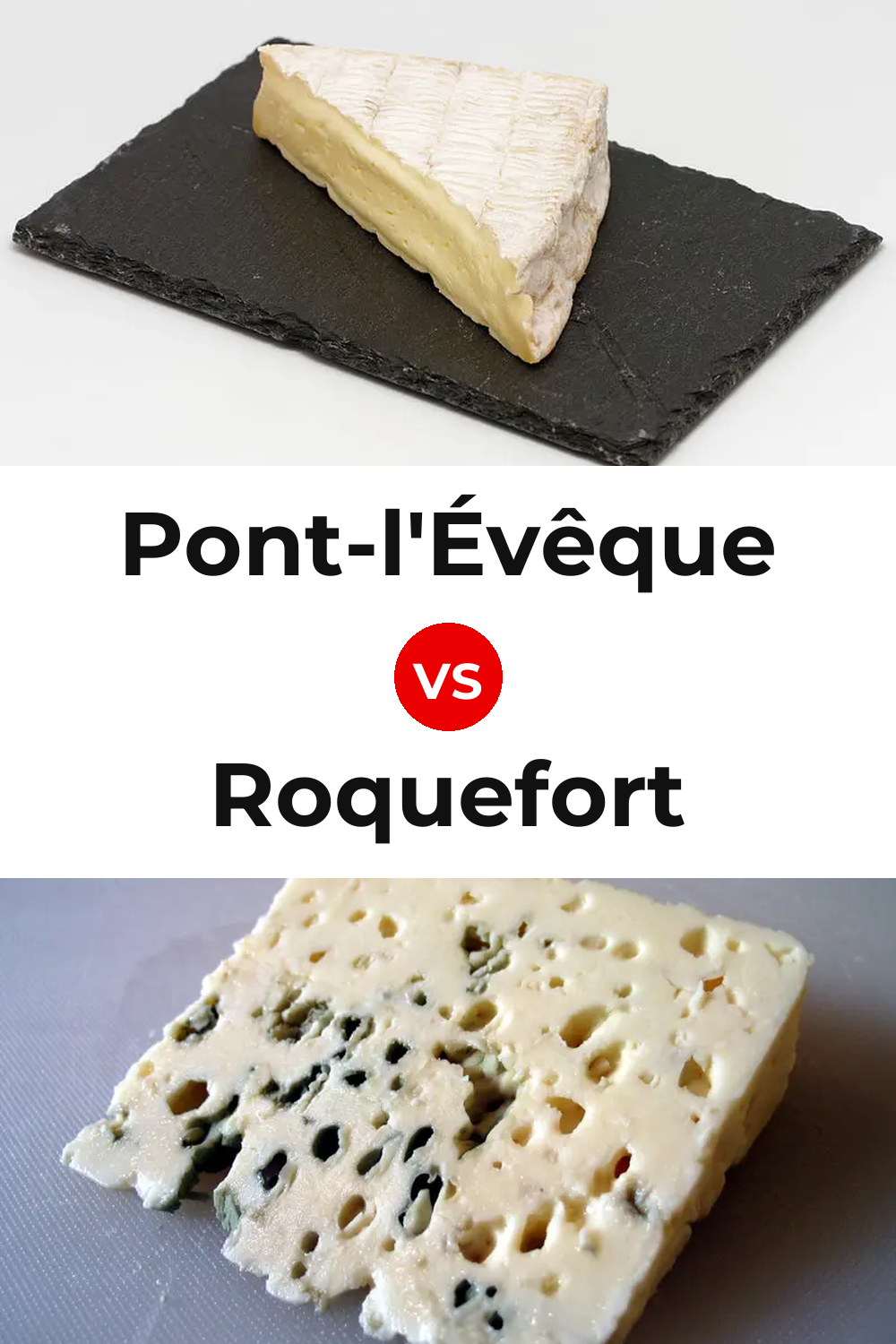
Pont-l'Évêque Cheese is a soft to semi-hard cow-milk cheese from France, while Roquefort Cheese is moist, very creamy and made from sheep milk, originating in France.
What Is Pont-l'Évêque Cheese?
Pont-l'Évêque is a square, washed-rind cow's milk cheese from Normandy and probably the oldest Norman cheese still in production. The pale yellow paste is soft and creamy with a pungent aroma, and the cheese ranks with Brie, Camembert and Roquefort among France's most popular.
What Is Roquefort Cheese?
Roquefort is a blue cheese made from raw Lacaune sheep's milk in southern France. Only cheese ripened in the natural Combalou caves of Roquefort-sur-Soulzon may carry the name. It is tangy and creamy, with no rind and a sharp bite from the blue veins.
What's the Difference Between Pont-l'Évêque Cheese and Roquefort Cheese?
- Milk type: Pont-l'Évêque Cheese (Cow's Milk), Roquefort Cheese (sheep's milk)
- Milk treatment: Pont-l'Évêque Cheese (Raw or Thermal Treatments), Roquefort Cheese (unpasteurized)
- Texture: Pont-l'Évêque Cheese (Soft to Semi-hard), Roquefort Cheese (Moist, very creamy)
- Rind: Pont-l'Évêque Cheese (Mix of white and reddish-orange), Roquefort Cheese (none)
- Aging: Pont-l'Évêque Cheese (18+ days), Roquefort Cheese (Minimum of 90 days, average of 5 months)
- Taste: Pont-l'Évêque Cheese (Mild: herbaceous, milky, and creamy), Roquefort Cheese (Mild to strong)
Side-by-Side Comparison
| Pont-l'Évêque Cheese | Roquefort Cheese | |
|---|---|---|
| Country of Origin | France | France |
| Specific Origin | Normandy, Manche, Calvados, Orne, Western Eure | Roquefort-Sur-Soulzon, South Of France |
| Milk Type | Cow's Milk | Sheep's milk |
| Milk Treatment | Raw or Thermal Treatments | Unpasteurized |
| Texture | Soft to Semi-hard | Moist, very creamy |
| Rind | Mix of white and reddish-orange | None |
| Aging | 18+ days | Minimum of 90 days, average of 5 months |
| Taste | Mild: herbaceous, milky, and creamy | Mild to strong |
Taste Comparison: Does Pont-l'Évêque Cheese Taste Like Roquefort Cheese?
Pont-l'Évêque Cheese reads as mild: herbaceous, milky, and creamy, while Roquefort Cheese brings mild to strong character. On the nose, Pont-l'Évêque Cheese offers barnyardy, fungal, and perhaps a little smoky, contrasted with Roquefort Cheese's sweet. More specifically, Pont-l'Évêque Cheese shows sweet and acid, fresh and pleasant taste, while Roquefort Cheese leans toward buttercream smooth to salty and sharp. Aging plays into this as well. Pont-l'Évêque Cheese at 18+ days develops a different profile than Roquefort Cheese at minimum of 90 days, average of 5 months.
Can You Substitute Pont-l'Évêque Cheese for Roquefort Cheese?
Pont-l'Évêque Cheese can stand in for Roquefort Cheese in many dishes, but the switch will shift the overall character of the recipe. Expect soft to semi-hard bite and body where the recipe calls for moist, very creamy. Flavor-wise, Pont-l'Évêque Cheese reads as mild: herbaceous, milky, and creamy while Roquefort Cheese brings mild to strong notes.
Which Is Better, Pont-l'Évêque Cheese or Roquefort Cheese?
There's no single winner. It depends on your recipe and the profile you want. If you want a soft to semi-hard cheese, go with Pont-l'Évêque Cheese. For a moist, very creamy profile, Roquefort Cheese is the better fit. Flavor-wise, Pont-l'Évêque Cheese suits recipes that want mild: herbaceous, milky, and creamy notes, while Roquefort Cheese fits dishes calling for mild to strong.
Which is your favorite?
One click, anonymous. See what others chose.
Frequently Asked Questions
Is Pont-l'Évêque Cheese the same as Roquefort Cheese?
No, they're distinct cheeses. Pont-l'Évêque Cheese is made from cow milk; Roquefort Cheese uses sheep. Aging also differs: Pont-l'Évêque Cheese is typically aged 18+ days, Roquefort Cheese minimum of 90 days, average of 5 months.
Is Pont-l'Évêque Cheese similar to Roquefort Cheese?
Not closely. They use different milk bases and have distinct profiles.
Can I substitute Pont-l'Évêque Cheese for Roquefort Cheese?
You can, but expect a shift in richness and milk character.
Does Pont-l'Évêque Cheese taste like Roquefort Cheese?
Pont-l'Évêque Cheese reads as mild: herbaceous, milky, and creamy, while Roquefort Cheese is mild to strong. Aromas also diverge. Pont-l'Évêque Cheese leans barnyardy, fungal, and perhaps a little smoky, and Roquefort Cheese is closer to sweet.
What is Pont-l'Évêque Cheese made of?
Pont-l'Évêque Cheese is made from cow milk (raw or thermal treatments), using lamb or kid rennet. It's typically aged 18+ days. It originates in France.
What is Roquefort Cheese made of?
Roquefort Cheese is made from sheep milk (unpasteurized), using animal rennet. It's typically aged minimum of 90 days, average of 5 months. It originates in France.
Which should I choose, Pont-l'Évêque Cheese or Roquefort Cheese?
It depends on the dish. The texture difference is the biggest practical tell. Pont-l'Évêque Cheese is soft to semi-hard, while Roquefort Cheese is moist, very creamy.