Queso Los Beyos vs Romano Cheese
Queso Los Beyos
Romano Cheese
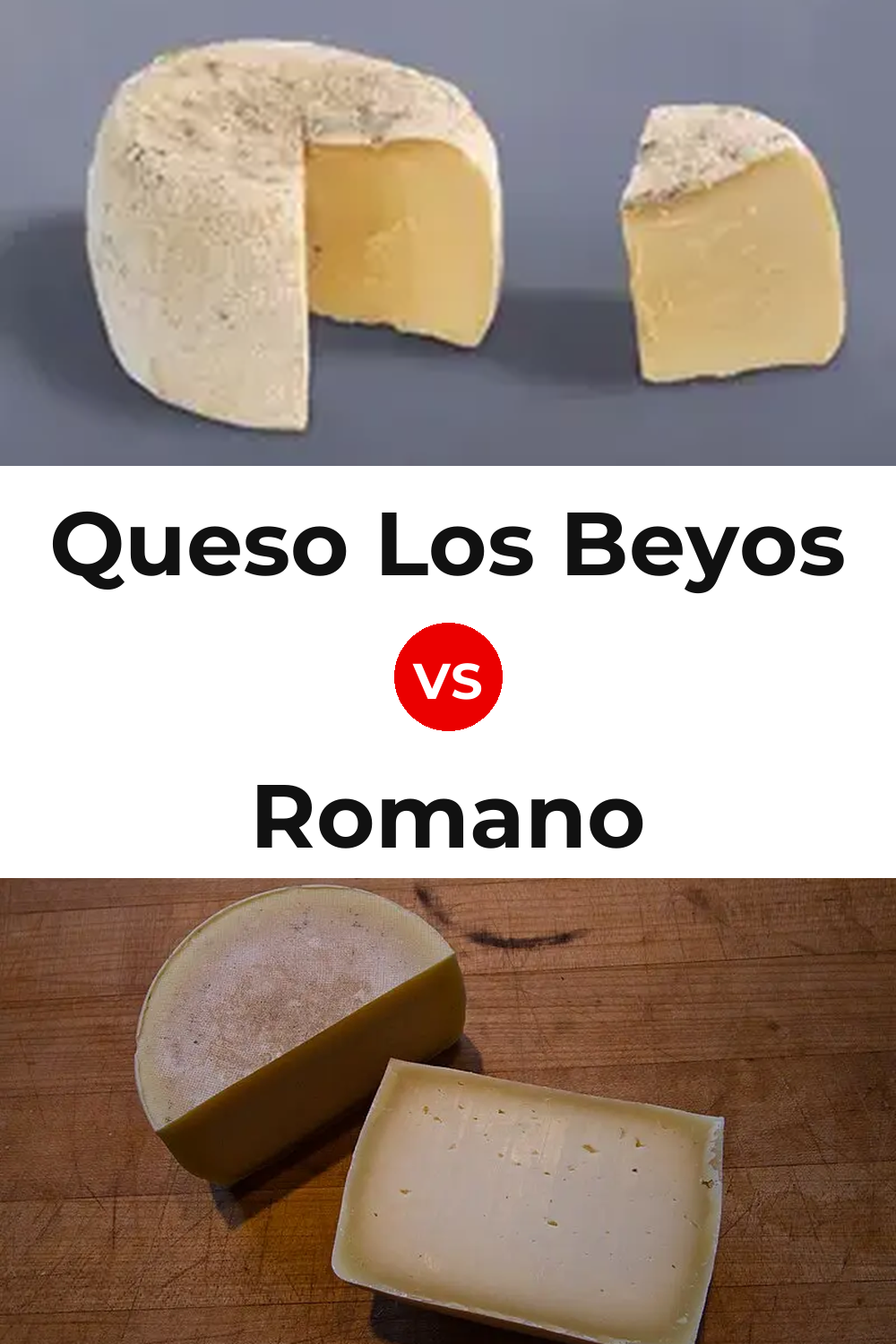
Queso Los Beyos is a hard to semi-hard, closed, friable, crumbly, minimal elasticity cow, goat, or sheep-milk cheese, while Romano Cheese is hard and made from cow, goat, or sheep milk, originating in Italy.
What Is Queso Los Beyos?
Queso Los Beyos is a traditional cheese from northern Spain, produced in the municipalities of Oseja de Sajambre (Castile-Leon) and Ponga and Amieva (Asturias). It is made from raw or pasteurized cow’s, sheep’s, or goat’s milk, but the milk types are never mixed. The cheese has a cylindrical shape with a height of 3–9 cm and a diameter of 7–11 cm, weighing between 250 and 500 grams. It has a thin, coarse rind that varies in color from creamy yellow to pale yellow or light brown, depending on the milk source. The paste is hard to semi-hard, closed, friable, and crumbly, with no fermentation holes. Its flavor is mild in cow’s milk cheese but more intense in sheep’s and goat’s milk versions, with a slightly salty and lightly acidic taste. Queso Los Beyos is matured for at least 15 days, or 60 days if made from raw milk, and is a well-known cheese in the region, historically linked to the Los Beyos gorge.
What Is Romano Cheese?
Romano, also known as Pecorino Romano, is a hard, salty Italian cheese made from sheep's milk, originally from the region around Rome. It is known for its sharp, piquant flavor and is most often used grated over pasta dishes, soups, and salads.
What's the Difference Between Queso Los Beyos and Romano Cheese?
- Milk treatment: Queso Los Beyos (Raw or pasteurized), Romano Cheese (pasteurized or unpasteurized)
- Texture: Queso Los Beyos (Hard to semi-hard, closed, friable, crumbly, minimal elasticity), Romano Cheese (hard)
- Rind: Queso Los Beyos (Thin, coarse, creamy yellow to light brown), Romano Cheese (natural)
- Taste: Queso Los Beyos (Mild (cow’s milk), more intense (sheep’s and goat’s milk)), Romano Cheese (mild, sharp, tangy)
Side-by-Side Comparison
| Queso Los Beyos | Romano Cheese | |
|---|---|---|
| Country of Origin | — | Italy |
| Specific Origin | Oseja De Sajambre (Castile-Leon), Ponga, And Amieva (Asturias) | — |
| Milk Type | Cow’s, sheep’s, or goat’s milk (never mixed) | Cow's, goat's or sheep's milk |
| Milk Treatment | Raw or pasteurized | Pasteurized or unpasteurized |
| Texture | Hard to semi-hard, closed, friable, crumbly, minimal elasticity | Hard |
| Rind | Thin, coarse, creamy yellow to light brown | Natural |
| Aging | Minimum 15 days, or 60 days if made from raw milk | — |
| Taste | Mild (cow’s milk), more intense (sheep’s and goat’s milk) | Mild, sharp, tangy |
Taste Comparison: Does Queso Los Beyos Taste Like Romano Cheese?
Queso Los Beyos reads as mild (cow’s milk), more intense (sheep’s and goat’s milk), while Romano Cheese brings mild, sharp, tangy character. On the nose, Queso Los Beyos offers mild in cow’s milk cheese, stronger in sheep’s and goat’s cheese, contrasted with Romano Cheese's strong.
Can You Substitute Queso Los Beyos for Romano Cheese?
In most recipes, Queso Los Beyos and Romano Cheese can be swapped with reasonable results. Both are cow, goat, or sheep-milk cheeses, so the base character carries over. Expect hard to semi-hard, closed, friable, crumbly, minimal elasticity bite and body where the recipe calls for hard. Flavor-wise, Queso Los Beyos reads as mild (cow’s milk), more intense (sheep’s and goat’s milk) while Romano Cheese brings mild, sharp, tangy notes.
Which Is Better, Queso Los Beyos or Romano Cheese?
There's no single winner. It depends on your recipe and the profile you want. If you want a hard to semi-hard, closed, friable, crumbly, minimal elasticity cheese, go with Queso Los Beyos. For a hard profile, Romano Cheese is the better fit. Flavor-wise, Queso Los Beyos suits recipes that want mild (cow’s milk), more intense (sheep’s and goat’s milk) notes, while Romano Cheese fits dishes calling for mild, sharp, tangy.
Which is your favorite?
One click, anonymous. See what others chose.
Frequently Asked Questions
Is Queso Los Beyos the same as Romano Cheese?
No, they're distinct cheeses.
Is Queso Los Beyos similar to Romano Cheese?
Somewhat. They share a cow, goat, or sheep-milk base but diverge in texture and flavor.
Can I substitute Queso Los Beyos for Romano Cheese?
You can, but expect a shift in bite and mouthfeel.
Does Queso Los Beyos taste like Romano Cheese?
Queso Los Beyos reads as mild (cow’s milk), more intense (sheep’s and goat’s milk), while Romano Cheese is mild, sharp, tangy. Aromas also diverge. Queso Los Beyos leans mild in cow’s milk cheese, stronger in sheep’s and goat’s cheese, and Romano Cheese is closer to strong.
What is Queso Los Beyos made of?
Queso Los Beyos is made from cow, goat, or sheep milk (raw or pasteurized), using animal rennet. It's typically aged minimum 15 days, or 60 days if made from raw milk.
What is Romano Cheese made of?
Romano Cheese is made from cow, goat, or sheep milk (pasteurized or unpasteurized). It originates in Italy.
Which should I choose, Queso Los Beyos or Romano Cheese?
It depends on the dish. The texture difference is the biggest practical tell. Queso Los Beyos is hard to semi-hard, closed, friable, crumbly, minimal elasticity, while Romano Cheese is hard.