
Queijo Serra da Estrela vs Stilton Cheese
Queijo Serra da Estrela
Stilton Cheese
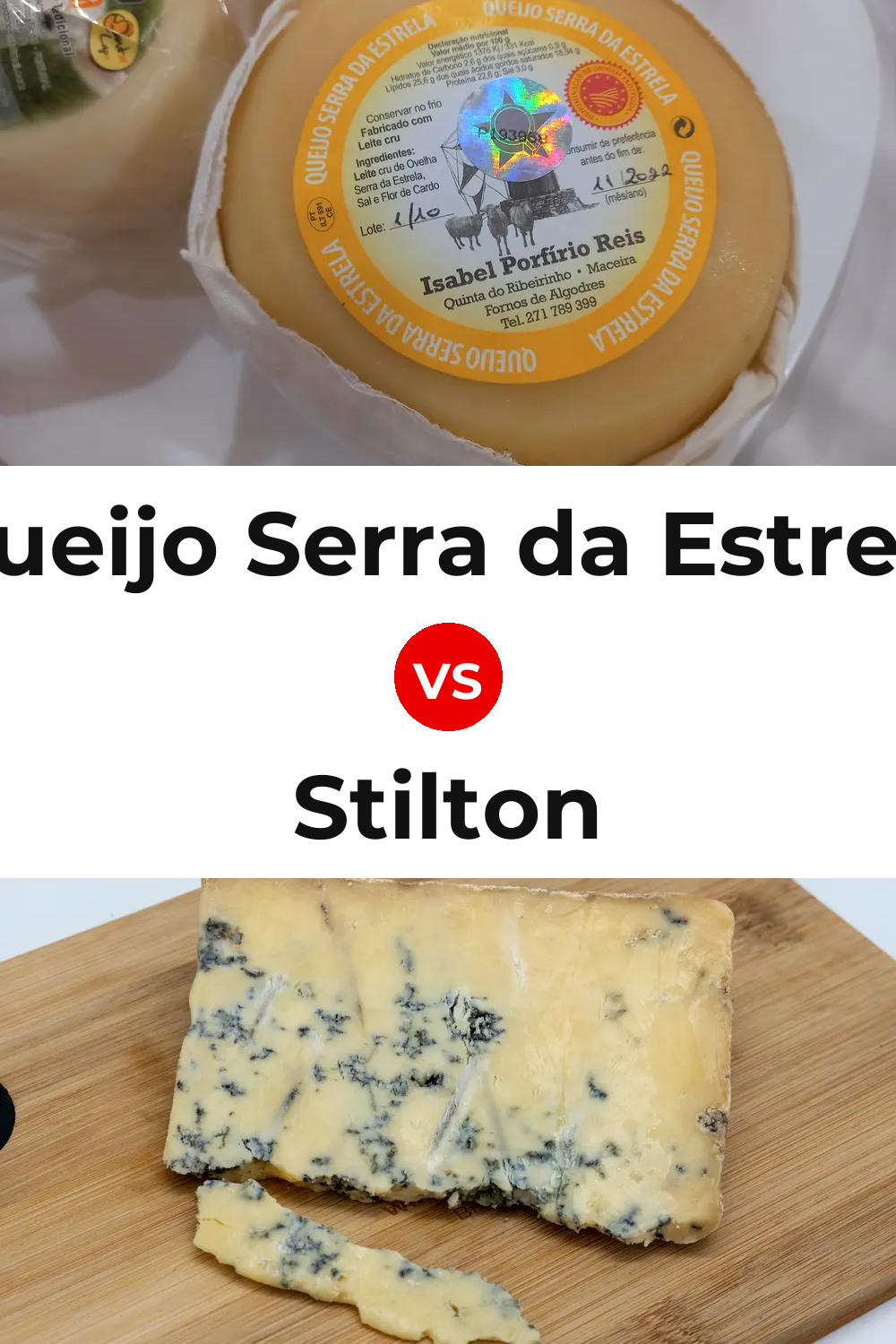
Queijo Serra da Estrela is a closed, slightly buttery, creamy and smooth (standard); closed or with some eyes, slightly dry crumbly body (velho) sheep-milk cheese from Portugal, while Stilton Cheese is hard, blue-veined and made from cow milk, originating in England.
Buy Queijo Serra da Estrela
Buy Stilton Cheese
What Is Queijo Serra da Estrela?
Serra da Estrela is a sheep's milk cheese from the mountains of central Portugal, protected as a PDO in the European Union and the UK. It is coagulated with thistle instead of rennet, and its paste runs from nearly semi-liquid when young to solid but sliceable with age.
What Is Stilton Cheese?
Stilton is an English cheese made in Derbyshire, Leicestershire and Nottinghamshire, in a blue version and a white one. The blue kind gets its veins from Penicillium roqueforti. Both hold PDO status, so no cheese made elsewhere can use the name.
What's the Difference Between Queijo Serra da Estrela and Stilton Cheese?
- Origin: Queijo Serra da Estrela (Portugal), Stilton Cheese (England)
- Milk type: Queijo Serra da Estrela (Sheep), Stilton Cheese (cow's milk)
- Milk treatment: Queijo Serra da Estrela (Raw), Stilton Cheese (pasteurized)
- Texture: Queijo Serra da Estrela (Closed, slightly buttery, creamy and smooth (standard); closed or with some eyes, slightly dry crumbly body (Velho)), Stilton Cheese (hard, blue-veined)
- Rind: Queijo Serra da Estrela (Smooth and semi-soft (standard), smooth to slightly wrinkled and hard to extra hard (Velho)), Stilton Cheese (natural)
- Aging: Queijo Serra da Estrela (Minimum 30 days; 120 days for "Velho"), Stilton Cheese (9 to 12 weeks)
- Taste: Queijo Serra da Estrela (Smooth, clean, and slightly acidic (standard); pleasant, lingering, clean, strong to slightly strong and slightly spicy/salty (Velho)), Stilton Cheese (spicy, strong)
Side-by-Side Comparison
| Queijo Serra da Estrela | Stilton Cheese | |
|---|---|---|
| Country of Origin | Portugal | England |
| Specific Origin | Beira Uplands, Including Municipalities Such As Carregal Do Sal, Celorico Da Beira, And Others. | Nottinghamshire, Leicestershire, Derbyshire |
| Milk Type | Sheep | Cow's milk |
| Milk Treatment | Raw | Pasteurized |
| Texture | Closed, slightly buttery, creamy and smooth (standard); closed or with some eyes, slightly dry crumbly body (Velho) | Hard, blue-veined |
| Rind | Smooth and semi-soft (standard), smooth to slightly wrinkled and hard to extra hard (Velho) | Natural |
| Aging | Minimum 30 days; 120 days for "Velho" | 9 to 12 weeks |
| Taste | Smooth, clean, and slightly acidic (standard); pleasant, lingering, clean, strong to slightly strong and slightly spicy/salty (Velho) | Spicy, strong |
Taste Comparison: Does Queijo Serra da Estrela Taste Like Stilton Cheese?
Queijo Serra da Estrela reads as smooth, clean, and slightly acidic (standard); pleasant, lingering, clean, strong to slightly strong and slightly spicy/salty (velho), while Stilton Cheese brings spicy, strong character. Aging plays into this as well. Queijo Serra da Estrela at minimum 30 days; 120 days for "velho" develops a different profile than Stilton Cheese at 9 to 12 weeks.
Can You Substitute Queijo Serra da Estrela for Stilton Cheese?
Queijo Serra da Estrela can stand in for Stilton Cheese in many dishes, but the switch will shift the overall character of the recipe. Expect closed, slightly buttery, creamy and smooth (standard); closed or with some eyes, slightly dry crumbly body (velho) bite and body where the recipe calls for hard, blue-veined. Flavor-wise, Queijo Serra da Estrela reads as smooth, clean, and slightly acidic (standard); pleasant, lingering, clean, strong to slightly strong and slightly spicy/salty (velho) while Stilton Cheese brings spicy, strong notes.
Which Is Better, Queijo Serra da Estrela or Stilton Cheese?
There's no single winner. It depends on your recipe and the profile you want. If you want a closed, slightly buttery, creamy and smooth (standard); closed or with some eyes, slightly dry crumbly body (velho) cheese, go with Queijo Serra da Estrela. For a hard, blue-veined profile, Stilton Cheese is the better fit. Flavor-wise, Queijo Serra da Estrela suits recipes that want smooth, clean, and slightly acidic (standard); pleasant, lingering, clean, strong to slightly strong and slightly spicy/salty (velho) notes, while Stilton Cheese fits dishes calling for spicy, strong.
Which is your favorite?
One click, anonymous. See what others chose.
Frequently Asked Questions
Is Queijo Serra da Estrela the same as Stilton Cheese?
No, they're distinct cheeses. Queijo Serra da Estrela originates in Portugal, while Stilton Cheese comes from England. Queijo Serra da Estrela is made from sheep milk; Stilton Cheese uses cow. Aging also differs: Queijo Serra da Estrela is typically aged minimum 30 days; 120 days for "velho", Stilton Cheese 9 to 12 weeks.
Is Queijo Serra da Estrela similar to Stilton Cheese?
Not closely. They use different milk bases and have distinct profiles.
Can I substitute Queijo Serra da Estrela for Stilton Cheese?
You can, but expect a shift in richness and milk character.
Does Queijo Serra da Estrela taste like Stilton Cheese?
Queijo Serra da Estrela reads as smooth, clean, and slightly acidic (standard); pleasant, lingering, clean, strong to slightly strong and slightly spicy/salty (velho), while Stilton Cheese is spicy, strong.
What is Queijo Serra da Estrela made of?
Queijo Serra da Estrela is made from sheep milk (raw), using cardoon flower (cynara cardunculus, l) rennet. It's typically aged minimum 30 days; 120 days for "velho". It originates in Portugal.
What is Stilton Cheese made of?
Stilton Cheese is made from cow milk (pasteurized). It's typically aged 9 to 12 weeks. It originates in England.
Which should I choose, Queijo Serra da Estrela or Stilton Cheese?
It depends on the dish. The texture difference is the biggest practical tell. Queijo Serra da Estrela is closed, slightly buttery, creamy and smooth (standard); closed or with some eyes, slightly dry crumbly body (velho), while Stilton Cheese is hard, blue-veined.