
Camembert Cheese vs Puzzone di Moena Cheese
Camembert Cheese
Puzzone di Moena Cheese
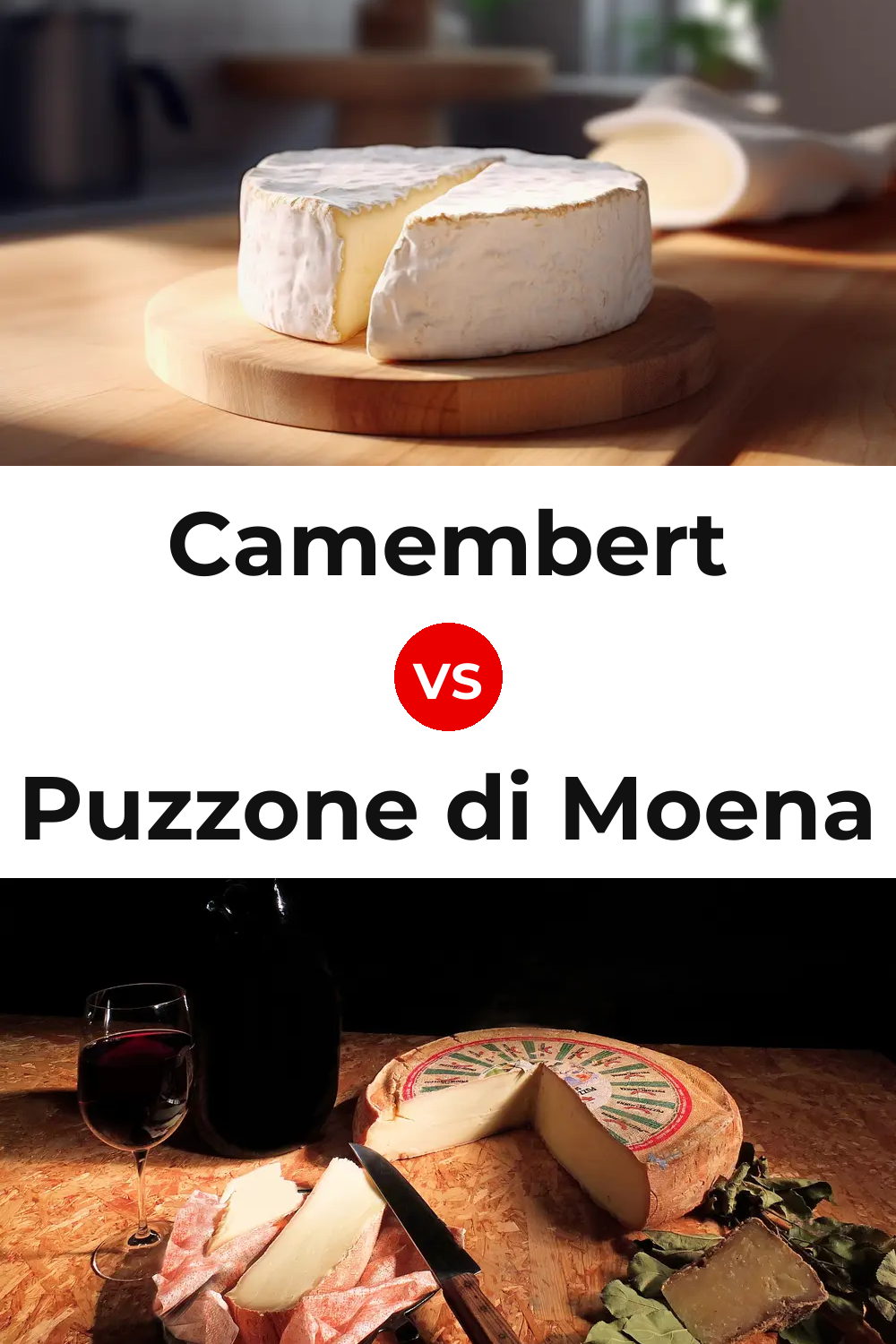
Camembert Cheese is a soft, artisan cow-milk cheese from France, while Puzzone di Moena Cheese is semi-cooked, medium-hard, elastic and made from cow milk, originating in Italy.
What Is Camembert Cheese?
Camembert is a moist, soft, surface-ripened cow's milk cheese from Normandy, first made in the late 18th century. Penicillium camemberti gives it a white bloomy rind and a creamy interior, with a taste stronger and slightly more sour than brie.
What Is Puzzone di Moena Cheese?
Puzzone di Moena is a semi-hard Italian PDO cheese made from raw cow's milk in Val di Fassa, Val di Fiemme and Valle di Primiero. Its washed rind is brick red and greasy, and the cheese is known for a penetrating odor with hints of ammonia.
What's the Difference Between Camembert Cheese and Puzzone di Moena Cheese?
- Origin: Camembert Cheese (France), Puzzone di Moena Cheese (Italy)
- Milk treatment: Camembert Cheese (unpasteurized for AOC Camembert de Normandie, pasteurized for most other versions), Puzzone di Moena Cheese (Raw, partially skimmed by natural surface skimming)
- Texture: Camembert Cheese (soft, artisan), Puzzone di Moena Cheese (Semi-cooked, medium-hard, elastic)
- Rind: Camembert Cheese (Bloomy), Puzzone di Moena Cheese (Smooth or with a few wrinkles, unctuous, yellow ochre to reddish brown)
- Aging: Camembert Cheese (minimum 3 weeks), Puzzone di Moena Cheese (Minimum 90 days, mature after 150 days)
- Taste: Camembert Cheese (slightly sour, stronger than brie), Puzzone di Moena Cheese (Strong, intense, slightly salty and/or sharp, with a barely-perceptible bitter aftertaste)
Side-by-Side Comparison
| Camembert Cheese | Puzzone di Moena Cheese | |
|---|---|---|
| Country of Origin | France | Italy |
| Specific Origin | Camembert, Normandy, Northwest France | Province Of Trento And Province Of Bolzano |
| Milk Type | Cow's milk | Cow |
| Milk Treatment | Unpasteurized for AOC Camembert de Normandie, pasteurized for most other versions | Raw, partially skimmed by natural surface skimming |
| Texture | Soft, artisan | Semi-cooked, medium-hard, elastic |
| Rind | Bloomy | Smooth or with a few wrinkles, unctuous, yellow ochre to reddish brown |
| Aging | Minimum 3 weeks | Minimum 90 days, mature after 150 days |
| Taste | Slightly sour, stronger than brie | Strong, intense, slightly salty and/or sharp, with a barely-perceptible bitter aftertaste |
Taste Comparison: Does Camembert Cheese Taste Like Puzzone di Moena Cheese?
Camembert Cheese reads as slightly sour, stronger than brie, while Puzzone di Moena Cheese brings strong, intense, slightly salty and/or sharp, with a barely-perceptible bitter aftertaste character. On the nose, Camembert Cheese offers buttery, rich, contrasted with Puzzone di Moena Cheese's strong and penetrating, with a slight hint of ammonia. More specifically, Camembert Cheese shows slightly sour, sometimes chalky, stronger than brie of the same ripening time; ammonia when overripe, while Puzzone di Moena Cheese leans toward slightly bitter aftertaste. Aging plays into this as well. Camembert Cheese at minimum 3 weeks develops a different profile than Puzzone di Moena Cheese at minimum 90 days, mature after 150 days.
Can You Substitute Camembert Cheese for Puzzone di Moena Cheese?
In most recipes, Camembert Cheese and Puzzone di Moena Cheese can be swapped with reasonable results. Both are cow-milk cheeses, so the base character carries over. Expect soft, artisan bite and body where the recipe calls for semi-cooked, medium-hard, elastic. Flavor-wise, Camembert Cheese reads as slightly sour, stronger than brie while Puzzone di Moena Cheese brings strong, intense, slightly salty and/or sharp, with a barely-perceptible bitter aftertaste notes.
Which Is Better, Camembert Cheese or Puzzone di Moena Cheese?
There's no single winner. It depends on your recipe and the profile you want. If you want a soft, artisan cheese, go with Camembert Cheese. For a semi-cooked, medium-hard, elastic profile, Puzzone di Moena Cheese is the better fit. Flavor-wise, Camembert Cheese suits recipes that want slightly sour, stronger than brie notes, while Puzzone di Moena Cheese fits dishes calling for strong, intense, slightly salty and/or sharp, with a barely-perceptible bitter aftertaste.
Which is your favorite?
One click, anonymous. See what others chose.
Frequently Asked Questions
Is Camembert Cheese the same as Puzzone di Moena Cheese?
No, they're distinct cheeses. Camembert Cheese originates in France, while Puzzone di Moena Cheese comes from Italy. Aging also differs: Camembert Cheese is typically aged minimum 3 weeks, Puzzone di Moena Cheese minimum 90 days, mature after 150 days.
Is Camembert Cheese similar to Puzzone di Moena Cheese?
Somewhat. They share a cow-milk base but diverge in texture and flavor.
Can I substitute Camembert Cheese for Puzzone di Moena Cheese?
You can, but expect a shift in bite and mouthfeel.
Does Camembert Cheese taste like Puzzone di Moena Cheese?
Camembert Cheese reads as slightly sour, stronger than brie, while Puzzone di Moena Cheese is strong, intense, slightly salty and/or sharp, with a barely-perceptible bitter aftertaste. Aromas also diverge. Camembert Cheese leans buttery, rich, and Puzzone di Moena Cheese is closer to strong and penetrating, with a slight hint of ammonia.
What is Camembert Cheese made of?
Camembert Cheese is made from cow milk (unpasteurized for aoc camembert de normandie, pasteurized for most other versions). It's typically aged minimum 3 weeks. It originates in France.
What is Puzzone di Moena Cheese made of?
Puzzone di Moena Cheese is made from cow milk (raw, partially skimmed by natural surface skimming), using bovi rennet. It's typically aged minimum 90 days, mature after 150 days. It originates in Italy.
Which should I choose, Camembert Cheese or Puzzone di Moena Cheese?
It depends on the dish. The texture difference is the biggest practical tell. Camembert Cheese is soft, artisan, while Puzzone di Moena Cheese is semi-cooked, medium-hard, elastic.