Cancoillotte Cheese vs Svecia Cheese
Cancoillotte Cheese
Svecia Cheese
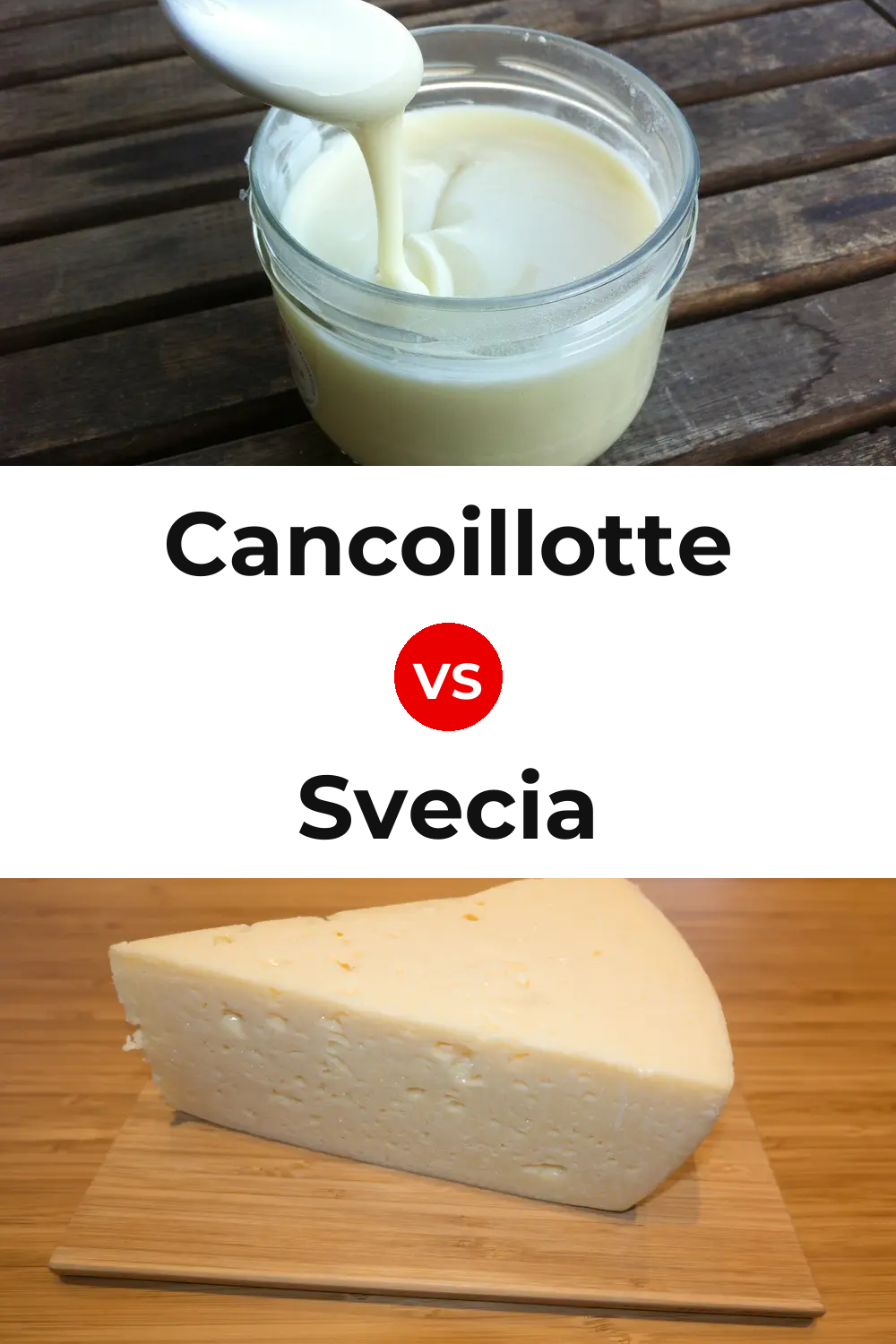
Cancoillotte Cheese is a smooth, creamy cow-milk cheese from France, while Svecia Cheese is semi-hard, creamy soft, firm, somewhat resilient, small irregular holes and made from cow milk.
What Is Cancoillotte Cheese?
Cancoillotte is made from cow's milk in the Franche-Comté region of France. This cheese is usually sold in a semi-liquid form and has a smooth, velvety texture with a mild, slightly nutty flavor. It can be enjoyed warm or cold, often melted and served with garlic or wine as flavor enhancers.
What Is Svecia Cheese?
Svecia is a semi-hard Swedish cheese with a creamy soft yet firm and somewhat resilient texture. It is cylindrical in shape, measuring about 35 cm in diameter and weighing between 12-15 kg. The cheese has a light yellow to yellow color with small irregular holes that are evenly distributed throughout. It is wax-coated and aged for a minimum of two months, developing a mildly acidic and full-bodied flavor. Produced in the low-lying areas of Sweden, Svecia has a long tradition dating back to the 13th century. It is made using Swedish Red and White Breed and Swedish Holstein Friesian milk, which maintains consistent quality throughout the seasons. The cheese is salted in brine and stored in dry conditions for aging. The topographical and climatic conditions of Sweden influence its distinct flavor and texture, making it a traditional and well-regarded cheese.
What's the Difference Between Cancoillotte Cheese and Svecia Cheese?
- Milk treatment: Cancoillotte Cheese (Skim), Svecia Cheese (Pasteurized)
- Texture: Cancoillotte Cheese (Smooth, creamy), Svecia Cheese (Semi-hard, creamy soft, firm, somewhat resilient, small irregular holes)
- Rind: Cancoillotte Cheese (None), Svecia Cheese (Wax-coated)
Side-by-Side Comparison
| Cancoillotte Cheese | Svecia Cheese | |
|---|---|---|
| Country of Origin | France | — |
| Specific Origin | Franche-Comte | Low-Lying Areas Of Sweden |
| Milk Type | Cow's milk | Cow |
| Milk Treatment | Skim | Pasteurized |
| Texture | Smooth, creamy | Semi-hard, creamy soft, firm, somewhat resilient, small irregular holes |
| Rind | None | Wax-coated |
| Aging | — | Minimum 2 months |
| Taste | — | Mildly acidic, full-bodied |
Taste Comparison: Does Cancoillotte Cheese Taste Like Svecia Cheese?
Their flavor profiles are distinct.
Can You Substitute Cancoillotte Cheese for Svecia Cheese?
In most recipes, Cancoillotte Cheese and Svecia Cheese can be swapped with reasonable results. Both are cow-milk cheeses, so the base character carries over. Expect smooth, creamy bite and body where the recipe calls for semi-hard, creamy soft, firm, somewhat resilient, small irregular holes.
Which Is Better, Cancoillotte Cheese or Svecia Cheese?
There's no single winner. It depends on your recipe and the profile you want. If you want a smooth, creamy cheese, go with Cancoillotte Cheese. For a semi-hard, creamy soft, firm, somewhat resilient, small irregular holes profile, Svecia Cheese is the better fit.
Which is your favorite?
One click, anonymous. See what others chose.
Frequently Asked Questions
Is Cancoillotte Cheese the same as Svecia Cheese?
No, they're distinct cheeses.
Is Cancoillotte Cheese similar to Svecia Cheese?
Somewhat. They share a cow-milk base but diverge in texture and flavor.
Can I substitute Cancoillotte Cheese for Svecia Cheese?
You can, but expect a shift in bite and mouthfeel.
Does Cancoillotte Cheese taste like Svecia Cheese?
They have distinct flavor profiles. The taste row in the table above is the best direct comparison.
What is Cancoillotte Cheese made of?
Cancoillotte Cheese is made from cow milk (skim), using rennet rennet. It originates in France.
What is Svecia Cheese made of?
Svecia Cheese is made from cow milk (pasteurized), using animal rennet. It's typically aged minimum 2 months.
Which should I choose, Cancoillotte Cheese or Svecia Cheese?
It depends on the dish. The texture difference is the biggest practical tell. Cancoillotte Cheese is smooth, creamy, while Svecia Cheese is semi-hard, creamy soft, firm, somewhat resilient, small irregular holes.