
Emmental Cheese vs Graddost Cheese
Emmental Cheese
Graddost Cheese
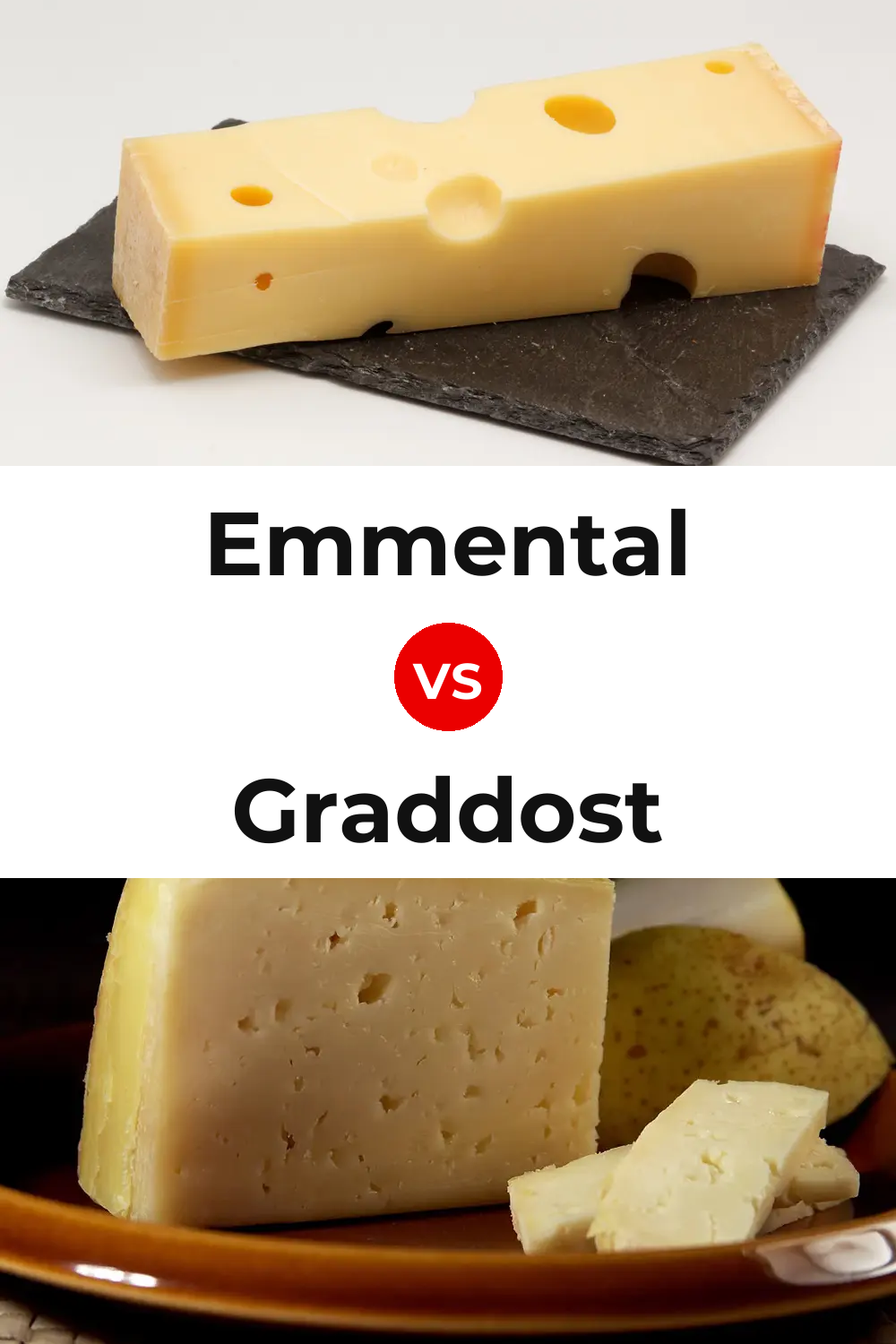
Emmental Cheese is a semi-hard cow-milk cheese from Switzerland, while Graddost Cheese is semi-hard and made from cow milk, originating in Sweden.
Buy Emmental Cheese
Buy Graddost Cheese
What Is Emmental Cheese?
Emmental is a yellow, medium-hard Swiss cheese from the Emme Valley, known for the natural holes that run through it. The taste is savoury but mild. It is eaten cold in chunks or slices and melted into dishes such as gratins.
What Is Graddost Cheese?
Gräddost is a Swedish semi-hard cow's milk cheese whose name means cream cheese. It tastes mild, creamy and slightly sour, is usually sold at 60% fat, and melts so well that Swedish pizzerias made it a standard in the 1970s.
What's the Difference Between Emmental Cheese and Graddost Cheese?
- Origin: Emmental Cheese (Switzerland), Graddost Cheese (Sweden)
- Milk treatment: Emmental Cheese (Raw), Graddost Cheese (pasteurized)
- Rind: Emmental Cheese (natural), Graddost Cheese (none, ripened in Cryovac plastic film)
- Aging: Emmental Cheese (4 months to over 1 year), Graddost Cheese (at least 4 weeks)
- Taste: Emmental Cheese (Nutty, sweet), Graddost Cheese (nutty, tangy)
Side-by-Side Comparison
| Emmental Cheese | Graddost Cheese | |
|---|---|---|
| Country of Origin | Switzerland | Sweden |
| Specific Origin | Emmental, Canton Of Bern | Sweden |
| Milk Type | Cow's milk | Cow's milk |
| Milk Treatment | Raw | Pasteurized |
| Texture | Semi-hard | Semi-hard |
| Rind | Natural | None, ripened in Cryovac plastic film |
| Aging | 4 months to over 1 year | At least 4 weeks |
| Taste | Nutty, sweet | Nutty, tangy |
Taste Comparison: Does Emmental Cheese Taste Like Graddost Cheese?
Emmental Cheese reads as nutty, sweet, while Graddost Cheese brings nutty, tangy character. More specifically, Emmental Cheese shows characterized by its holes ("eyes"), sweet and slightly rubbery, crystalline when aged, while Graddost Cheese leans toward mild, creamy and slightly sour, sometimes nutty. Aging plays into this as well. Emmental Cheese at 4 months to over 1 year develops a different profile than Graddost Cheese at at least 4 weeks.
Can You Substitute Emmental Cheese for Graddost Cheese?
In most recipes, Emmental Cheese and Graddost Cheese can be swapped with reasonable results. Both are cow-milk cheeses, so the base character carries over. Flavor-wise, Emmental Cheese reads as nutty, sweet while Graddost Cheese brings nutty, tangy notes.
Which Is Better, Emmental Cheese or Graddost Cheese?
There's no single winner. It depends on your recipe and the profile you want. Flavor-wise, Emmental Cheese suits recipes that want nutty, sweet notes, while Graddost Cheese fits dishes calling for nutty, tangy.
Which is your favorite?
One click, anonymous. See what others chose.
Frequently Asked Questions
Is Emmental Cheese the same as Graddost Cheese?
No, they're distinct cheeses. Emmental Cheese originates in Switzerland, while Graddost Cheese comes from Sweden. Aging also differs: Emmental Cheese is typically aged 4 months to over 1 year, Graddost Cheese at least 4 weeks.
Is Emmental Cheese similar to Graddost Cheese?
Yes, they share close profiles. Same milk base and similar texture make them workable alternatives in many recipes.
Can I substitute Emmental Cheese for Graddost Cheese?
Yes, quite easily. The milk base and texture are close enough that most recipes won't notice the swap.
Does Emmental Cheese taste like Graddost Cheese?
Emmental Cheese reads as nutty, sweet, while Graddost Cheese is nutty, tangy.
What is Emmental Cheese made of?
Emmental Cheese is made from cow milk (raw). It's typically aged 4 months to over 1 year. It originates in Switzerland.
What is Graddost Cheese made of?
Graddost Cheese is made from cow milk (pasteurized). It's typically aged at least 4 weeks. It originates in Sweden.
Which should I choose, Emmental Cheese or Graddost Cheese?
It depends on the dish. The table above is the fastest way to decide based on your recipe.