
Emmental Cheese vs Herrgardsost Cheese
Emmental Cheese
Herrgardsost Cheese
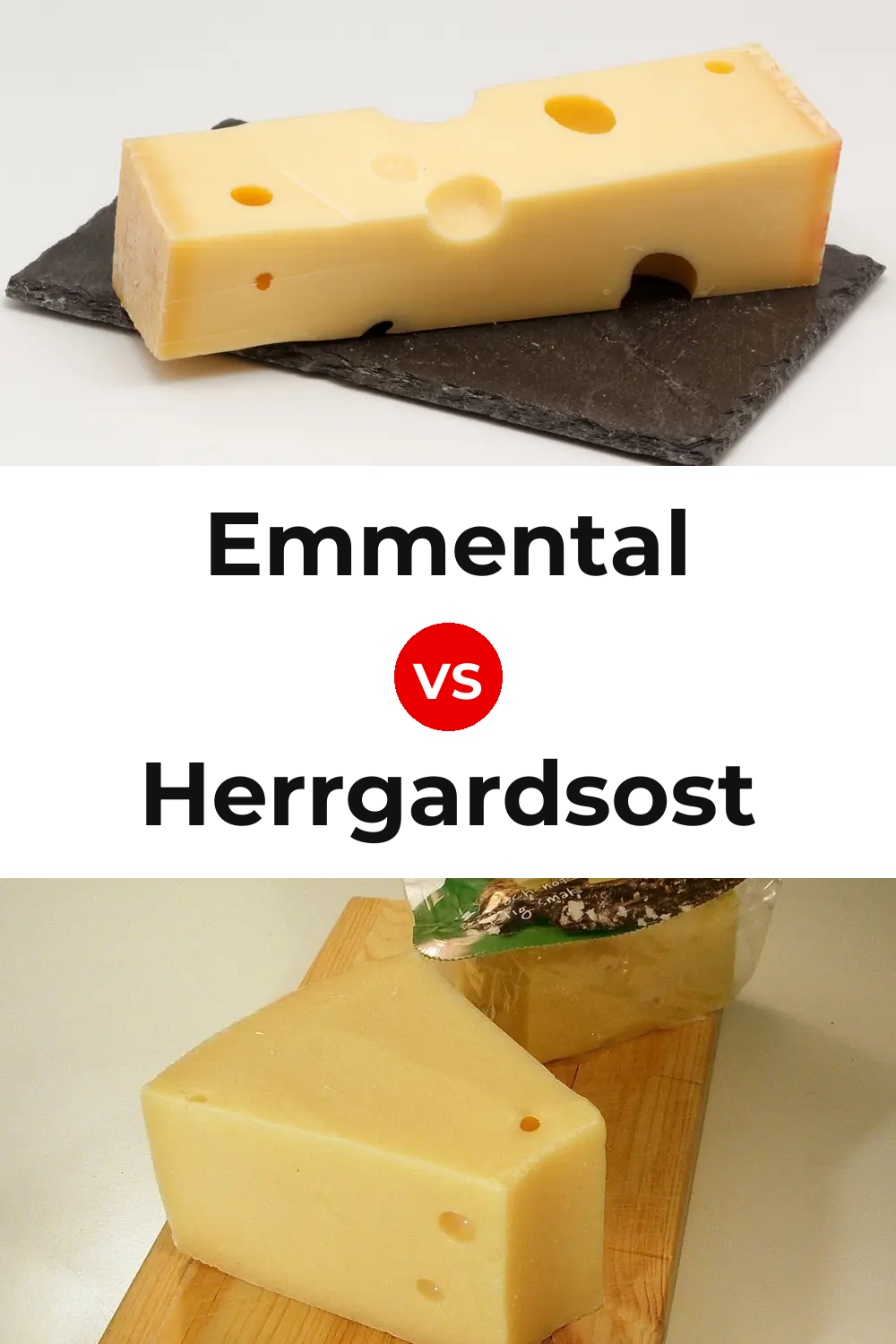
Emmental Cheese is a semi-hard cow-milk cheese from Switzerland, while Herrgardsost Cheese is semi-hard and made from cow milk, originating in Sweden.
Buy Emmental Cheese
Buy Herrgardsost Cheese
What Is Emmental Cheese?
Emmental is a yellow, medium-hard Swiss cheese from the Emme Valley, known for the natural holes that run through it. The taste is savoury but mild. It is eaten cold in chunks or slices and melted into dishes such as gratins.
What Is Herrgardsost Cheese?
Herrgardsost is a semi-hard Swedish cheese made from cow's milk, aged three months to two years. It has small round holes, a waxed surface, and a mild, nutty, creamy taste.
What's the Difference Between Emmental Cheese and Herrgardsost Cheese?
- Origin: Emmental Cheese (Switzerland), Herrgardsost Cheese (Sweden)
- Milk treatment: Emmental Cheese (Raw), Herrgardsost Cheese (pasteurized)
- Rind: Emmental Cheese (natural), Herrgardsost Cheese (waxed)
- Aging: Emmental Cheese (4 months to over 1 year), Herrgardsost Cheese (3 to 4 months, up to 2 years)
- Taste: Emmental Cheese (Nutty, sweet), Herrgardsost Cheese (mild, nutty, sweet, tangy)
Side-by-Side Comparison
| Emmental Cheese | Herrgardsost Cheese | |
|---|---|---|
| Country of Origin | Switzerland | Sweden |
| Specific Origin | Emmental, Canton Of Bern | Sweden |
| Milk Type | Cow's milk | Cow's milk |
| Milk Treatment | Raw | Pasteurized |
| Texture | Semi-hard | Semi-hard |
| Rind | Natural | Waxed |
| Aging | 4 months to over 1 year | 3 to 4 months, up to 2 years |
| Taste | Nutty, sweet | Mild, nutty, sweet, tangy |
Taste Comparison: Does Emmental Cheese Taste Like Herrgardsost Cheese?
Emmental Cheese reads as nutty, sweet, while Herrgardsost Cheese brings mild, nutty, sweet, tangy character. More specifically, Emmental Cheese shows characterized by its holes ("eyes"), sweet and slightly rubbery, crystalline when aged, while Herrgardsost Cheese leans toward mild, nutty, creamy with age. Aging plays into this as well. Emmental Cheese at 4 months to over 1 year develops a different profile than Herrgardsost Cheese at 3 to 4 months, up to 2 years.
Can You Substitute Emmental Cheese for Herrgardsost Cheese?
In most recipes, Emmental Cheese and Herrgardsost Cheese can be swapped with reasonable results. Both are cow-milk cheeses, so the base character carries over. Flavor-wise, Emmental Cheese reads as nutty, sweet while Herrgardsost Cheese brings mild, nutty, sweet, tangy notes.
Which Is Better, Emmental Cheese or Herrgardsost Cheese?
There's no single winner. It depends on your recipe and the profile you want. Flavor-wise, Emmental Cheese suits recipes that want nutty, sweet notes, while Herrgardsost Cheese fits dishes calling for mild, nutty, sweet, tangy.
Which is your favorite?
One click, anonymous. See what others chose.
Frequently Asked Questions
Is Emmental Cheese the same as Herrgardsost Cheese?
No, they're distinct cheeses. Emmental Cheese originates in Switzerland, while Herrgardsost Cheese comes from Sweden. Aging also differs: Emmental Cheese is typically aged 4 months to over 1 year, Herrgardsost Cheese 3 to 4 months, up to 2 years.
Is Emmental Cheese similar to Herrgardsost Cheese?
Yes, they share close profiles. Same milk base and similar texture make them workable alternatives in many recipes.
Can I substitute Emmental Cheese for Herrgardsost Cheese?
Yes, quite easily. The milk base and texture are close enough that most recipes won't notice the swap.
Does Emmental Cheese taste like Herrgardsost Cheese?
Emmental Cheese reads as nutty, sweet, while Herrgardsost Cheese is mild, nutty, sweet, tangy.
What is Emmental Cheese made of?
Emmental Cheese is made from cow milk (raw). It's typically aged 4 months to over 1 year. It originates in Switzerland.
What is Herrgardsost Cheese made of?
Herrgardsost Cheese is made from cow milk (pasteurized), using rennet. It's typically aged 3 to 4 months, up to 2 years. It originates in Sweden.
Which should I choose, Emmental Cheese or Herrgardsost Cheese?
It depends on the dish. The table above is the fastest way to decide based on your recipe.