
Queijo de Cabra Transmontano vs Stilton Cheese
Queijo de Cabra Transmontano
Stilton Cheese
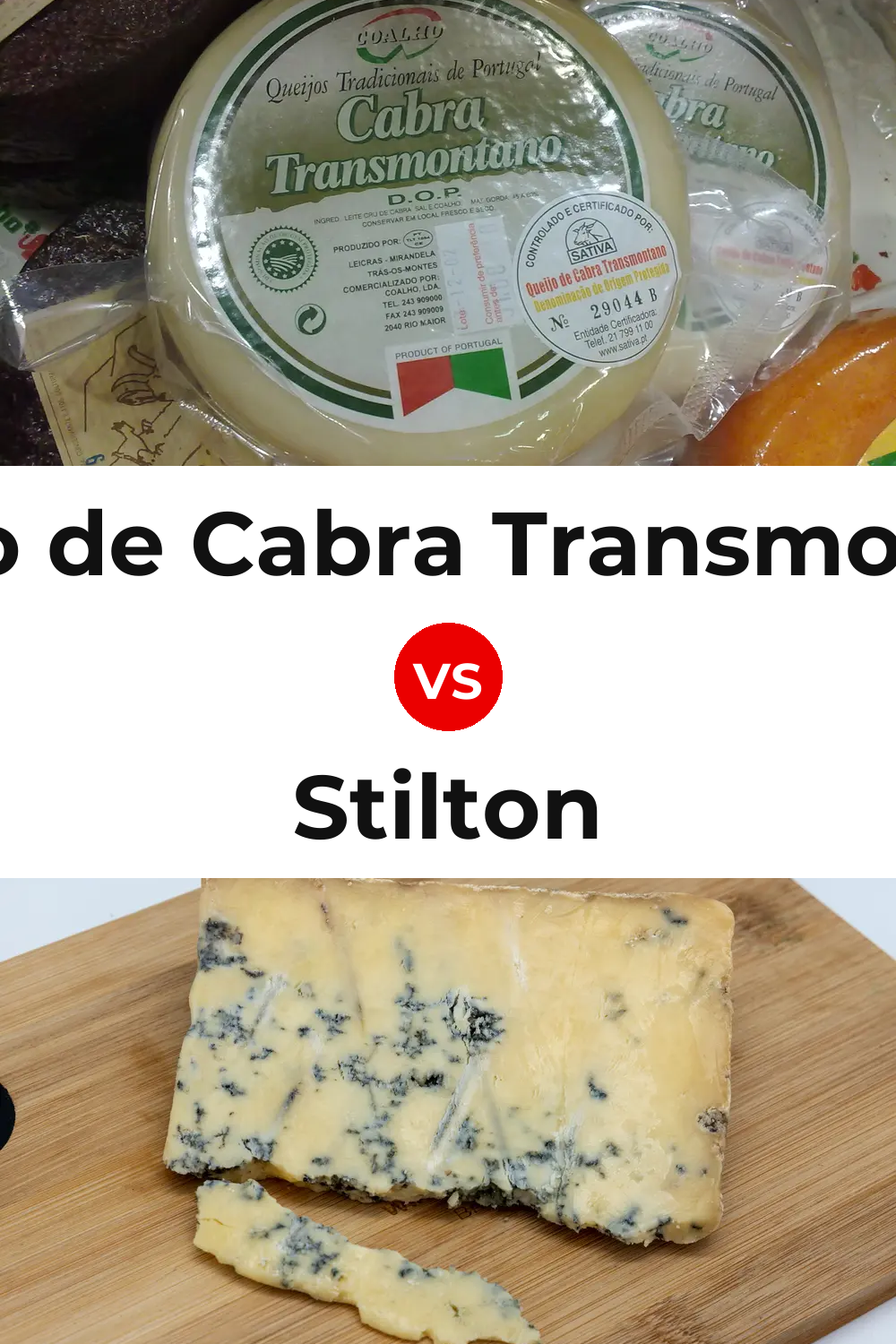
Queijo de Cabra Transmontano is a closed, semi-hard to extra-hard, not buttery goat-milk cheese, while Stilton Cheese is hard, blue-veined and made from cow milk, originating in England.
Buy Queijo de Cabra Transmontano
Buy Stilton Cheese
What Is Queijo de Cabra Transmontano?
Queijo de Cabra Transmontano is a Portuguese protected designation of origin cheese made from raw milk of Serrana goats in Trás-os-Montes. It has a firm white paste, a strong aroma and a slightly piquant taste, and ages at least 60 days, or 90 days for the Velho version.
What Is Stilton Cheese?
Stilton is an English cheese made in Derbyshire, Leicestershire and Nottinghamshire, in a blue version and a white one. The blue kind gets its veins from Penicillium roqueforti. Both hold PDO status, so no cheese made elsewhere can use the name.
What's the Difference Between Queijo de Cabra Transmontano and Stilton Cheese?
- Milk type: Queijo de Cabra Transmontano (Goat's milk), Stilton Cheese (cow's milk)
- Milk treatment: Queijo de Cabra Transmontano (Raw), Stilton Cheese (pasteurized)
- Texture: Queijo de Cabra Transmontano (Closed, semi-hard to extra-hard, not buttery), Stilton Cheese (hard, blue-veined)
- Rind: Queijo de Cabra Transmontano (Semi-hard to extra-hard, unbroken, well-formed, smooth, white or paprika-red in color), Stilton Cheese (natural)
- Aging: Queijo de Cabra Transmontano (Minimum ripening time of 60 to 90 days), Stilton Cheese (9 to 12 weeks)
- Taste: Queijo de Cabra Transmontano (Clean taste, usually with a slight tang), Stilton Cheese (spicy, strong)
Side-by-Side Comparison
| Queijo de Cabra Transmontano | Stilton Cheese | |
|---|---|---|
| Country of Origin | — | England |
| Specific Origin | Trás-Os-Montes Region, Including Municipalities In The Districts Of Bragança And Vila Real | Nottinghamshire, Leicestershire, Derbyshire |
| Milk Type | Goat's milk | Cow's milk |
| Milk Treatment | Raw | Pasteurized |
| Texture | Closed, semi-hard to extra-hard, not buttery | Hard, blue-veined |
| Rind | Semi-hard to extra-hard, unbroken, well-formed, smooth, white or paprika-red in color | Natural |
| Aging | Minimum ripening time of 60 to 90 days | 9 to 12 weeks |
| Taste | Clean taste, usually with a slight tang | Spicy, strong |
Taste Comparison: Does Queijo de Cabra Transmontano Taste Like Stilton Cheese?
Queijo de Cabra Transmontano reads as clean taste, usually with a slight tang, while Stilton Cheese brings spicy, strong character. Aging plays into this as well. Queijo de Cabra Transmontano at minimum ripening time of 60 to 90 days develops a different profile than Stilton Cheese at 9 to 12 weeks.
Can You Substitute Queijo de Cabra Transmontano for Stilton Cheese?
Queijo de Cabra Transmontano can stand in for Stilton Cheese in many dishes, but the switch will shift the overall character of the recipe. Expect closed, semi-hard to extra-hard, not buttery bite and body where the recipe calls for hard, blue-veined. Flavor-wise, Queijo de Cabra Transmontano reads as clean taste, usually with a slight tang while Stilton Cheese brings spicy, strong notes.
Which Is Better, Queijo de Cabra Transmontano or Stilton Cheese?
There's no single winner. It depends on your recipe and the profile you want. If you want a closed, semi-hard to extra-hard, not buttery cheese, go with Queijo de Cabra Transmontano. For a hard, blue-veined profile, Stilton Cheese is the better fit. Flavor-wise, Queijo de Cabra Transmontano suits recipes that want clean taste, usually with a slight tang notes, while Stilton Cheese fits dishes calling for spicy, strong.
Which is your favorite?
One click, anonymous. See what others chose.
Frequently Asked Questions
Is Queijo de Cabra Transmontano the same as Stilton Cheese?
No, they're distinct cheeses. Queijo de Cabra Transmontano is made from goat milk; Stilton Cheese uses cow. Aging also differs: Queijo de Cabra Transmontano is typically aged minimum ripening time of 60 to 90 days, Stilton Cheese 9 to 12 weeks.
Is Queijo de Cabra Transmontano similar to Stilton Cheese?
Not closely. They use different milk bases and have distinct profiles.
Can I substitute Queijo de Cabra Transmontano for Stilton Cheese?
You can, but expect a shift in richness and milk character.
Does Queijo de Cabra Transmontano taste like Stilton Cheese?
Queijo de Cabra Transmontano reads as clean taste, usually with a slight tang, while Stilton Cheese is spicy, strong.
What is Queijo de Cabra Transmontano made of?
Queijo de Cabra Transmontano is made from goat milk (raw), using animal rennet. It's typically aged minimum ripening time of 60 to 90 days.
What is Stilton Cheese made of?
Stilton Cheese is made from cow milk (pasteurized). It's typically aged 9 to 12 weeks. It originates in England.
Which should I choose, Queijo de Cabra Transmontano or Stilton Cheese?
It depends on the dish. The texture difference is the biggest practical tell. Queijo de Cabra Transmontano is closed, semi-hard to extra-hard, not buttery, while Stilton Cheese is hard, blue-veined.