Queijo Rabaçal 
Queijo Rabaçal is a Portuguese cheese from the village of Rabaçal in the Coimbra district, made by hand from sheep's and goat's milk. It has held protected designation of origin status since 1996, and its taste sharpens as the cheese ripens.
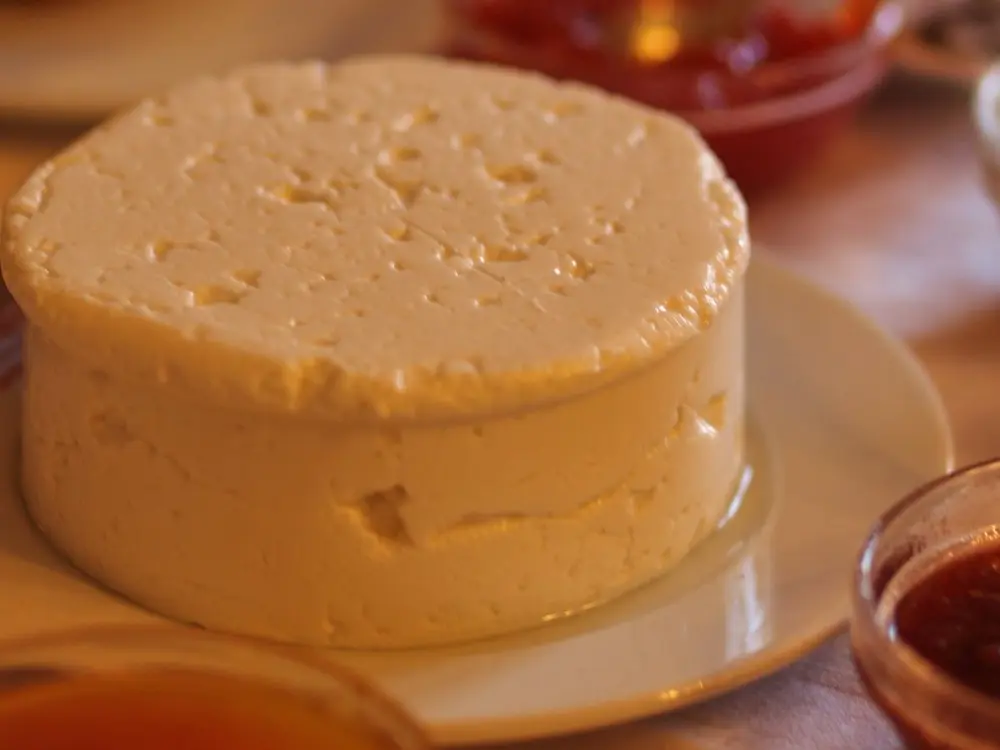
Elingunnur, CC BY 3.0, via Wikimedia Commons
Key Facts
| Country of Origin | Portugal |
| Protection | PDO (1996) |
| Milk Type | Sheep's and goat's milk |
| Texture | Semi-hard to hard |
| Aroma | Influenced by regional flora |
| Colors | Dull white |
| Forms | Cured cheese |
| Rennet Type | Animal rennet |
What is Queijo Rabaçal?
Queijo Rabaçal comes from the village of Rabaçal in the Coimbra district of Portugal. It has carried a protected designation of origin since 1996. The original recipe is still worked by hand in parts of the Serra do Sicó, across the neighboring municipalities of Condeixa-a-Nova, Soure, Ansião, Pombal, Alvaiázere and Penela.
Sheep's and goat's milk is set with rennet. The curd is packed into cylindrical moulds 10 to 20 cm wide and 3.3 to 4.2 cm high, then salted and ripened. Finished cheeses weigh 0.3 to 0.5 kg and carry at least 45 percent fat in dry matter.
The rind is smooth and very pale yellow, dry to slightly oily. Inside, the paste is almost white. The taste is delicate and balanced, growing stronger and more aromatic with longer ripening. Herbs that grow locally give the cheese much of its aroma.
Most of it reaches the table as a hard cheese, though locally it is also sold fresh. A version made from cow's and sheep's milk is sold as well, outside the PDO. Since 2010 Rabaçal has hosted the Mercado do Queijo do Rabaçal at the Roman villa excavation site on a Sunday in late April, a cheese fair with folklore, dance and local food. The 2012 edition drew 54 regional exhibitors, 17 of them cheesemakers.
How Does Queijo Rabaçal Compare?
The most relevant cheeses to compare Queijo Rabaçal against.


