Wensleydale
Wensleydale is a supple, crumbly cow's milk cheese that started in Wensleydale, North Yorkshire. It has a faint honey aroma, pairs well with sweet fruit, and owes much of its modern fame to Wallace and Gromit.
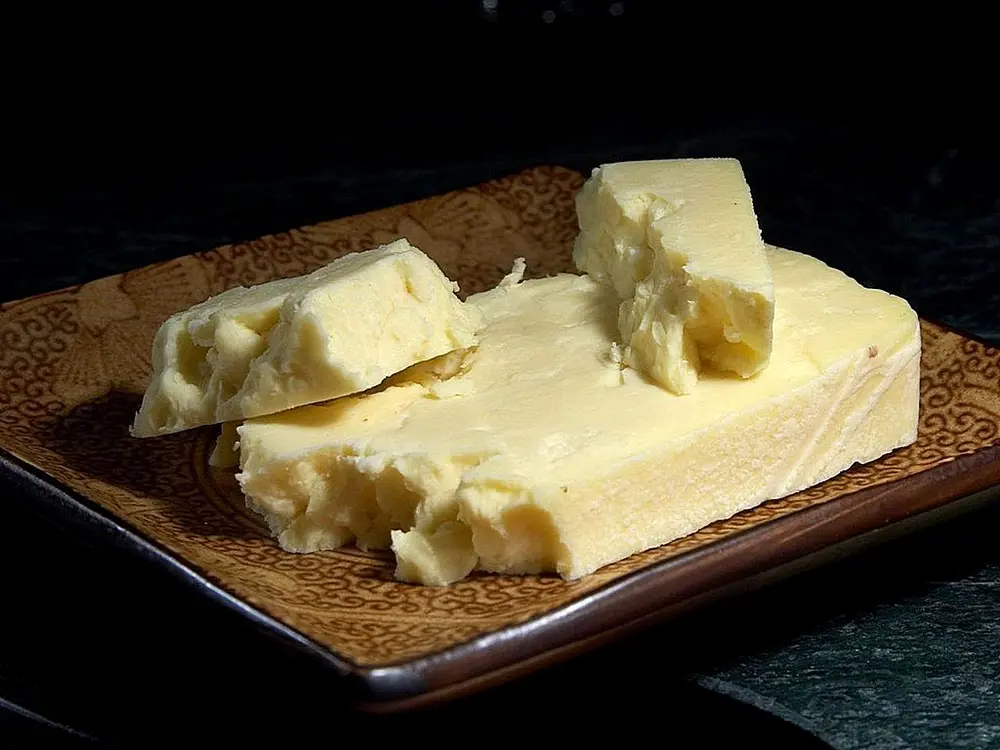
Key Facts
| Country of Origin | United Kingdom |
| Specific Origin | Yorkshire Dales |
| Protection | Yes |
| Milk Type | Cow’s milk |
| Milk Treatment | Pressed |
| Texture | Firm and crumbly |
| Flavor | Fresh, lemony tang |
| Aroma | Slight honey |
| Colors | Creamy white |
| Age | 1 to 4 months old |
What is Wensleydale Cheese?
French Cistercian monks from the Roquefort region brought the recipe to Wensleydale and built a monastery at Fors, later moving to Jervaulx in Lower Wensleydale. Their cheese was made from sheep's milk. After the monastery was dissolved in 1540, local farmers kept making it.
Cows' milk took over in the 14th century and changed the cheese. A little ewes' milk was still mixed in for a more open texture that let blue mould develop, so Wensleydale was almost always blue back then. White is now the norm and blue is rare. The first commercial creamery opened at Hawes in 1897, and Yorkshire Wensleydale won Protected Geographical Indication status in 2013.
The cheese is medium in body, supple and crumbly, with a slight honey aroma.
It suits sweeter food such as sweet apples, and many restaurants and delicatessens sell a version studded with cranberries. In Yorkshire and North East England people eat it with fruit cake or Christmas cake.
George Orwell ranked it second behind Stilton in his 1945 essay "In Defence of English Cooking". Sales had fallen so far by the 1990s that production in Wensleydale was at risk, until the Wallace & Gromit films revived it. When The Curse of the Were-Rabbit came out in 2005, sales rose 23%.
How Does Wensleydale Cheese Compare?
The most relevant cheeses to compare Wensleydale against.


