
Adelost
Adelost is a Swedish blue cheese made from pasteurized cow's milk, with a light cream paste shot through with blue-gray veins. Its name means noble cheese, and it is known for a sharp, salty flavor and use as a table cheese.
Find Adelost Cheese
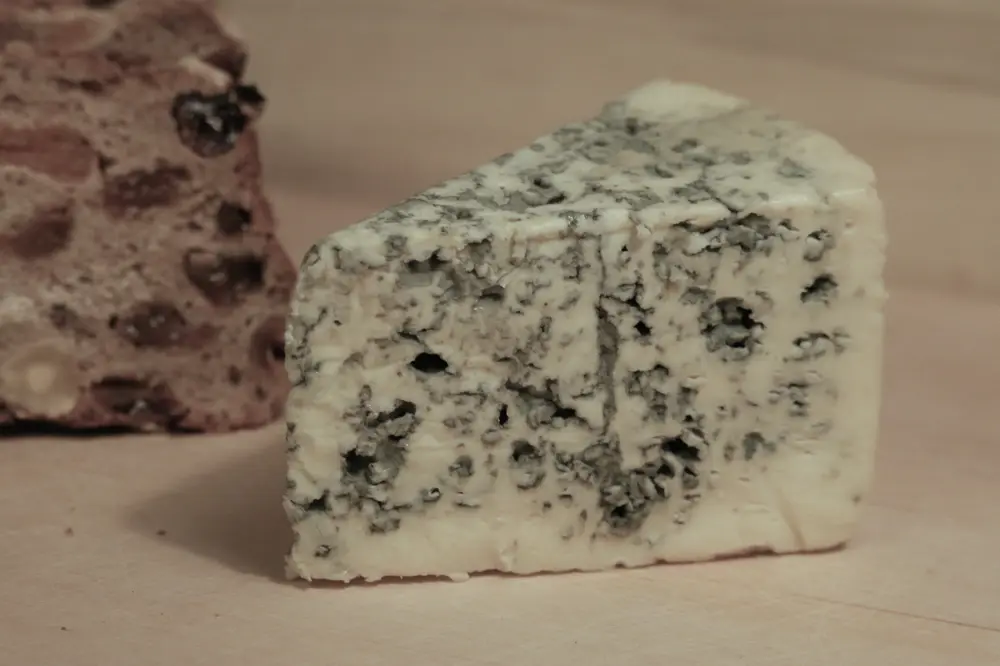
Jorchr, CC BY-SA 3.0, via Wikimedia Commons
Key Facts
| Country of Origin | Sweden |
| Specific Origin | Sweden |
| Milk Type | Cow's milk |
| Milk Treatment | Pasteurized |
| Fat Content | 50% |
| Rind | Slightly moldy |
| Texture | Semi-soft, blue-veined |
| Flavor | Salty, sharp, tangy |
| Aroma | Strong |
| Colors | Light cream paste with blue-gray veins |
| Forms | Cylinders 18 cm (7.1 in) in diameter by 10 cm (3.9 in) high, about 2.5 kg (5.5 lb) |
| Age | 2 to 3 months |
| Alternative Spellings | Ädelost |
| Also Known As | ädel |
What is Adelost Cheese?
Adelost comes from Sweden. The name translates as noble cheese or fine cheese, and Swedes call it either adelost or just adel. It stands as the Swedish answer to French blue cheese.
The milk is cow's milk, pasteurized. Ripening takes two to three months, and the finished cheese carries a fat content of 50%. A slightly moldy rind forms on the outside during that time.
Cut it open and the paste is light cream, with blue-gray veins spread evenly through it. The flavor is sharp and salty.
Wheels are cylinders, 18 cm (7.1 in) across and 10 cm (3.9 in) tall, finishing at about 2.5 kg (5.5 lb). Adelost is most often served as a table cheese.
How Does Adelost Cheese Compare?
The most relevant cheeses to compare Adelost against.


