Castelmagno Cheese vs Mimolette Cheese
Castelmagno Cheese
Mimolette Cheese
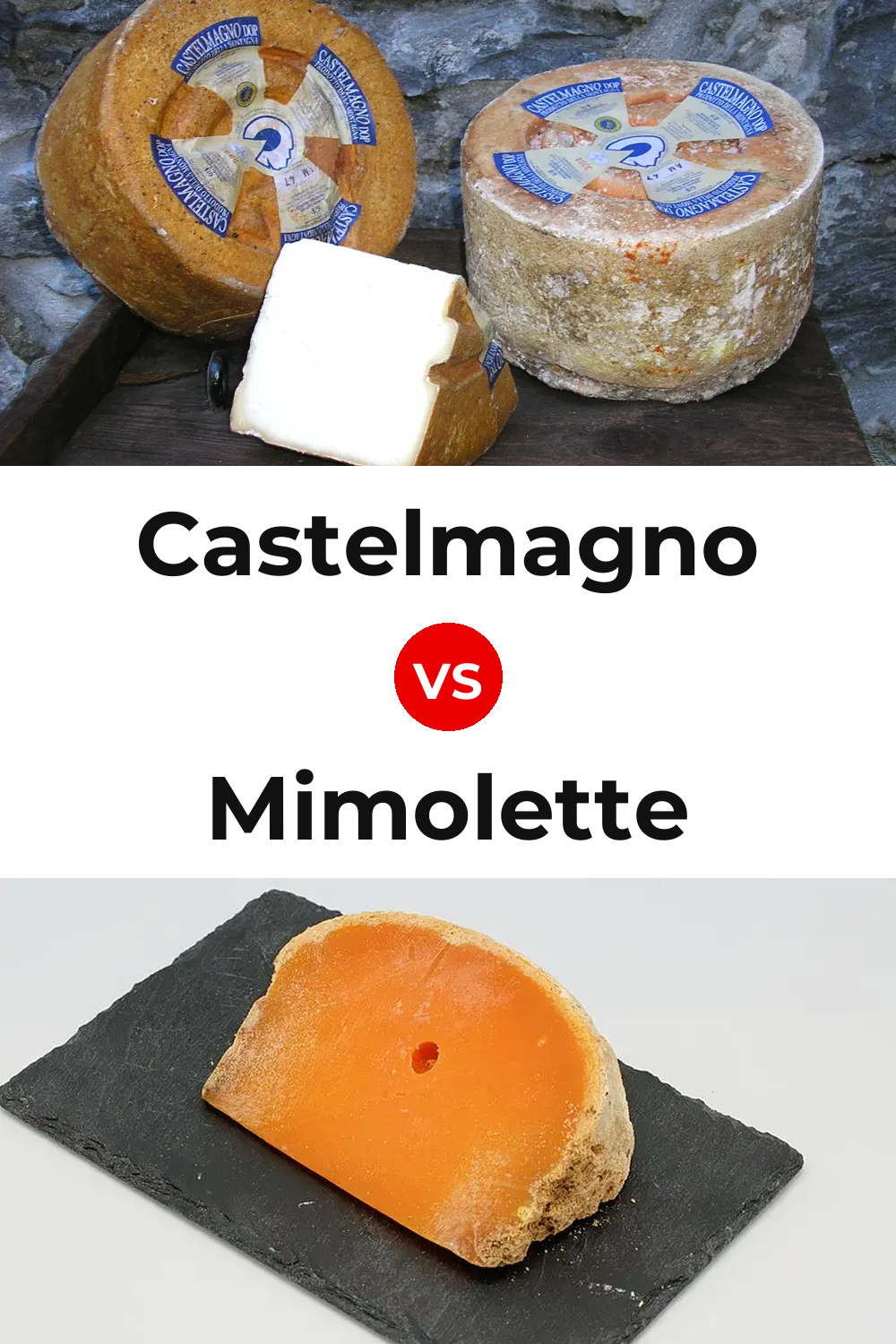
Castelmagno Cheese is a hard, compact, friable cow, goat, and sheep-milk cheese from Italy, while Mimolette Cheese is smooth, creamy body and made from cow milk, originating in France.
What Is Castelmagno Cheese?
Castelmagno is a semi-hard Italian cheese from the Valle Grana in Piedmont, made mainly from whole cow's milk. It holds protected designation of origin status and has been made since at least 1277.
What Is Mimolette Cheese?
Mimolette is a hard, bright orange cow's milk cheese made around Lille in northern France. It is sold at several ages, from young wheels that taste like Parmesan to extra-old ones with a hazelnut flavor and a grey, mite-worked rind.
What's the Difference Between Castelmagno Cheese and Mimolette Cheese?
- Origin: Castelmagno Cheese (Italy), Mimolette Cheese (France)
- Milk type: Castelmagno Cheese (cow's, goat's and sheep's milk), Mimolette Cheese (Cow's milk)
- Milk treatment: Castelmagno Cheese (pasteurized or unpasteurized), Mimolette Cheese (Pasteurized)
- Texture: Castelmagno Cheese (Hard, compact, friable), Mimolette Cheese (Smooth, creamy body)
- Rind: Castelmagno Cheese (Wrinkled, hard, reddish-gray), Mimolette Cheese (Natural)
- Aging: Castelmagno Cheese (60 days to 6 months and beyond), Mimolette Cheese (6 weeks to 24 months)
- Taste: Castelmagno Cheese (Savory, salty), Mimolette Cheese (Sweet, less acidic, fruity, nutty, caramel)
Side-by-Side Comparison
| Castelmagno Cheese | Mimolette Cheese | |
|---|---|---|
| Country of Origin | Italy | France |
| Specific Origin | Castelmagno, Pradleves, Monterosso Grana, Cuneo | Flanders Area Of Pas-De-Calais |
| Milk Type | Cow's, goat's and sheep's milk | Cow's milk |
| Milk Treatment | Pasteurized or unpasteurized | Pasteurized |
| Texture | Hard, compact, friable | Smooth, creamy body |
| Rind | Wrinkled, hard, reddish-gray | Natural |
| Aging | 60 days to 6 months and beyond | 6 weeks to 24 months |
| Taste | Savory, salty | Sweet, less acidic, fruity, nutty, caramel |
Taste Comparison: Does Castelmagno Cheese Taste Like Mimolette Cheese?
Castelmagno Cheese reads as savory, salty, while Mimolette Cheese brings sweet, less acidic, fruity, nutty, caramel character. On the nose, Castelmagno Cheese offers fine and delicate or somewhat acidic to strong and persistent, contrasted with Mimolette Cheese's butterscotch. More specifically, Castelmagno Cheese shows unusual crumbly texture, sometimes shows blue veining with age. fine and delicate to strong and persistent odor, while Mimolette Cheese leans toward mature: dense, waxy, hints of butterscotch; young: mild. Aging plays into this as well. Castelmagno Cheese at 60 days to 6 months and beyond develops a different profile than Mimolette Cheese at 6 weeks to 24 months.
Can You Substitute Castelmagno Cheese for Mimolette Cheese?
Castelmagno Cheese can stand in for Mimolette Cheese in many dishes, but the switch will shift the overall character of the recipe. Expect hard, compact, friable bite and body where the recipe calls for smooth, creamy body. Flavor-wise, Castelmagno Cheese reads as savory, salty while Mimolette Cheese brings sweet, less acidic, fruity, nutty, caramel notes.
Which Is Better, Castelmagno Cheese or Mimolette Cheese?
There's no single winner. It depends on your recipe and the profile you want. If you want a hard, compact, friable cheese, go with Castelmagno Cheese. For a smooth, creamy body profile, Mimolette Cheese is the better fit. Flavor-wise, Castelmagno Cheese suits recipes that want savory, salty notes, while Mimolette Cheese fits dishes calling for sweet, less acidic, fruity, nutty, caramel.
Which is your favorite?
One click, anonymous. See what others chose.
Frequently Asked Questions
Is Castelmagno Cheese the same as Mimolette Cheese?
No, they're distinct cheeses. Castelmagno Cheese originates in Italy, while Mimolette Cheese comes from France. Castelmagno Cheese is made from cow, goat, and sheep milk; Mimolette Cheese uses cow. Aging also differs: Castelmagno Cheese is typically aged 60 days to 6 months and beyond, Mimolette Cheese 6 weeks to 24 months.
Is Castelmagno Cheese similar to Mimolette Cheese?
Not closely. They use different milk bases and have distinct profiles.
Can I substitute Castelmagno Cheese for Mimolette Cheese?
You can, but expect a shift in richness and milk character.
Does Castelmagno Cheese taste like Mimolette Cheese?
Castelmagno Cheese reads as savory, salty, while Mimolette Cheese is sweet, less acidic, fruity, nutty, caramel. Aromas also diverge. Castelmagno Cheese leans fine and delicate or somewhat acidic to strong and persistent, and Mimolette Cheese is closer to butterscotch.
What is Castelmagno Cheese made of?
Castelmagno Cheese is made from cow, goat, and sheep milk (pasteurized or unpasteurized). It's typically aged 60 days to 6 months and beyond. It originates in Italy.
What is Mimolette Cheese made of?
Mimolette Cheese is made from cow milk (pasteurized). It's typically aged 6 weeks to 24 months. It originates in France.
Which should I choose, Castelmagno Cheese or Mimolette Cheese?
It depends on the dish. The texture difference is the biggest practical tell. Castelmagno Cheese is hard, compact, friable, while Mimolette Cheese is smooth, creamy body.