Chèvre (Goat Cheese) vs Gamonedo Cheese
Chèvre (Goat Cheese)
Gamonedo Cheese
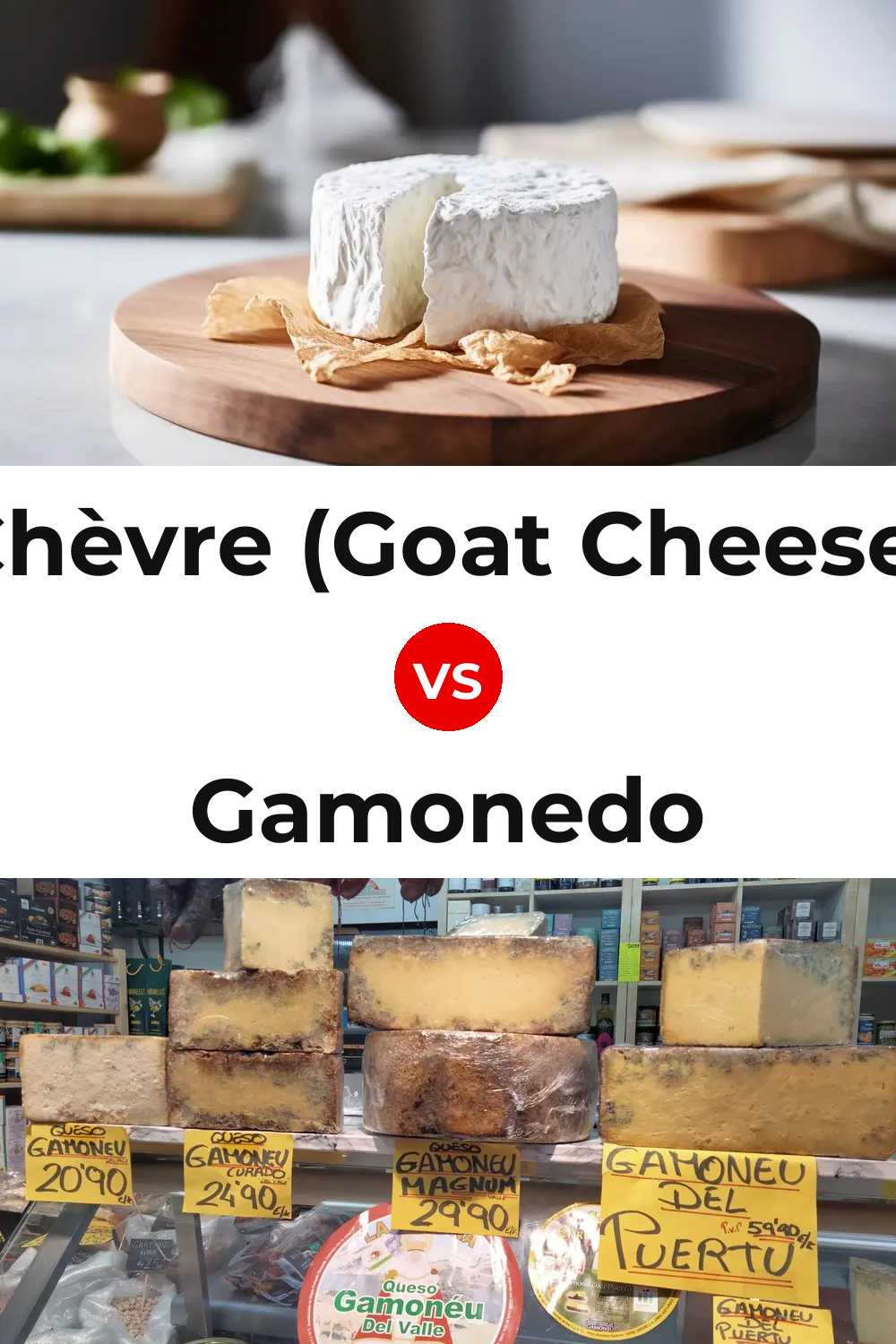
Chèvre (Goat Cheese) is a soft goat-milk cheese from France, while Gamonedo Cheese is a cow, goat, and sheep-milk cheese, originating in Spain.
What Is Chèvre (Goat Cheese)?
Chèvre is the French word for goat, and it refers to any cheese made from goat's milk. These cheeses can vary widely in texture from soft and creamy to firm and crumbly. Chèvre flavors range from mild and smooth to tangy and bold, depending on the age and production methods.
What Is Gamonedo Cheese?
Gamonedo is a blue cheese from the Asturias region in northern Spain. It is unique due to its dual-smoking and blue-mold maturation process, giving it a distinct smoky flavor with spicy blue veins. The cheese is typically aged for several months in natural caves, which enhances its complex flavor profile.
What's the Difference Between Chèvre (Goat Cheese) and Gamonedo Cheese?
- Origin: Chèvre (Goat Cheese) (France), Gamonedo Cheese (Spain)
- Milk type: Chèvre (Goat Cheese) (Goat), Gamonedo Cheese (Raw cow’s, sheep’s, and goat’s milk, or any combination. Breeds: Friesian, Asturiana de los Valles, etc.)
- Milk treatment: Chèvre (Goat Cheese) (pasteurized or unpasteurized), Gamonedo Cheese (Raw)
- Taste: Chèvre (Goat Cheese) (tangy), Gamonedo Cheese (Buttery, slightly nutty)
Side-by-Side Comparison
| Chèvre (Goat Cheese) | Gamonedo Cheese | |
|---|---|---|
| Country of Origin | France | Spain |
| Specific Origin | — | Asturian Region |
| Milk Type | Goat | Raw cow’s, sheep’s, and goat’s milk, or any combination. Breeds: Friesian, Asturiana de los Valles, etc. |
| Milk Treatment | Pasteurized or unpasteurized | Raw |
| Texture | Soft | — |
| Rind | — | Inedible, varied |
| Aging | — | Minimum of sixty days up to five months |
| Taste | Tangy | Buttery, slightly nutty |
Taste Comparison: Does Chèvre (Goat Cheese) Taste Like Gamonedo Cheese?
Chèvre (Goat Cheese) reads as tangy, while Gamonedo Cheese brings buttery, slightly nutty character.
Can You Substitute Chèvre (Goat Cheese) for Gamonedo Cheese?
Chèvre (Goat Cheese) can stand in for Gamonedo Cheese in many dishes, but the switch will shift the overall character of the recipe. Flavor-wise, Chèvre (Goat Cheese) reads as tangy while Gamonedo Cheese brings buttery, slightly nutty notes.
Which Is Better, Chèvre (Goat Cheese) or Gamonedo Cheese?
There's no single winner. It depends on your recipe and the profile you want. Flavor-wise, Chèvre (Goat Cheese) suits recipes that want tangy notes, while Gamonedo Cheese fits dishes calling for buttery, slightly nutty.
Which is your favorite?
One click, anonymous. See what others chose.
Frequently Asked Questions
Is Chèvre (Goat Cheese) the same as Gamonedo Cheese?
No, they're distinct cheeses. Chèvre (Goat Cheese) originates in France, while Gamonedo Cheese comes from Spain. Chèvre (Goat Cheese) is made from goat milk; Gamonedo Cheese uses cow, goat, and sheep.
Is Chèvre (Goat Cheese) similar to Gamonedo Cheese?
Not closely. They use different milk bases and have distinct profiles.
Can I substitute Chèvre (Goat Cheese) for Gamonedo Cheese?
You can, but expect a shift in richness and milk character.
Does Chèvre (Goat Cheese) taste like Gamonedo Cheese?
Chèvre (Goat Cheese) reads as tangy, while Gamonedo Cheese is buttery, slightly nutty.
What is Chèvre (Goat Cheese) made of?
Chèvre (Goat Cheese) is made from goat milk (pasteurized or unpasteurized). It originates in France.
What is Gamonedo Cheese made of?
Gamonedo Cheese is made from cow, goat, and sheep milk (raw). It's typically aged minimum of sixty days up to five months. It originates in Spain.
Which should I choose, Chèvre (Goat Cheese) or Gamonedo Cheese?
It depends on the dish. The table above is the fastest way to decide based on your recipe.