Crottin de Chavignol Cheese vs Raclette Cheese
Crottin de Chavignol Cheese
Raclette Cheese
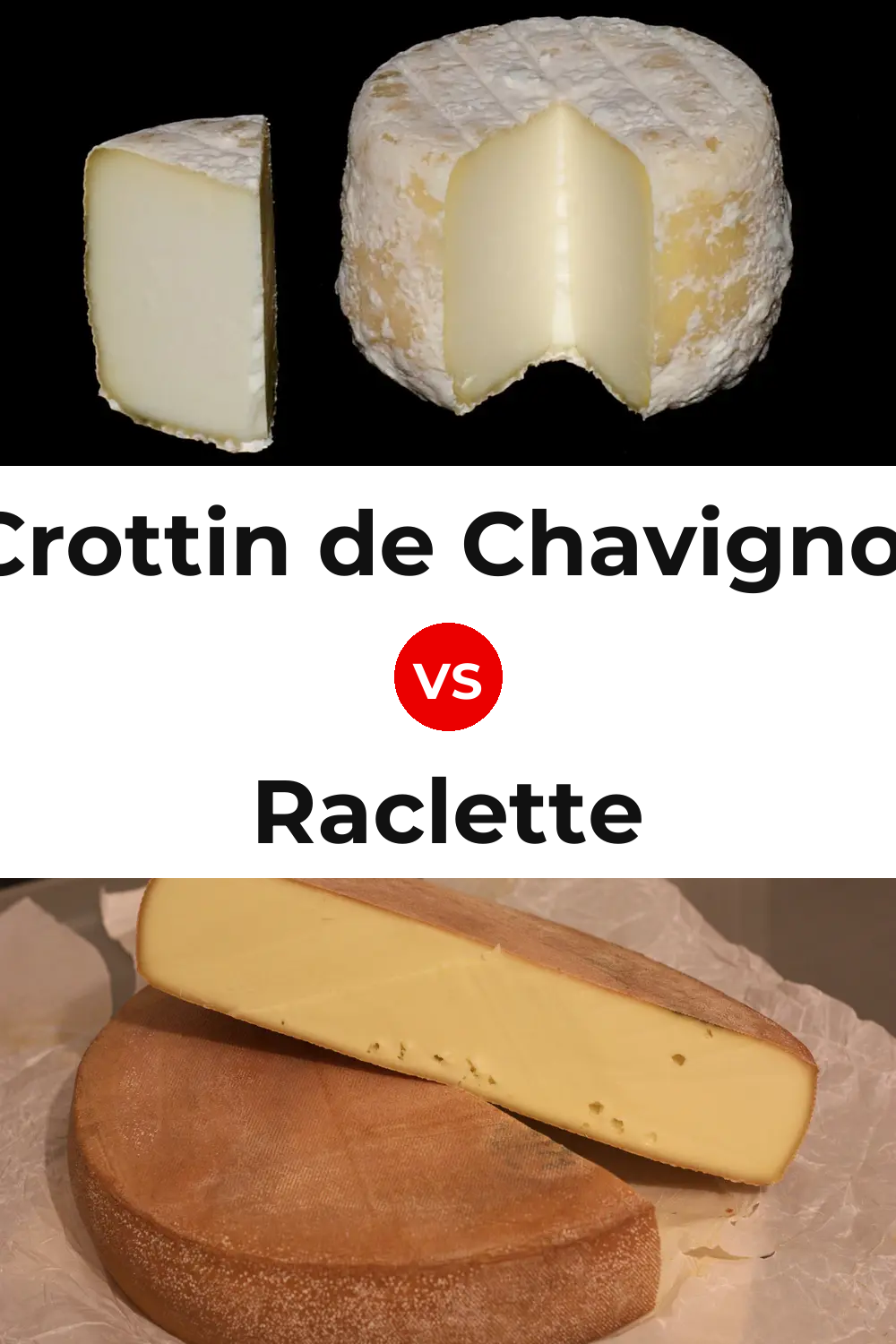
Crottin de Chavignol Cheese is a firm, smooth goat-milk cheese from France, while Raclette Cheese is semisoft, smooth and made from cow milk, originating in Switzerland.
What Is Crottin de Chavignol Cheese?
Crottin de Chavignol is a small cylindrical goat cheese from the Loire Valley and the claim to fame of the village of Chavignol. It tastes subtle and slightly nutty, and it is sold at three stages of ripening, from a white rind and compact paste to a crumbly one with bluish mould.
What Is Raclette Cheese?
Raclette is a Swiss cheese and the dish made from it: the cheese is heated and the melted part is scraped off, usually onto boiled potatoes. It comes from the canton of Valais, where the cheese carries an AOP.
What's the Difference Between Crottin de Chavignol Cheese and Raclette Cheese?
- Origin: Crottin de Chavignol Cheese (France), Raclette Cheese (Switzerland)
- Milk type: Crottin de Chavignol Cheese (goat's milk), Raclette Cheese (Cow's milk)
- Milk treatment: Crottin de Chavignol Cheese (unpasteurized), Raclette Cheese (Raw)
- Texture: Crottin de Chavignol Cheese (Firm, smooth), Raclette Cheese (Semisoft, smooth)
- Rind: Crottin de Chavignol Cheese (Natural, white or blue), Raclette Cheese (Washed)
- Aging: Crottin de Chavignol Cheese (At least 10 days), Raclette Cheese (3-4 months)
- Taste: Crottin de Chavignol Cheese (Light goat to walnut and hazelnut), Raclette Cheese (Mildly acidic)
Side-by-Side Comparison
| Crottin de Chavignol Cheese | Raclette Cheese | |
|---|---|---|
| Country of Origin | France | Switzerland |
| Specific Origin | Sancerre Region | Alpine Regions |
| Milk Type | Goat's milk | Cow's milk |
| Milk Treatment | Unpasteurized | Raw |
| Texture | Firm, smooth | Semisoft, smooth |
| Rind | Natural, white or blue | Washed |
| Aging | At least 10 days | 3-4 months |
| Taste | Light goat to walnut and hazelnut | Mildly acidic |
Taste Comparison: Does Crottin de Chavignol Cheese Taste Like Raclette Cheese?
Crottin de Chavignol Cheese reads as light goat to walnut and hazelnut, while Raclette Cheese brings mildly acidic character. More specifically, Crottin de Chavignol Cheese shows light goat flavor, floral, balanced, ages to mushroom, forest undergrowth, matures to nutty flavors, repassé: strong, creamy, while Raclette Cheese leans toward 'slightly lactic', 'milky', 'fresh butter', 'floral', 'vegetal'. Aging plays into this as well. Crottin de Chavignol Cheese at at least 10 days develops a different profile than Raclette Cheese at 3-4 months.
Can You Substitute Crottin de Chavignol Cheese for Raclette Cheese?
Crottin de Chavignol Cheese can stand in for Raclette Cheese in many dishes, but the switch will shift the overall character of the recipe. Expect firm, smooth bite and body where the recipe calls for semisoft, smooth. Flavor-wise, Crottin de Chavignol Cheese reads as light goat to walnut and hazelnut while Raclette Cheese brings mildly acidic notes.
Which Is Better, Crottin de Chavignol Cheese or Raclette Cheese?
There's no single winner. It depends on your recipe and the profile you want. If you want a firm, smooth cheese, go with Crottin de Chavignol Cheese. For a semisoft, smooth profile, Raclette Cheese is the better fit. Flavor-wise, Crottin de Chavignol Cheese suits recipes that want light goat to walnut and hazelnut notes, while Raclette Cheese fits dishes calling for mildly acidic.
Which is your favorite?
One click, anonymous. See what others chose.
Frequently Asked Questions
Is Crottin de Chavignol Cheese the same as Raclette Cheese?
No, they're distinct cheeses. Crottin de Chavignol Cheese originates in France, while Raclette Cheese comes from Switzerland. Crottin de Chavignol Cheese is made from goat milk; Raclette Cheese uses cow. Aging also differs: Crottin de Chavignol Cheese is typically aged at least 10 days, Raclette Cheese 3-4 months.
Is Crottin de Chavignol Cheese similar to Raclette Cheese?
Not closely. They use different milk bases and have distinct profiles.
Can I substitute Crottin de Chavignol Cheese for Raclette Cheese?
You can, but expect a shift in richness and milk character.
Does Crottin de Chavignol Cheese taste like Raclette Cheese?
Crottin de Chavignol Cheese reads as light goat to walnut and hazelnut, while Raclette Cheese is mildly acidic.
What is Crottin de Chavignol Cheese made of?
Crottin de Chavignol Cheese is made from goat milk (unpasteurized). It's typically aged at least 10 days. It originates in France.
What is Raclette Cheese made of?
Raclette Cheese is made from cow milk (raw), using animal rennet. It's typically aged 3-4 months. It originates in Switzerland.
Which should I choose, Crottin de Chavignol Cheese or Raclette Cheese?
It depends on the dish. The texture difference is the biggest practical tell. Crottin de Chavignol Cheese is firm, smooth, while Raclette Cheese is semisoft, smooth.