Fourme d'Ambert Cheese vs Provolone Cheese
Fourme d'Ambert Cheese
Provolone Cheese
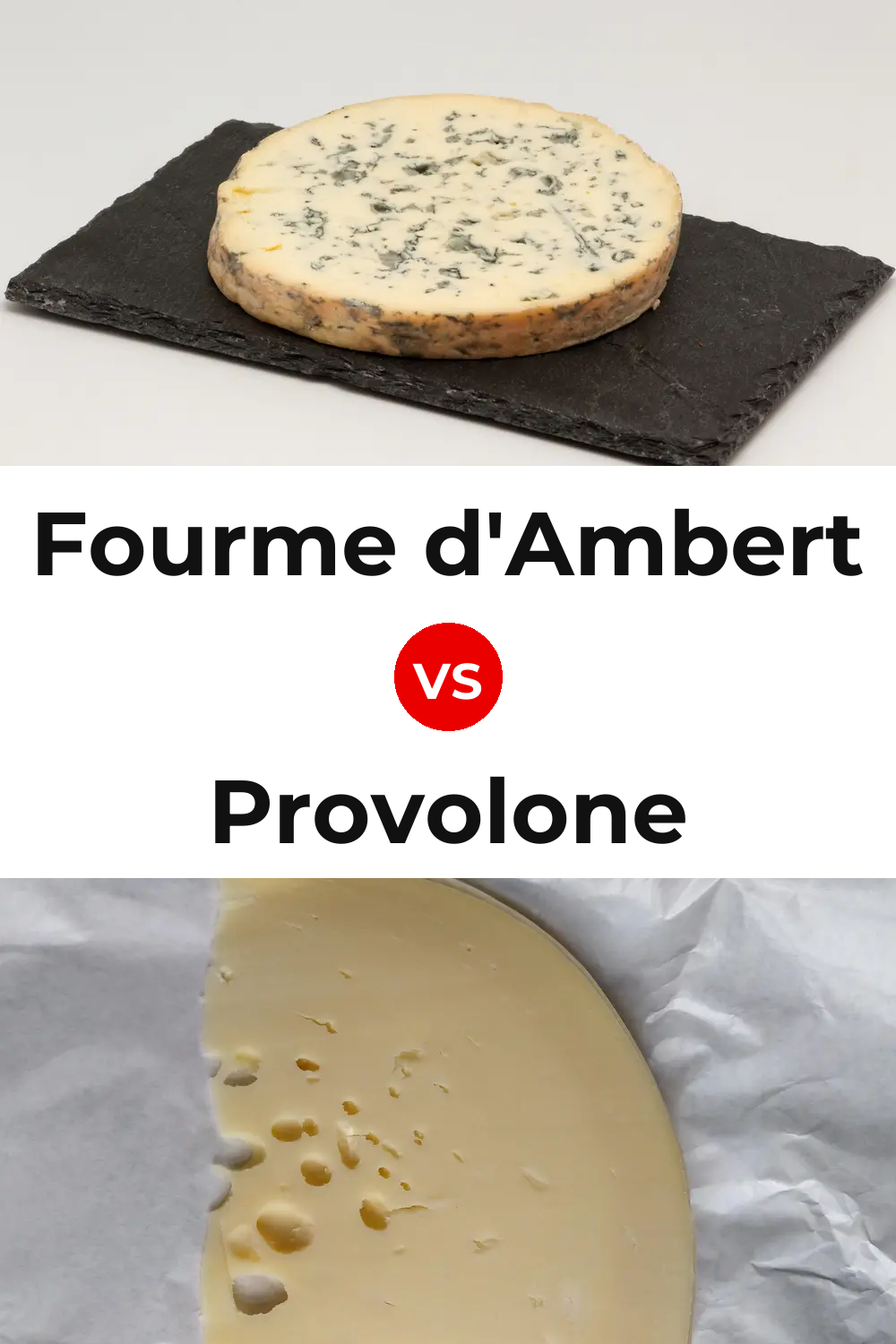
Fourme d'Ambert Cheese is a semi-hard cow-milk cheese from France, while Provolone Cheese is semi-hard, artisan and made from cow milk, originating in Italy.
What Is Fourme d'Ambert Cheese?
Fourme d'Ambert is a semi-hard blue cheese from the Auvergne region of France, sold in a narrow cylinder. One of the country's oldest cheeses, it dates back to Roman times and is inoculated with Penicillium roqueforti.
What Is Provolone Cheese?
Provolone is an Italian semi-hard cheese made from cow's milk with a stretched curd. It runs from the very sharp piccante, aged at least four months, to the mild dolce.
What's the Difference Between Fourme d'Ambert Cheese and Provolone Cheese?
- Origin: Fourme d'Ambert Cheese (France), Provolone Cheese (Italy)
- Texture: Fourme d'Ambert Cheese (semi-hard), Provolone Cheese (semi-hard, artisan)
- Aging: Fourme d'Ambert Cheese (Minimum 28 days from the date of renneting), Provolone Cheese (at least 4 months for piccante)
- Taste: Fourme d'Ambert Cheese (Mild blue cheese), Provolone Cheese (tangy)
Side-by-Side Comparison
| Fourme d'Ambert Cheese | Provolone Cheese | |
|---|---|---|
| Country of Origin | France | Italy |
| Specific Origin | Auvergne Region | Campania, Italy |
| Milk Type | Cow's milk | Cow's milk |
| Milk Treatment | Mostly pasteurized, some raw | — |
| Texture | Semi-hard | Semi-hard, artisan |
| Rind | Light gray-blue | — |
| Aging | Minimum 28 days from the date of renneting | At least 4 months for piccante |
| Taste | Mild blue cheese | Tangy |
Taste Comparison: Does Fourme d'Ambert Cheese Taste Like Provolone Cheese?
Fourme d'Ambert Cheese reads as mild blue cheese, while Provolone Cheese brings tangy character. On the nose, Fourme d'Ambert Cheese offers underwood, contrasted with Provolone Cheese's pleasant. Aging plays into this as well. Fourme d'Ambert Cheese at minimum 28 days from the date of renneting develops a different profile than Provolone Cheese at at least 4 months for piccante.
Can You Substitute Fourme d'Ambert Cheese for Provolone Cheese?
In most recipes, Fourme d'Ambert Cheese and Provolone Cheese can be swapped with reasonable results. Both are cow-milk cheeses, so the base character carries over. Expect semi-hard bite and body where the recipe calls for semi-hard, artisan. Flavor-wise, Fourme d'Ambert Cheese reads as mild blue cheese while Provolone Cheese brings tangy notes.
Which Is Better, Fourme d'Ambert Cheese or Provolone Cheese?
There's no single winner. It depends on your recipe and the profile you want. If you want a semi-hard cheese, go with Fourme d'Ambert Cheese. For a semi-hard, artisan profile, Provolone Cheese is the better fit. Flavor-wise, Fourme d'Ambert Cheese suits recipes that want mild blue cheese notes, while Provolone Cheese fits dishes calling for tangy.
Which is your favorite?
One click, anonymous. See what others chose.
Frequently Asked Questions
Is Fourme d'Ambert Cheese the same as Provolone Cheese?
No, they're distinct cheeses. Fourme d'Ambert Cheese originates in France, while Provolone Cheese comes from Italy. Aging also differs: Fourme d'Ambert Cheese is typically aged minimum 28 days from the date of renneting, Provolone Cheese at least 4 months for piccante.
Is Fourme d'Ambert Cheese similar to Provolone Cheese?
Somewhat. They share a cow-milk base but diverge in texture and flavor.
Can I substitute Fourme d'Ambert Cheese for Provolone Cheese?
You can, but expect a shift in bite and mouthfeel.
Does Fourme d'Ambert Cheese taste like Provolone Cheese?
Fourme d'Ambert Cheese reads as mild blue cheese, while Provolone Cheese is tangy. Aromas also diverge. Fourme d'Ambert Cheese leans underwood, and Provolone Cheese is closer to pleasant.
What is Fourme d'Ambert Cheese made of?
Fourme d'Ambert Cheese is made from cow milk (mostly pasteurized, some raw). It's typically aged minimum 28 days from the date of renneting. It originates in France.
What is Provolone Cheese made of?
Provolone Cheese is made from cow milk. It's typically aged at least 4 months for piccante. It originates in Italy.
Which should I choose, Fourme d'Ambert Cheese or Provolone Cheese?
It depends on the dish. The texture difference is the biggest practical tell. Fourme d'Ambert Cheese is semi-hard, while Provolone Cheese is semi-hard, artisan.