Glarner Alpkäse
Glarner Alpkäse is a Swiss raw cow's milk cheese made on the alpine pastures of Glarus during the summer grazing season. The wheels have no holes and reach the market in mild, spicy and sharp grades. It has held AOP protection since 2014.
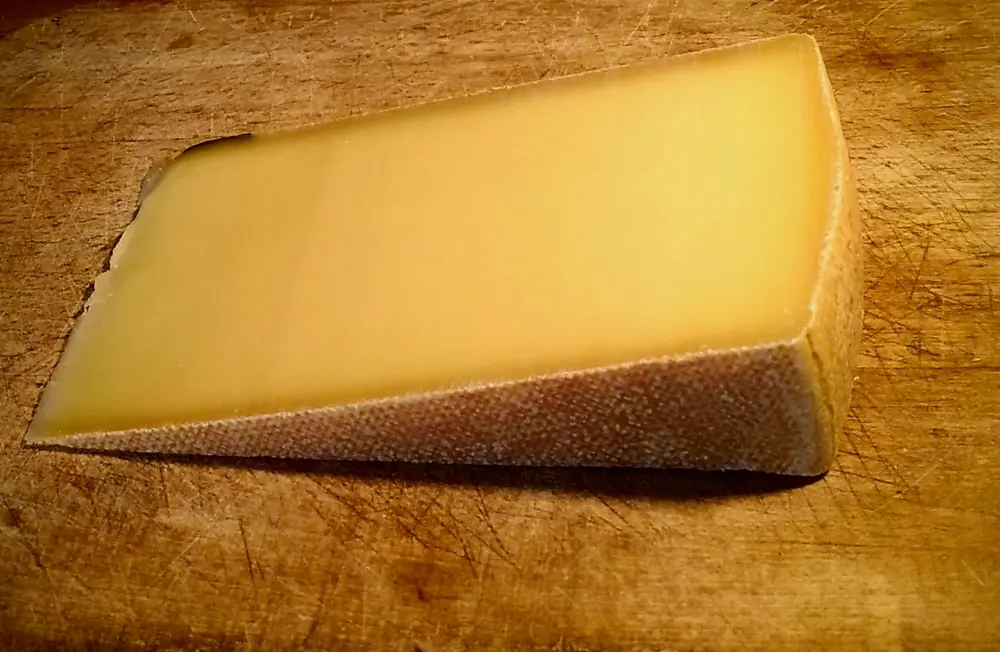
Pohoua, CC BY-SA 4.0, via Wikimedia Commons
Key Facts
| Country of Origin | Switzerland |
| Specific Origin | Glarus, Switzerland |
| Protection | GI (2020) |
| Milk Type | Cow |
| Milk Treatment | Raw |
| Rind | Natural, formed in a salt bath |
| Flavor | Mild when young, more pungent with longer ripening |
| Colors | Yellow-red rind |
| Forms | Wheels of 5 to 9 kg (11 to 20 lb), 28 to 32 cm (11 to 13 in) across |
| Alternative Spellings | Glarner Alpkase |
| Also Known As | Landkäse |
What is Glarner Alpkäse Cheese?
Glarner Alpkäse comes from the alpine pastures of the canton of Glarus, and it is also called Landkäse after the 'Land' of Glarus. It shows up in written sources only in the 19th century. Before that, the alp farmers of Glarus concentrated on Schabziger and fat butter. The cheese entered the Swiss register of protected designations of origin in 2014.
Like all Alpkäse, it may only be made from milk produced and turned into cheese up on the alp during the alp season, which runs from May to September. The cows have to graze freely on alpine pasture, and silage feeding is banned. Apart from raw milk, lactic acid bacteria cultures, rennet, and salt and water for the brine bath and rind care, nothing goes in.
The cheesemaker adds the cultures first, then rennet at 32 degrees, and the milk sets about half an hour later. The curd is cut into grains the size of coffee beans, heated to between 45 and 54 degrees, and filled into round molds called Järbe. After several hours under the press, the wheels spend one or two days in a salt bath, which builds the rind and strengthens the aroma. Brushing with lightly salted brine shapes the ripening that follows.
A wheel weighs 5 to 9 kilograms (11 to 20 pounds) and measures 28 to 32 centimeters (11 to 13 inches) across, with no holes in the paste. Young cheese tastes mild; longer ripening makes it sharper, and the raw milk of each alp carries the flavor of its own pasture flora. It is sold in mild, spicy and sharp grades.
Most of it is eaten in slices with bread. It also works as a frying cheese, in a gratin or cordon bleu, and in fondue. Total production is a little over 130 tonnes, of which around 70 tonnes are marketed by a cooperative that takes the wheels into its own cellar after 30 days. Much Alpkäse is available only locally.
How Does Glarner Alpkäse Cheese Compare?
The most relevant cheeses to compare Glarner Alpkäse against.


