Vacherin Mont-d'Or
Vacherin Mont d'Or is a soft, seasonal cow's milk cheese from the Jura region of Switzerland and France. It is bound in a strip of spruce bark, sold in a round spruce box, and often warmed in that box and eaten like fondue.
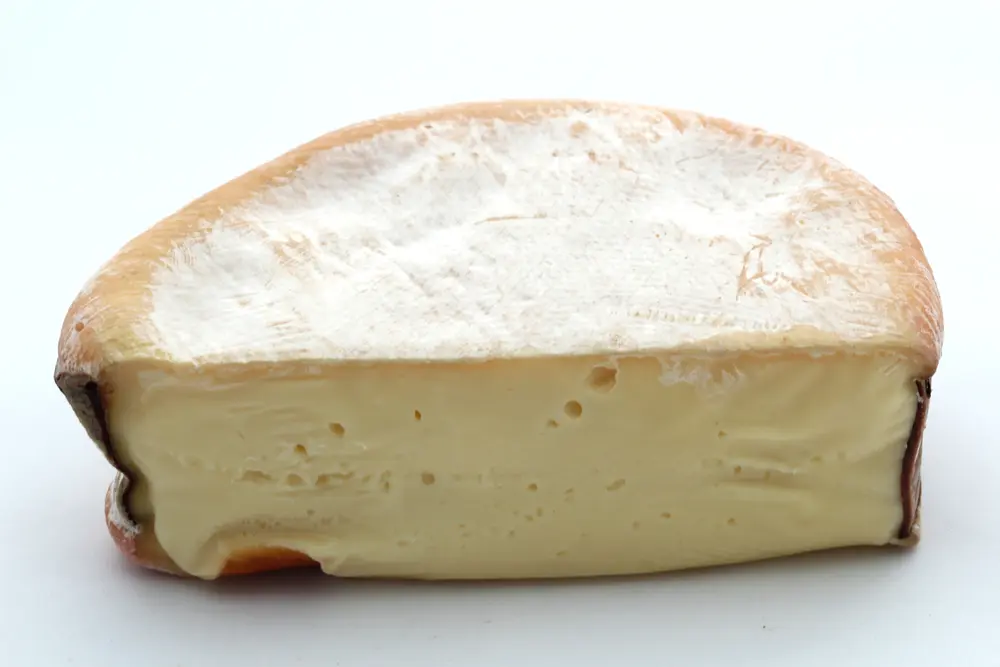
Guy Waterval, CC BY-SA 4.0, via Wikimedia Commons
Key Facts
| Country of Origin | Switzerland |
| Specific Origin | Jura region, Switzerland and France |
| Protection | GI (2011) |
| Milk Type | Cow |
| Milk Treatment | Thermized (Swiss), raw (French) |
| Fat Content | 45 to 50% in dry matter |
| Rind | Washed rind |
| Texture | Soft |
| Colors | Grayish-yellow rind |
| Forms | Round spruce boxes of various diameters |
| Age | At least 2 weeks |
| Alternative Spellings | Vacherin Mont d'Or |
| Also Known As | Vacherin, mont d'Or, Vacherin du Haut-Doubs |
What is Vacherin Mont-d'Or Cheese?
Vacherin Mont d'Or comes from villages in the Jura region, on both the Swiss and French sides. Its origin has been officially controlled since 1981. The Swiss version has carried an AOC since 2003 and an AOP since 2013, and the French one is covered by an AOC/PDO that permits artisanal and cooperative production. As of 2009 there were 11 producers of Vacherin in France. The French cheese also goes by mont d'Or or Vacherin du Haut-Doubs, and in local shops it is usually just called Vacherin.
Making it is tied to the calendar. Production runs from August 15 to March 15, and the cheese is sold from September 10 to May 10. It is traditionally made in the winter, when the cows have come down from the mountain pastures and there is no longer enough milk for Comte. The Swiss cheese is generally made with thermized milk, since pasteurization is not allowed; the French Vacherin du Haut-Doubs is unpasteurized.
Each cheese is wrapped in a sangle, a strip cut from the cambium of a Norway spruce, for at least two weeks. That spruce band gives the cheese a flavour nothing else has. The wheels go into round spruce boxes in a range of diameters, and the strips of spruce come from specialists known as sanglier.
It is soft and rich, with a grayish-yellow washed rind, and typically contains 45 to 50 percent milk fat in dry matter. The usual way to eat it is warmed in its own box, spooned out like fondue.
How Does Vacherin Mont-d'Or Cheese Compare?
The most relevant cheeses to compare Vacherin Mont-d'Or against.


