Gorgonzola Cheese vs Svecia Cheese
Gorgonzola Cheese
Svecia Cheese
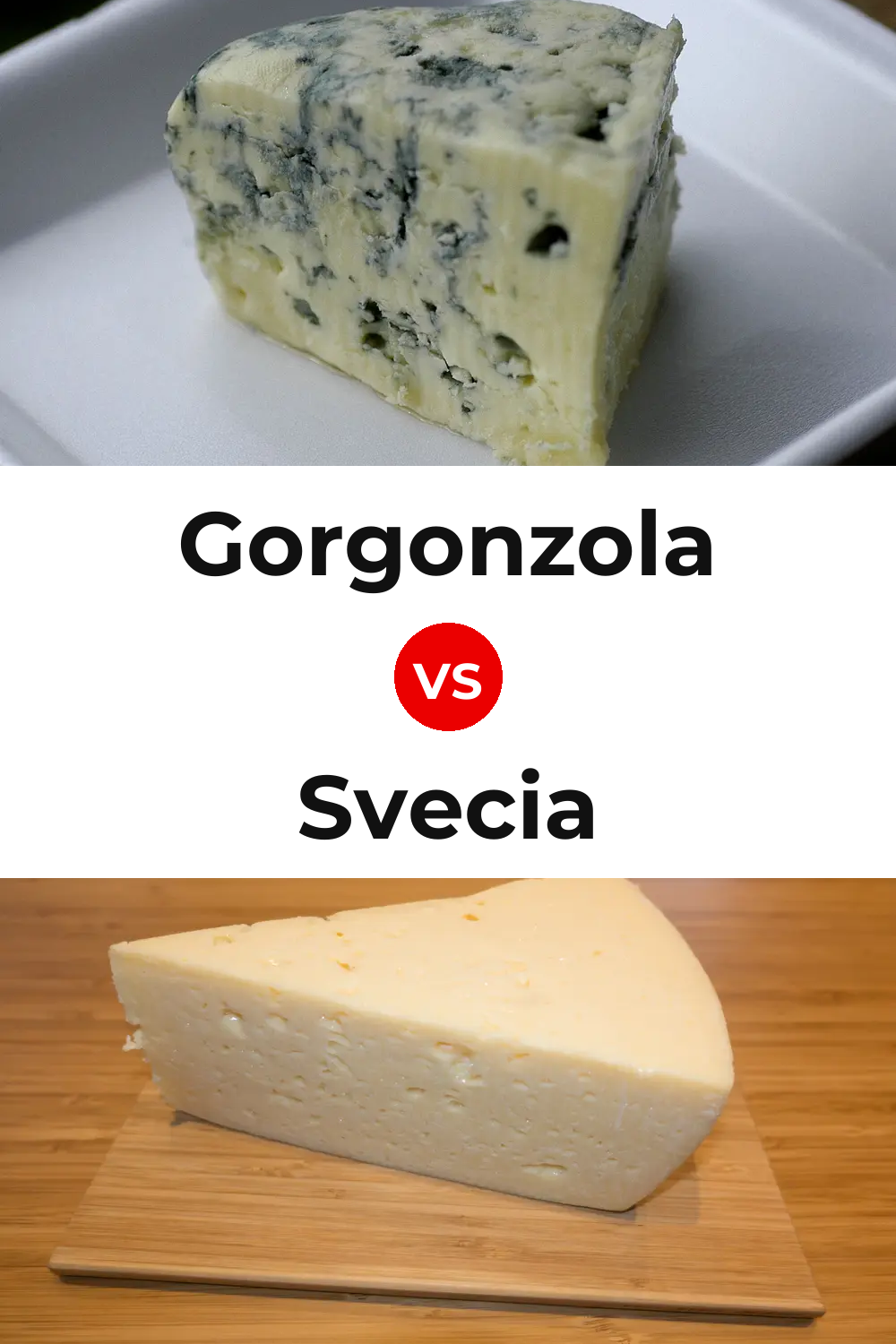
Gorgonzola Cheese is a soft to crumbly cow-milk cheese from Italy, while Svecia Cheese is semi-hard, creamy soft, firm, somewhat resilient, small irregular holes and made from cow milk.
What Is Gorgonzola Cheese?
Gorgonzola is an Italian blue cheese made from unskimmed cow's milk, named for a town near Milan. It comes in two styles: dolce, mild and buttery, and piccante, sharper with a firm, crumbly body.
What Is Svecia Cheese?
Svecia is a Swedish semi-hard cow's milk cheese with a creamy consistency, light yellow colour, small irregular holes and a mildly acidic taste. It is sold in wax-covered cylinders weighing 12 to 15 kg (26 to 33 lb) and aged for at least two months.
What's the Difference Between Gorgonzola Cheese and Svecia Cheese?
- Texture: Gorgonzola Cheese (Soft to crumbly), Svecia Cheese (Semi-hard, creamy soft, firm, somewhat resilient, small irregular holes)
- Rind: Gorgonzola Cheese (None), Svecia Cheese (Wax-coated)
- Aging: Gorgonzola Cheese (2 to 3 months), Svecia Cheese (Minimum 2 months)
- Taste: Gorgonzola Cheese (Sweet to savory), Svecia Cheese (Mildly acidic, full-bodied)
Side-by-Side Comparison
| Gorgonzola Cheese | Svecia Cheese | |
|---|---|---|
| Country of Origin | Italy | — |
| Specific Origin | Lombardy, Piedmont | Low-Lying Areas Of Sweden |
| Milk Type | Cow's milk | Cow |
| Milk Treatment | Pasteurized | Pasteurized |
| Texture | Soft to crumbly | Semi-hard, creamy soft, firm, somewhat resilient, small irregular holes |
| Rind | None | Wax-coated |
| Aging | 2 to 3 months | Minimum 2 months |
| Taste | Sweet to savory | Mildly acidic, full-bodied |
Taste Comparison: Does Gorgonzola Cheese Taste Like Svecia Cheese?
Gorgonzola Cheese reads as sweet to savory, while Svecia Cheese brings mildly acidic, full-bodied character. Aging plays into this as well. Gorgonzola Cheese at 2 to 3 months develops a different profile than Svecia Cheese at minimum 2 months.
Can You Substitute Gorgonzola Cheese for Svecia Cheese?
In most recipes, Gorgonzola Cheese and Svecia Cheese can be swapped with reasonable results. Both are cow-milk cheeses, so the base character carries over. Expect soft to crumbly bite and body where the recipe calls for semi-hard, creamy soft, firm, somewhat resilient, small irregular holes. Flavor-wise, Gorgonzola Cheese reads as sweet to savory while Svecia Cheese brings mildly acidic, full-bodied notes.
Which Is Better, Gorgonzola Cheese or Svecia Cheese?
There's no single winner. It depends on your recipe and the profile you want. If you want a soft to crumbly cheese, go with Gorgonzola Cheese. For a semi-hard, creamy soft, firm, somewhat resilient, small irregular holes profile, Svecia Cheese is the better fit. Flavor-wise, Gorgonzola Cheese suits recipes that want sweet to savory notes, while Svecia Cheese fits dishes calling for mildly acidic, full-bodied.
Which is your favorite?
One click, anonymous. See what others chose.
Frequently Asked Questions
Is Gorgonzola Cheese the same as Svecia Cheese?
No, they're distinct cheeses. Aging also differs: Gorgonzola Cheese is typically aged 2 to 3 months, Svecia Cheese minimum 2 months.
Is Gorgonzola Cheese similar to Svecia Cheese?
Somewhat. They share a cow-milk base but diverge in texture and flavor.
Can I substitute Gorgonzola Cheese for Svecia Cheese?
You can, but expect a shift in bite and mouthfeel.
Does Gorgonzola Cheese taste like Svecia Cheese?
Gorgonzola Cheese reads as sweet to savory, while Svecia Cheese is mildly acidic, full-bodied.
What is Gorgonzola Cheese made of?
Gorgonzola Cheese is made from cow milk (pasteurized). It's typically aged 2 to 3 months. It originates in Italy.
What is Svecia Cheese made of?
Svecia Cheese is made from cow milk (pasteurized), using animal rennet. It's typically aged minimum 2 months.
Which should I choose, Gorgonzola Cheese or Svecia Cheese?
It depends on the dish. The texture difference is the biggest practical tell. Gorgonzola Cheese is soft to crumbly, while Svecia Cheese is semi-hard, creamy soft, firm, somewhat resilient, small irregular holes.