Double Gloucester
Double Gloucester is a semi-hard cow's milk cheese made in Gloucestershire, England, since the 16th century. It ages longer than Single Gloucester, giving it a stronger, more savoury flavour, and it is the cheese sent rolling down Cooper's Hill each spring.
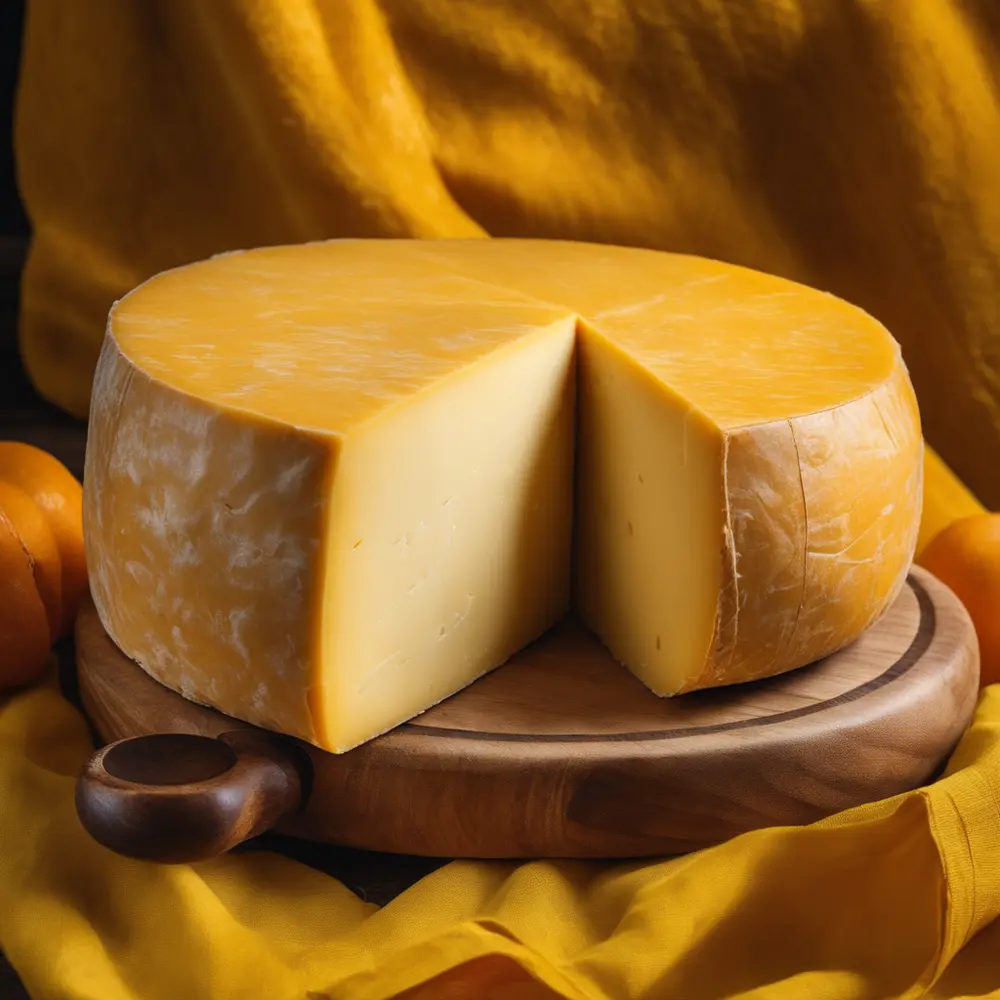
Key Facts
| Country of Origin | England |
| Specific Origin | Gloucestershire, England |
| Milk Type | Cow's milk |
| Milk Treatment | Pasteurized in supermarket versions |
| Rind | Natural |
| Texture | Hard, artisan |
| Flavor | Smooth, tangy |
| Aroma | Buttery, rich |
| Colors | Orange |
| Forms | Large rounds, slabs |
What is Double Gloucester Cheese?
Gloucester cheese has been made in Gloucestershire, England, since the 16th century. Two varieties exist, Single and Double, and both were traditionally made from the milk of Gloucester cattle. Double Gloucester was the prized one, comparable in quality to the best Cheddar or Cheshire and exported out of the county, while Single Gloucester was mostly eaten within Gloucestershire.
Production from the Gloucester cow died out in the 1950s along with most of the breed. In 1973 Charles Martell gathered three Old Gloucester cows from a county herd of fewer than 50 and brought farmhouse Double Gloucester back; the BBC series A Taste of Britain filmed the attempt. He revived Single Gloucester in 1978. Since 2004 traditionally produced Gloucester cheese has had the backing of the Slow Food movement.
Double Gloucester is allowed to age longer than Single. Most of what UK supermarkets sell is slab cheese from large creameries run by dairy companies such as Dairy Crest, pasteurised but not processed, usually under a store brand. Nobody knows for certain where the names came from. The theories are that the creamy milk was skimmed twice for the double variety, that cream from the morning milk was added to the evening milk, or simply that a Double Gloucester is about twice the height.
The cheese has a natural rind and a hard texture. Next to Single Gloucester it is firmer, less crumbly and stronger, with a more savoury flavour. The wild flower Galium verum, known colloquially as lady's bedstraw, originally gave Double Gloucester its distinctively yellow colour. Both types are made in rounds, and Double Gloucester rounds are the larger of the two.
It is often blended with other ingredients. Mixed with chives and spring onions it is sold as Cotswold cheese, a modern name rather than a traditional English one, coloured to resemble Cotswold stone. Layered alternately with Stilton, it becomes Huntsman cheese.
How Does Double Gloucester Cheese Compare?
The most relevant cheeses to compare Double Gloucester against.


