
Vorarlberger Bergkäse 
Vorarlberger Bergkäse is a hard cow's milk cheese from the Austrian state of Vorarlberg, made by hand from raw hay milk and protected as a PDO. It ages 3 to 6 months, sometimes past two years, and tastes nutty with herbal notes.
Find Vorarlberger Bergkäse Cheese
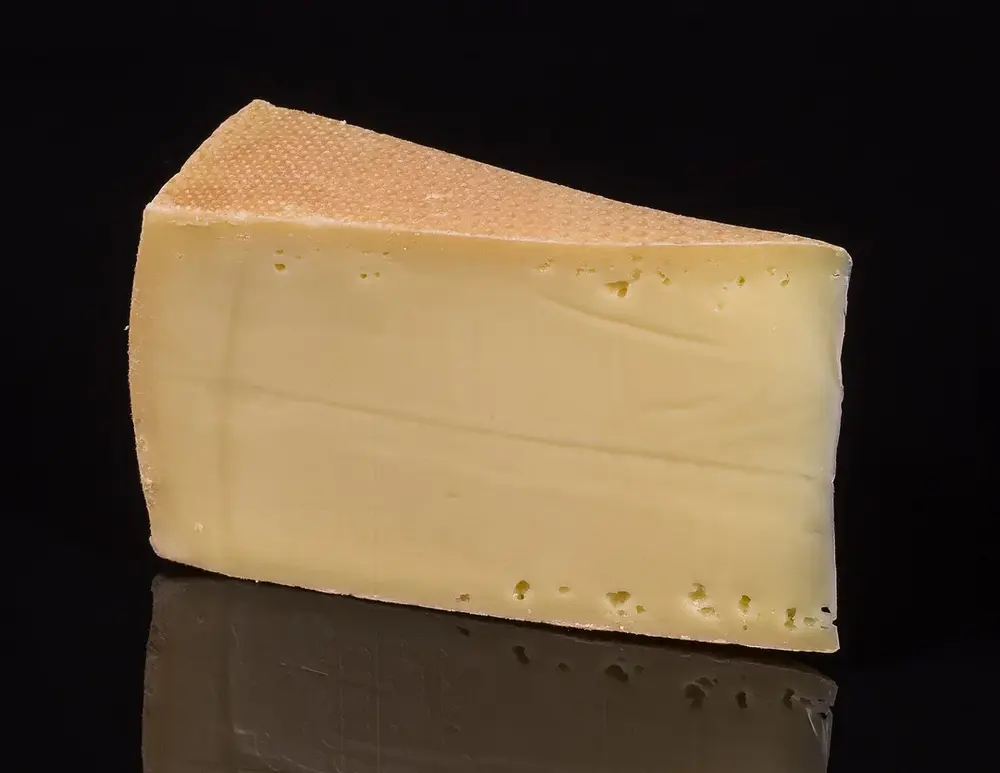
Hubertl, CC BY-SA 4.0, via Wikimedia Commons
Key Facts
| Country of Origin | Austria |
| Specific Origin | Vorarlberg, including regions Bregenzerwald, Kleinwalsertal, Großwalsertal, Leiblachtal (Pfänderstock), Walgau, and Rheintal. |
| Protection | PDO (1997) |
| Milk Type | Cow's milk |
| Milk Treatment | Raw |
| Rind | Smear-ripened to dried, brownish yellow to brown granular rind |
| Texture | Firm to smooth |
| Flavor | Spicy, becoming sharp with increasing age |
| Colors | Ivory-colored to pale yellow |
| Forms | Cheese rounds weighing between 7 kg and 40 kg. |
| Age | At least 3 months |
| Rennet Type | Natural rennet |
| Also Known As | Vorarlberg mountain cheese |
What is Vorarlberger Bergkäse Cheese?
Vorarlberger Bergkäse comes from Vorarlberg in western Austria and is protected as a European designation of origin (PDO) product. Cheesemaking in the Bregenz Forest goes back to the Celts, who used the alpine pastures and made cheese there. Until the second half of the 17th century the region mostly produced sour cheese.
After the Thirty Years' War ended in 1648, herdsmen from the Swiss canton of Appenzell arrived in the Bregenz Forest and taught local farmers "fat senning": making cheese from whole milk instead of skimming it first. That method produces hard cheese, and Vorarlberger Bergkäse grew out of it. By the middle of the 18th century Vorarlberg made more hard cheese than it could sell at home, so the trade was organised and much of it went to Italy.
Production is limited to alpine dairies in the Bregenz Forest, the Großwalsertal, the Kleinwalsertal, the Leiblachtal (Pfänderstock) and the Rhine Valley. Only natural raw milk is used, and only natural rennet. Milk may come only from farms with mostly grassland farming and no silage, so-called hay milk, and it has to be delivered daily and processed at once. Herds still follow alpine transhumance, grazing higher pastures from May to October while valley meadows are cut for winter hay. Summer milk is made into Alpkäse in the mountain dairies; from early October to the end of May the milk becomes Bergkäse.
The cheese takes the shape of a round loaf, roughly 55 to 65 cm across, weighing up to 35 kg. Maturing runs 3 to 6 months, and some wheels are held two years or longer. Fat content is 45% in dry matter. The Bregenzerwald type shows small holes, treated as a mark of quality. Aroma runs from mild to spicy, and the taste is nutty with herbal notes.
The Bregenz Forest Cheese Route was set up in 1998 to support local dairying and the farming tradition behind it, linking farmers, traders and craftsmen. Visitors along the route can watch the cheese being made and join tastings.
How Does Vorarlberger Bergkäse Cheese Compare?
The most relevant cheeses to compare Vorarlberger Bergkäse against.


