Ackawi
Akkawi is a white brine cheese from the Levant, named after the port city of Acre. It is usually made from pasteurized cow's milk, cured two days in salted whey brine, and eaten with soft flatbread or on its own as a table cheese.
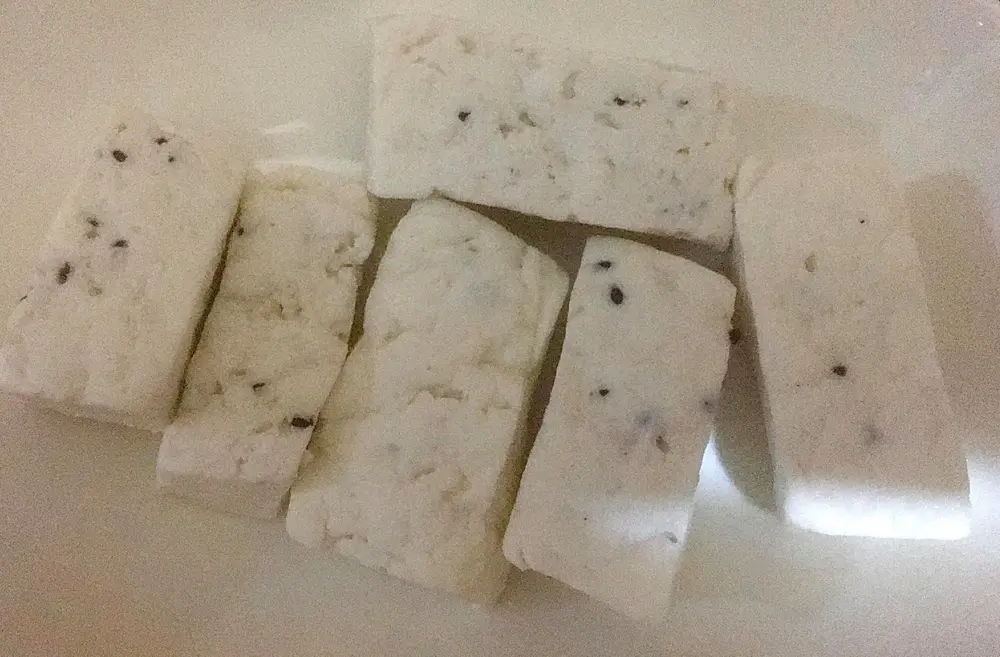
Rotana Nawwaf Al Hasanat, CC BY-SA 4.0, via Wikimedia Commons
Key Facts
| Country of Origin | Cyprus, Egypt, Israel, Jordan, Lebanon, Middle East, Syria |
| Specific Origin | The Levant, Middle East |
| Milk Type | Cow's, goat's or sheep's milk |
| Milk Treatment | Pasteurized |
| Rind | Natural |
| Texture | Soft, brined |
| Flavor | Mild, milky, salty |
| Aroma | Mild, milky |
| Colors | White |
| Age | 2 days in brine |
| Alternative Spellings | Akkawi , Akawieh, Akawi |
What is Ackawi Cheese?
Akkawi is a white brine cheese from the Levant. The name comes from the port city of Acre, Akka in Arabic, and marks the cheese as coming from there. Ahmed Aref El-Zein's 1913 book on the history of Sidon lists 1200 containers of Akkawi cheese imported into the city from Haifa and Acre in 1907.
It is made by heating milk to 35 to 40 Celsius, adding rennet, and leaving it to curdle for about an hour. The whey is then squeezed out through a cheesecloth. The curd is hand-packed into square draining hoops and cured in salted whey brine for two days. Cow's milk is the usual choice, though goat and sheep milk are also used.
The cheese is white, smooth, and mildly salty. It does not melt easily, so its texture sits closer to mozzarella, feta or mizithra. That texture and flavor come from keeping the curds together far longer than a simpler curd cheese such as Syrian cheese. Akkawi can be stored up to a year.
Production is concentrated in Israel, Palestine, Lebanon, Jordan, Syria, Egypt and Cyprus, where it is eaten with a soft flatbread at lunch and dinner. It also serves as a table cheese, on its own or with fruit. Supply has been unreliable at times. During the Lebanese Civil War dairy animals were slaughtered and Lebanon imported Akkawi from Eastern Europe, and in Los Angeles people once made a substitute by soaking feta through several changes of water to desalinate it.
How Does Ackawi Cheese Compare?
The most relevant cheeses to compare Ackawi against.


