
Cream Cheese
Cream cheese is a soft, mild fresh cheese made from milk and cream, sold unripened rather than aged. It began in Chester, New York in the 1870s and is best known as the spread on a bagel.
Find Cream Cheese
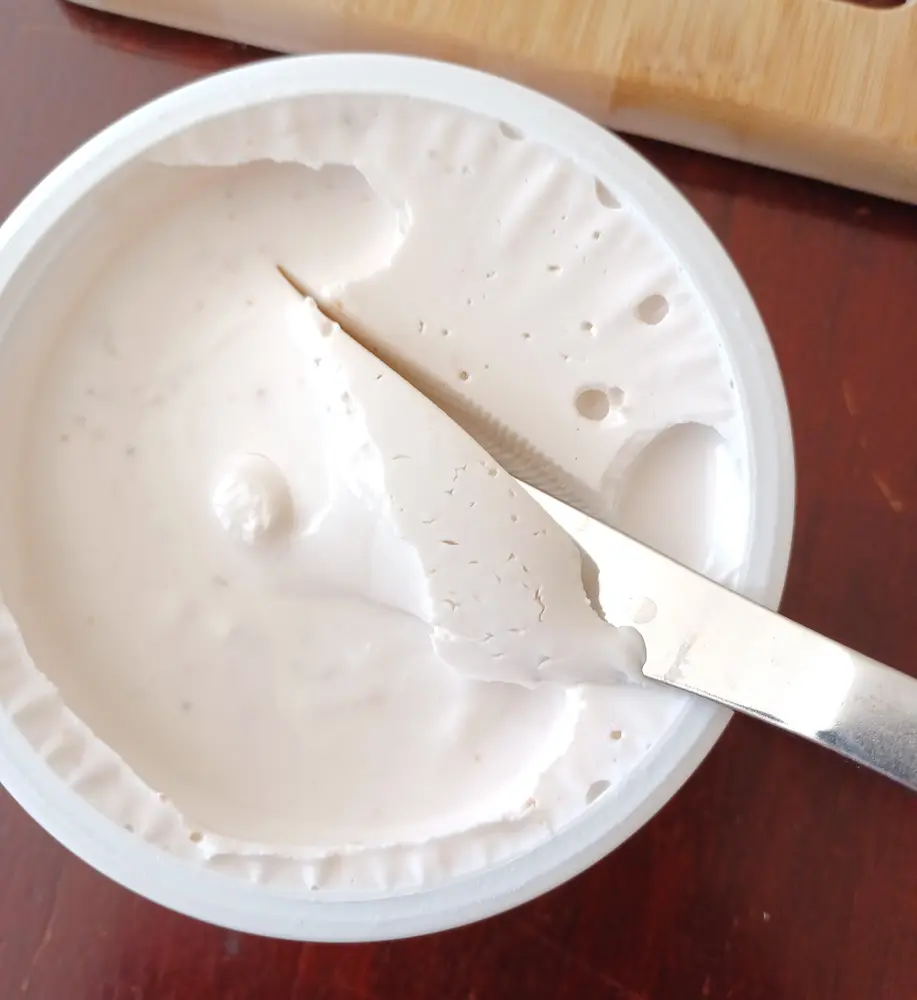
Key Facts
| Country of Origin | United States |
| Specific Origin | Chester, New York, the U.S. |
| Milk Type | Cow's milk |
| Milk Treatment | Pasteurized or unpasteurized |
| Fat Content | At least 33% milk fat (the U.S.), at least 30% (Canada) |
| Moisture Content | Not more than 55% |
| Rind | Rindless |
| Texture | Fresh soft, processed |
| Flavor | Creamy, mild, sweet |
| Aroma | Fresh, pleasant |
| Colors | White |
| Age | Unripened, eaten fresh |
| Rennet Type | Animal (chymosin, pepsin, rennet) in Canada |
| Alternative Spellings | Fruit cream cheese |
| Also Known As | fruit cream |
What is Cream Cheese?
Cream cheese comes from the United States, where it appeared in the 1870s. Around 1873 William A. Lawrence, a dairyman in Chester, New York, became the first to mass produce the unripened fresh cheese. He had started making a Neufchâtel style in 1872, then added cream to get something richer. His 1877 brand carried a cow silhouette and the words "Neufchatel & Cream Cheese".
The famous name came later and from elsewhere. Alvah Reynolds, a New York cheese distributor, began selling the Lawrence and Durland cheese in 1880 as "Philadelphia Cream Cheese", despite no connection to Philadelphia. Reynolds sold the brand rights to the Phenix Cheese Company in 1903, and Phenix merged with Kraft in 1928.
Making it starts with pasteurized, homogenized milk and lactic acid bacteria. Fermentation near 22 degrees C (72 F) drops the pH until the proteins lose their charge and the mixture coagulates. The bacteria then have to be killed by heating to 52 to 63 degrees C (126 to 145 F) at exactly the right moment. Off timing gives inferior cheese. Because the fat content is high and fat repels water, commercial producers add gums such as guar or carob to stop separation.
The result is soft and usually mild in taste. It is closer in flavor, texture and method to Boursin and mascarpone than to aged soft cheeses. Under U.S. rules it holds at least 33% milk fat, no more than 55% moisture, and a pH of 4.4 to 4.9. American cream cheese tends to be lower in fat than versions made in other countries. Flavored kinds are common.
It has a firm place in the Ashkenazi Jewish cuisine of New York City, above all as the bagel and cream cheese, an open-faced sandwich that may also take lox, capers and other additions. Julia Child suggested Philadelphia brand as a stand-in for petit suisse. Home cooks can make it easily, though consistent commercial production is harder.
How Does Cream Cheese Compare?
The most relevant cheeses to compare Cream Cheese against.


