
Caerphilly
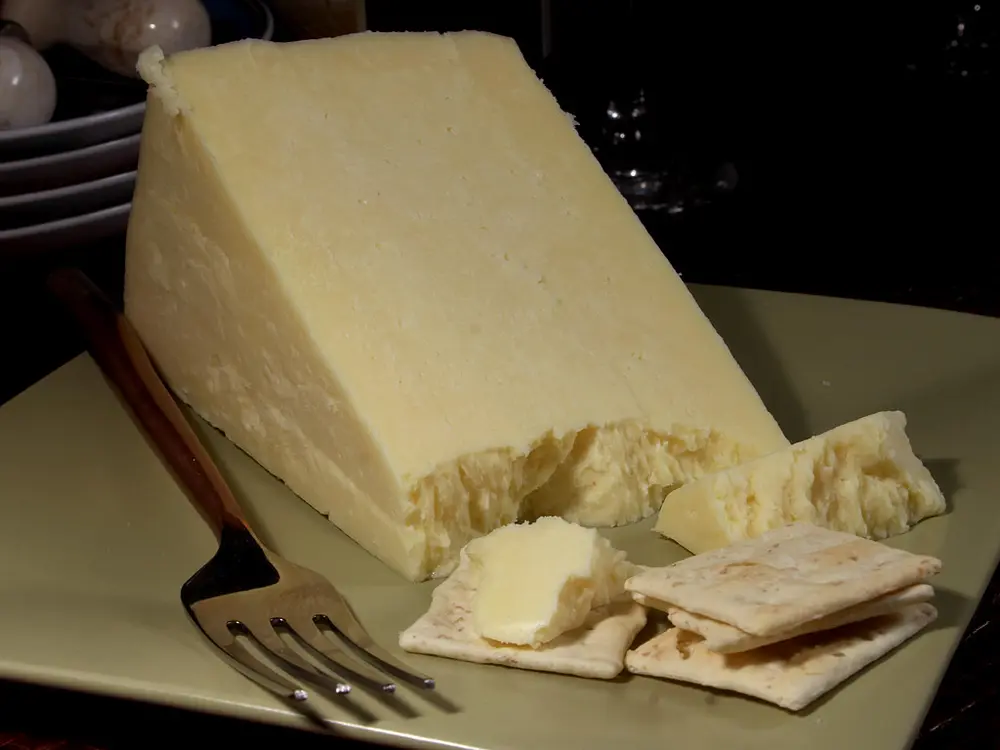
Caerphilly is a white, crumbly cow's milk cheese from the area around the town of Caerphilly in Wales, first made on farms to feed local coal miners. It has a mild taste with a tang of lemon and ripens in as little as two weeks.
Find Caerphilly Cheese
Key Facts
| Country of Origin | United Kingdom, Wales |
| Specific Origin | 8 miles north of Cardiff |
| Milk Type | Cow's milk |
| Milk Treatment | Unpasteurized |
| Fat Content | 48% |
| Rind | Mottled gray-white |
| Texture | Tri-layered: Brie-like to dense core |
| Flavor | Earthy, barnyard, lemony |
| Aroma | Fresh |
| Colors | White |
| Forms | Wheel |
| Age | From 2 weeks |
| Alternative Spellings | Caerffili |
| Also Known As | Duckett's Caerphilly, Duckett's Aged Caerphilly |
What is Caerphilly Cheese?
Caerphilly comes from the area around the town of Caerphilly in Wales, where farms made it to feed coal miners. The early version held more moisture than the cheese sold today. The salt suited manual work, and a wedge cut from a round did not dry out underground.
Competing demands for milk pushed production into England at the start of the 20th century. Farmhouse Caerphilly died out during the Second World War, when English factories put their milk into Cheddar, which kept better for the war effort. Those factories later made Caerphilly themselves because it matured quickly and needed less financing. Somerset and Wiltshire still produce most of the mass-made cheese.
The old style returned in Wales during the 1980s through Cenarth Cheese, which Thelma Adams started when milk quotas left her with milk going to waste. By the late 1990s nobody in the town made the cheese, so Castle Dairies took it up using pre-war methods by hand, winning gold and bronze at the 2000 British Cheese Awards. In 2004 Gorwydd Caerphilly, made by brothers Todd and Maugan Trethowan at Tregaron in Ceredigion, took the Caerphilly prize and the overall award for best traditional British cheese.
Rennet is added to buttermilk to make curd. The curd is formed, cut and pressed lightly into a cylindrical mould, then the rounds sit in brine for 24 hours to build a rind and are dusted with rice flour, which leaves the outside white. Acid production starts slow and builds, and the low make temperature lets the acid dry the curd out, which is where the crumbly texture comes from.
The paste is almost white, with fat generally between 45 and 55 percent, and the flavour is mild with a tang of lemon. A 1987 Chicago Sun-Times piece called it mild, salty and buttermilky, halfway between ricotta and cheddar. Bee Wilson praised the small-producer version as buttery next to the post-war factory type, which she called young and flavourless. The town holds a three-day festival for it, The Big Cheese, or Y Caws Mawr in Welsh.
How Does Caerphilly Cheese Compare?
The most relevant cheeses to compare Caerphilly against.


