Stichelton
Loved by 4 people from the United States.
Stichelton is an English blue cheese made in Nottinghamshire from unpasteurised cow's milk and calf rennet. It is made the way Blue Stilton once was, but since Stilton's protected status requires pasteurised milk, it took an older spelling of the village name instead.
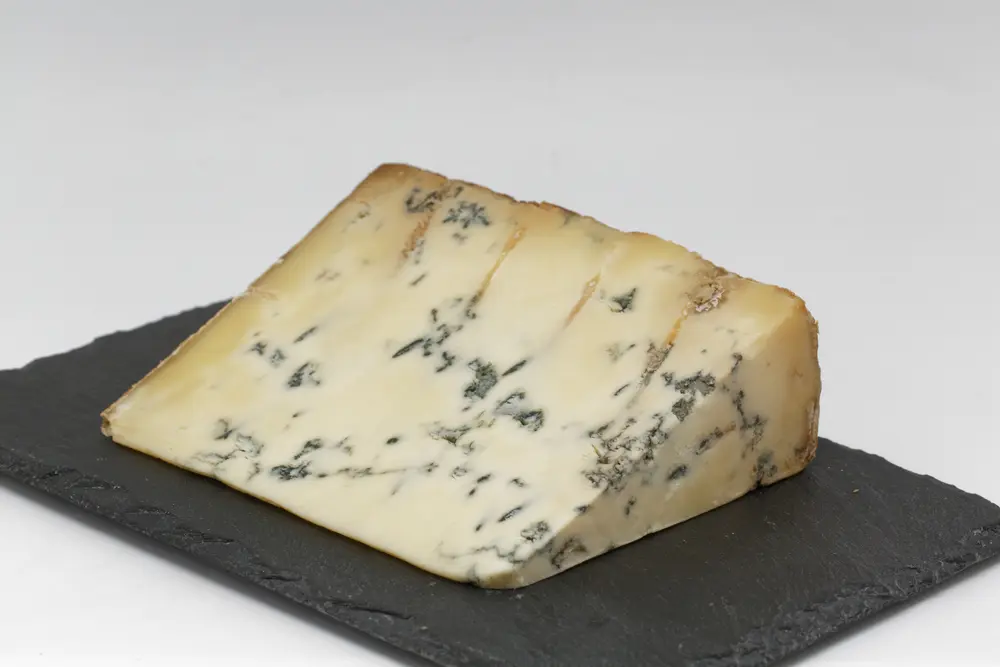
Thesupermat, CC BY-SA 4.0, via Wikimedia Commons
Key Facts
| Country of Origin | England, Great Britain, United Kingdom |
| Specific Origin | Collingthwaite Farm, Nottinghamshire |
| Milk Type | Cow's milk |
| Milk Treatment | Unpasteurized |
| Fat Content | Full cream |
| Rind | Blue |
| Texture | Semi-Soft |
| Flavor | Complex |
| Aroma | Rich |
| Colors | Ivory |
| Forms | Matured around 12 weeks |
| Age | Around 12 weeks |
| Rennet Type | Traditional animal rennet |
What is Stichelton Cheese?
Stichelton is an English blue cheese, close to Blue Stilton except that it uses neither pasteurised milk nor factory-produced rennet. The name comes from a form of the village name of Stilton recorded in the 1086 Domesday Book, as Stichiltone and Sticiltone. The spelling Stichelton appears in the 13th-century Lincoln Rolls. The makers needed another name because Stilton is legally off limits.
Until 1989 the Colston Bassett dairy still made a Stilton from unpasteurised milk. It stopped after an outbreak of food poisoning was linked to the dairy, a link later shown to be unfounded. In 1996 Stilton received Protected Designation of Origin status from the EU, and one of the criteria was pasteurised cows milk. Randolph Hodgson, owner of Neal's Yard Dairy, and Joe Schneider, an American cheesemaker who had worked in the Netherlands and the UK, talked in late 2004 about bringing the unpasteurised version back. They found premises on the Welbeck Abbey Estate near Worksop in Nottinghamshire, and the first Stichelton was made in October 2006.
Production is small batch, in a dairy at Cuckney on the northern edge of Sherwood Forest. The milk is unpasteurised, from Friesian-Holstein cows at Collinthwaite Farm on the Welbeck Estate. Rennet comes from calves' stomachs, and the curd is hand-ladled and smoothed. The starter culture is MT36, the one used in the pre-1989 unpasteurised Stiltons and not the culture used in modern pasteurised ones. A sample came from the original producer through a colleague of Hodgson and was kept alive for fifteen years before Stichelton production began.
ForbesLife magazine called it a sumptuous cheese that sets a full-flavored, succulent, complex chain of sensations going in the mouth: fruity and salty, buttery and earthy, sharp and creamy.
The cheese has drawn attention beyond Britain. Anne-Sophie Pic listed it among the five best cheeses in the world, and in 2022 Dan Saladino featured it as one of three cheeses, with Salers from France and Mishavine from Albania, in his book Eating to Extinction: The World's Rarest Foods and Why We Need to Save Them.
How Does Stichelton Cheese Compare?
The most relevant cheeses to compare Stichelton against.


